A crystal where light lives longer express
A glowing spot in a crystal is like a lighthouse in fog: the longer it shines, the more reliable the signal. In quantum devices, ions of rare-earth metals embedded in a transparent lattice play the role of such a lighthouse. They absorb energy and release it as a flash of light. But if there are atoms with magnetic moments nearby, the flash quickly dies out.
Researchers took cerium oxide — a substance where all atomic nuclei are "magnetically silent." They added two types of ions to this film: erbium and thulium. Erbium glowed for 2.9–5.3 milliseconds, like a lamp that stays on while you read a paragraph. Thulium flashed and faded in 14–68 microseconds — faster than an eye blink.
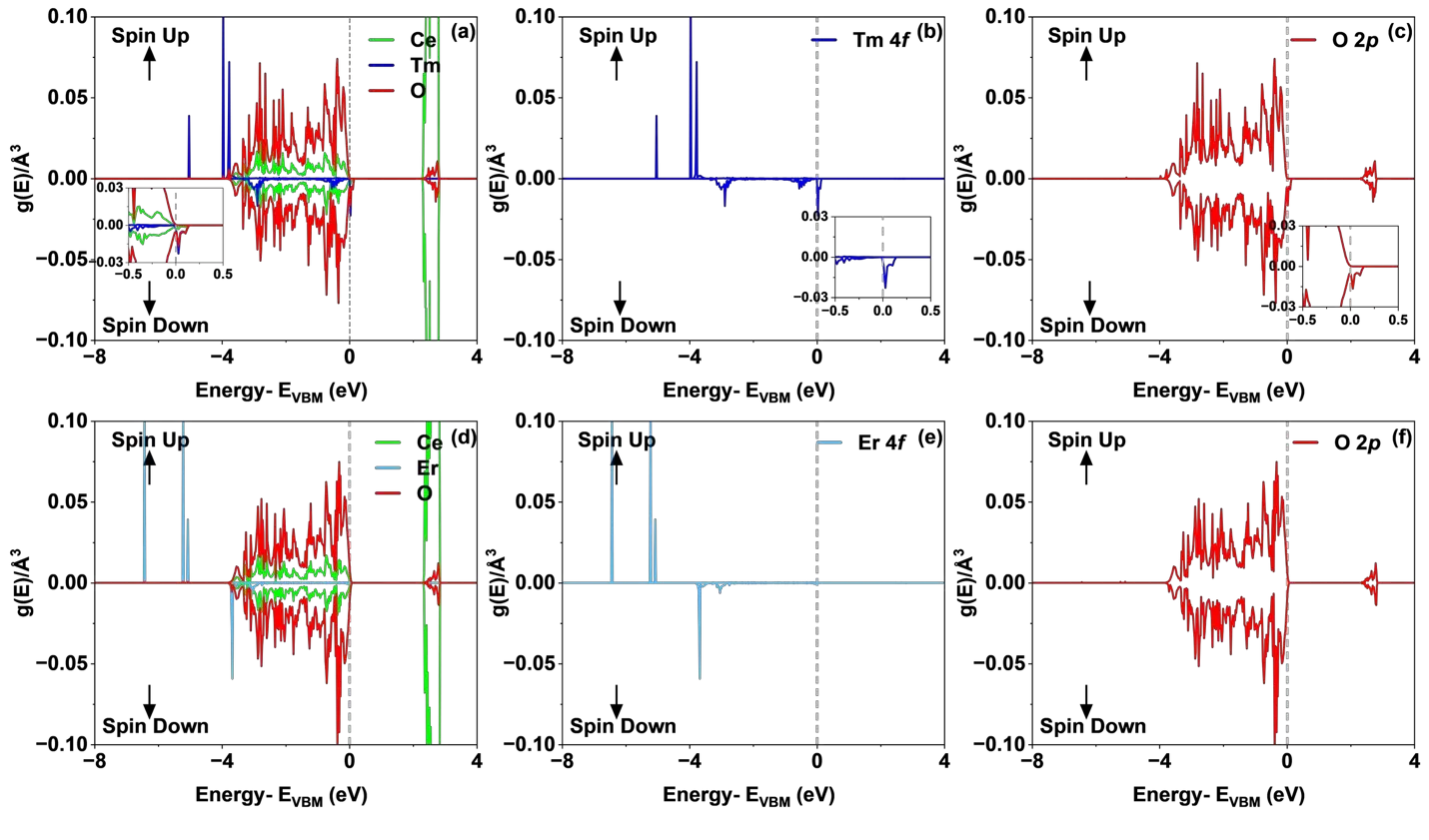
Calculations confirmed: in thulium, the electron clouds of oxygen and thulium overlap like two circles in a diagram. In erbium, the circles barely intersect. That is why erbium in cerium oxide is a promising candidate for quantum memory, where a photon must be stored for as long as possible.
Cerium oxide is one of the few substances where all naturally occurring isotopes have nuclei with zero magnetic moment. This "magnetic silence" allows quantum states to live longer.