Atomic Order Changes Crystal Color express
A crystal of germanium with tin is like a mosaic where each tile is an atom. If you lay the tiles randomly, the mosaic has one color, but if you arrange them in a pattern, it has another. Physicists measured how the atomic pattern changes a semiconductor's most important property: its band gap, that is, the energy needed to get an electron moving and creating current.
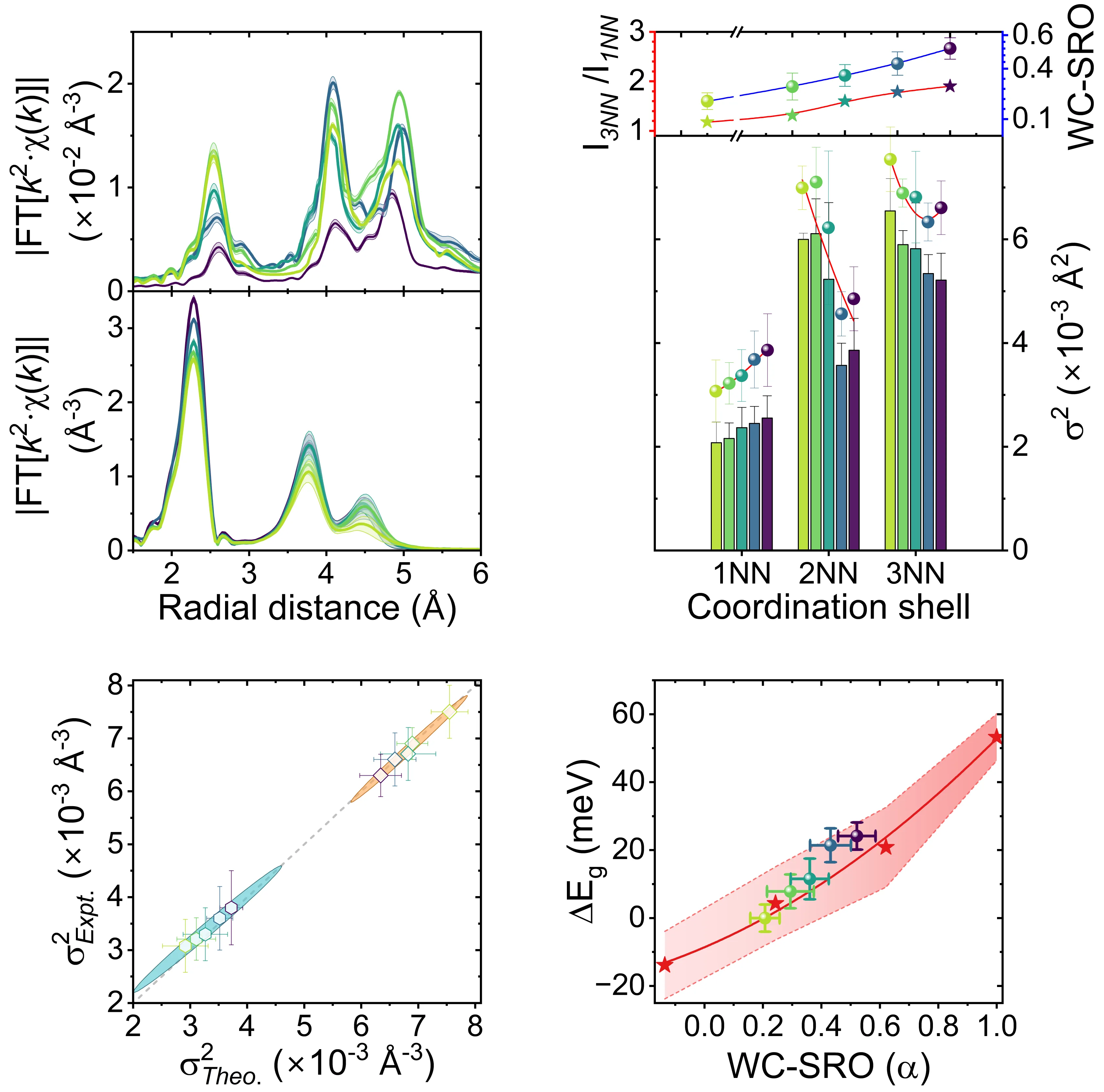
Until now, this step was adjusted in two ways: by changing the germanium-to-tin ratio or by stretching the crystal. The authors added a third way: they heated the crystal after growth, and the atoms rearranged themselves into a more ordered pattern. Using X-ray radiation and machine learning, they calculated how strongly the order affects the glow.
It turned out that ordering shifts the color of the glow — the crystal starts emitting light with a different energy. It's as if the same mosaic began to glow green or yellow depending on how the tiles are arranged. Now engineers have a new tool for fine-tuning semiconductor lasers and LEDs.
Germanium and tin are neighbors in the periodic table, but their atoms differ greatly in size, so even small rearrangements in their positions noticeably affect properties.