The concept of doping emerged in the 1940s at Bell Labs, where researchers like John Bardeen, Walter Brattain, and William Shockley developed the first working transistor by carefully doping germanium. The term 'doping' was borrowed from chemistry, where it described adding impurities to alter properties.
How it works
When a dopant atom replaces a silicon atom in the crystal lattice, it either donates an extra electron to the conduction band (n-type doping) or creates a 'hole' that acts as a positive charge carrier (p-type doping). The concentration and type of dopants determine the material's conductivity and allow engineers to create junctions — like p-n junctions — that are essential for diodes, transistors, and other semiconductor devices.
In practice
Doping is used in virtually every semiconductor device: computer processors, LEDs, solar panels, and sensors. It also plays a role in quantum computing, where doped silicon is used to create qubits with long coherence times.
Fun fact
The first transistor, built in 1947, used a piece of gold foil pressed onto doped germanium — the entire device was about the size of a paperclip, yet it revolutionized all of modern technology.
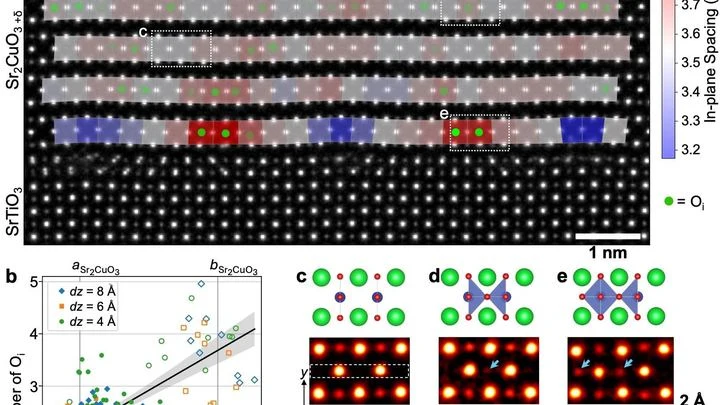
A superconductor is a material that conducts electricity without loss, like water flowing through a perfectly smooth pipe. In copper-based superconductors, tiny oxygen additions act like a volume knob: a bit more and the material starts superconducting; a bit less and it stops. But the oxygen atoms themselves are so small that seeing them directly was impossible.
A quantum spin liquid is a state of matter in which the magnetic moments of atoms behave like a fluid: they constantly fluctuate and never settle into a rigid order, even at extremely low temperatures. One of the most famous theoretical models of such a liquid was proposed by Alexei Kitaev.
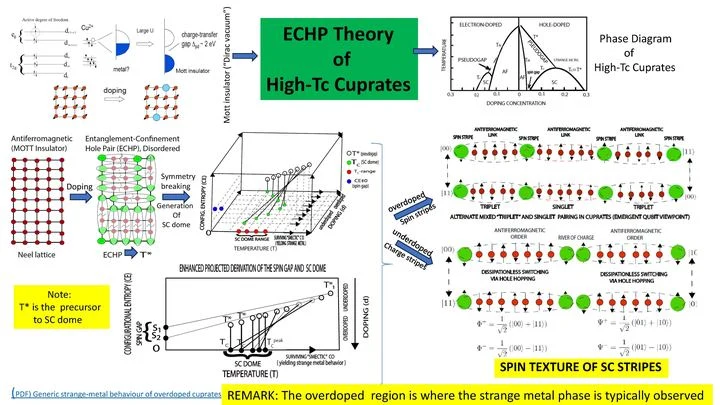
At low temperatures, many materials become superconductors — current flows without resistance. But how exactly does this happen if electrons were initially trapped in an insulator? Half a century ago, Philip Anderson suggested that the answer lies in a special quantum dance of particles.
In superconductors, electrons pair up and flow without resistance. Usually, these pairs are distributed uniformly, like water in a calm lake. But sometimes ripples appear in the material — pairs bunch up and thin out with a certain period. This state is called superconductivity with pair-density waves.
Honeycombs filled with electronic 'honey.' In the normal state, electrons move chaotically, but upon strong cooling they can pair up: this is how superconductivity emerges. The shape of these pairs, or pairing symmetry, determines the material's properties: some dance a waltz, others a foxtrot.
In some materials, electric current can flow without any loss: this is superconductivity. But before becoming a superconductor, a substance often passes through a strange state: electrons already sense each other and form pairs, yet they cannot move in unison.
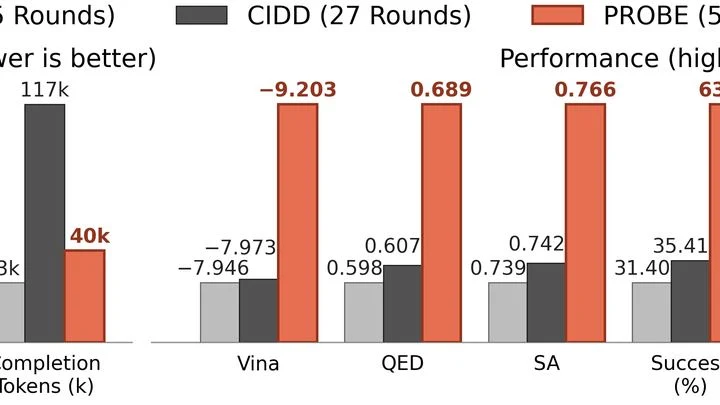
An engineer building a bridge cannot strengthen one beam without affecting the load on adjacent ones. Drug development works similarly: a molecule must fit snugly into the 'pocket' of a target protein, like a key in a lock, while also being safe, stable, and convenient to administer.
Imagine a sandwich where the bread is made of copper oxide layers and the filling is a thin layer of strontium ions. That's the infinite-layer cuprate, the simplest version of superconducting ceramics, conceived nearly 40 years ago.
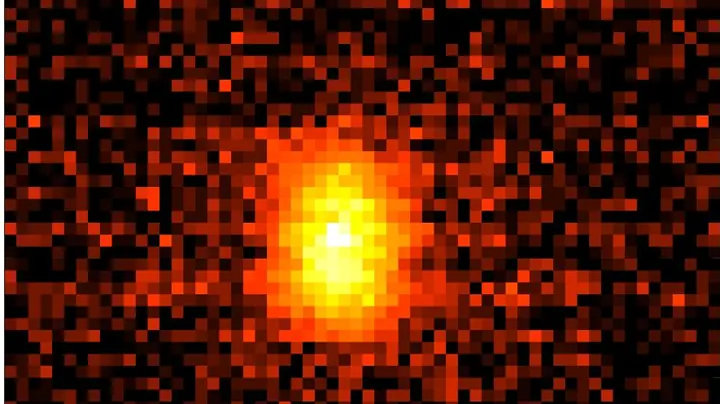
In a boron nitride crystal, the perfect atomic lattice is sometimes disrupted: an atom is missing here, or replaced by a foreign one there. Under a powerful microscope, these tiny imperfections appear as traps for electrons: they capture particles and start to emit light, and they also respond to magnetic fields.
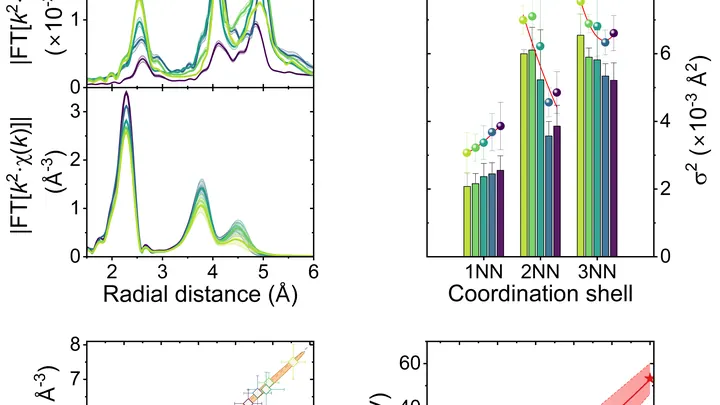
A bridge made of two rows of planks bends under the feet of pedestrians, and each step gets a boost from the elastic motion of the deck. A similar principle underlies superconductivity: electrons glide without resistance because the atomic lattice itself adapts to them. In nickel-based materials, this picture has long been elusive.
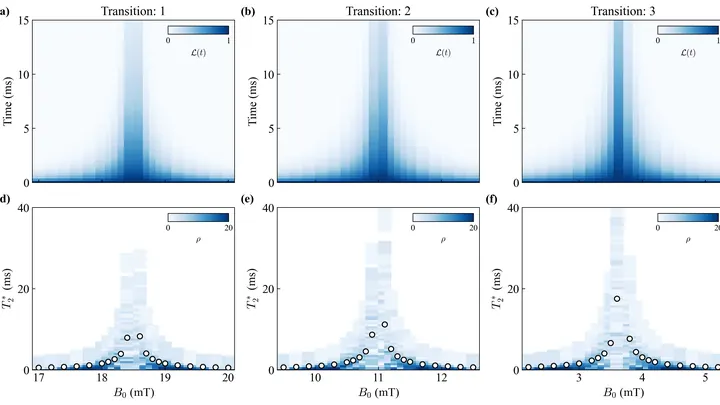
Holding a phone number in your head while people shout and slam doors around you is nearly impossible. That's roughly the life of a quantum bit, a qubit, in an ordinary material: the nuclei of neighboring atoms, like tiny magnets, constantly jostle it and erase information. To keep a qubit from forgetting, you need to find it a quiet spot.
Diamond is the hardest natural material and usually does not conduct electricity. But if you add a few foreign atoms to its crystal lattice, it can become a semiconductor, like silicon in computer chips.
A fridge magnet stays put because the tiny atomic arrows inside it all point in the same direction. But when those arrows start to argue (some pulling left, others right, and some spinning like tops) you get magnetic frustration. That disorder gives rise to whimsical patterns: stripes, spirals, vortices.
A crystal of germanium with tin is like a mosaic where each tile is an atom. If you lay the tiles randomly, the mosaic has one color, but if you arrange them in a pattern, it has another. Physicists measured how the atomic pattern changes a semiconductor's most important property: its band gap, that is, the energy needed to get an electron moving and creating current.
In a crystal lattice that resembles a woven basket, electrons sometimes pair up and flow without resistance. Such a material, a superconductor based on a kagome lattice, behaves like a temperamental orchestra: add a bit of titanium, and the conductor's baton switches from one order to another.
Light in semiconductors is born from pairs of charges, an electron and a hole, that attract each other like a magnet to a fridge. Such a pair is called an exciton. If you add one more charge to the pair, you get a trion — a trio of three particles.
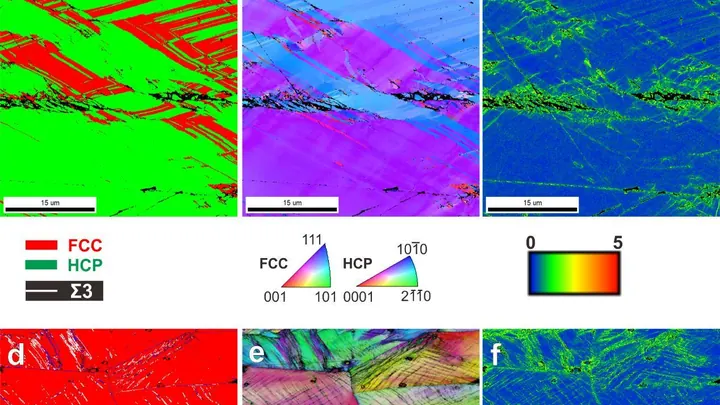
Metal is like a rope made of many strands: pull too hard and it snaps. Engineers have long sought a way to make it both strong and flexible at the same time. Typically, additives that increase strength make the metal brittle. But a team of materials scientists found a loophole: they added a small amount of nitrogen to the CrMnFeCoNi alloy, just one atom in a hundred, and got an unexpected result.
Deep inside an underground laboratory, a room-sized detector waits for an event that might happen once in a hundred million billion years. That event is neutrinoless double beta decay — a process that would break one of physics' fundamental laws. To catch it, you need perfect silence: not a single stray radioactive atom in the detector's materials.