Peering into the Heart of a Quantum Dot express
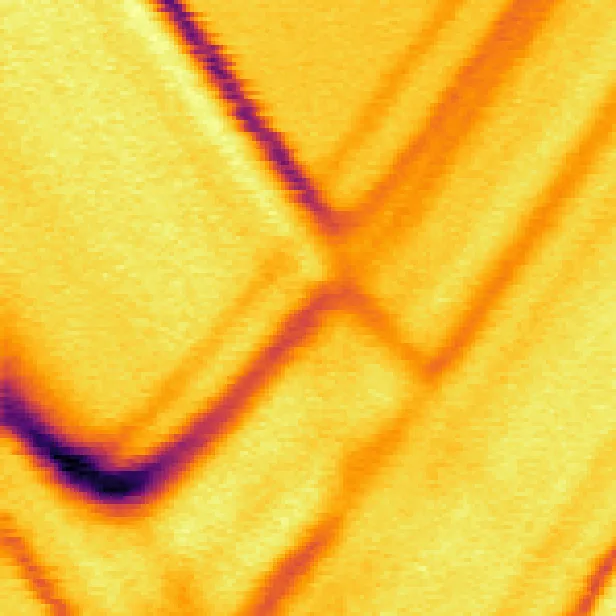
A quantum dot is a trap for electrons, just a few atoms in size, where a particle behaves like a ball in a tiny box. Place two such boxes side by side, and electrons can hop between them, making the system akin to a pair of communicating vessels. Physicists control this hopping by applying voltages to electrodes, but until now they could only see individual energy levels, like viewing a mountain range through a narrow slit.
The new method, dubbed delta-axis spectroscopy, lets you see the entire range at once. The researchers continuously varied the voltage while simultaneously measuring how the system absorbed energy, so you can hear every note the instrument plays, not just a few strings. In an experiment on a silicon-germanium double dot, they reconstructed a spectrum of 15 levels and precisely determined the interaction strengths between electrons.
This approach is important for quantum computers, where double quantum dots serve as qubits — the elementary units of information. Knowing the energy landscape precisely allows qubits to be tuned without trial and error, speeding up the creation of reliable computing devices.
Quantum dots are so small that several thousand could fit across the cross-section of a human hair.
The idea of controlling individual electrons in traps evokes the technology in Peter Watts's novel Blindsight, where quantum effects are used for communication and computation.