Popular

Carbon nanotubes with calcium trap hydrogen ⚡ экспресс

Original: "Towards viable H$$_2$$ storage in Ca decorated low-dimensional materials with insights from reference quantum Monte Carlo"
arXiv:2604.07110 · 2026-04-08 · CC0 · ⏱ 1 min · Materials
Calcium atoms in carbon tubes act like Velcro, trapping hydrogen for clean engines.
Abstract

Storing hydrogen is like trying to hold sand in a fist—the molecules are almost too small to interact with materials under the right conditions. Early hopes were pinned on graphene with calcium, but that system is unstable and the calculations were off. Using diffusion Monte Carlo (DMC), the 'gold standard' of quantum simulations, researchers tested two ways to anchor calcium: on boron-doped graphene and inside carbon nanotubes. It turns out hydrogen sticks with just the right energy for storage, especially inside the nanotubes, where calcium acts like an anchor. These calculations give engineers a solid starting point for designing next-gen hydrogen tanks.

Links in the knowledge graph 1

📄 Showing the "Simple" version — "Popular" is not ready yet. Add it to favorites to help prioritize it.

Hydrogen is an ideal fuel: when used, it only produces water, not carbon dioxide. The trouble is that hydrogen is the lightest gas, its molecules leak out of any container. Right now, cars store hydrogen in heavy tanks under extreme pressure, canceling out weight benefits.

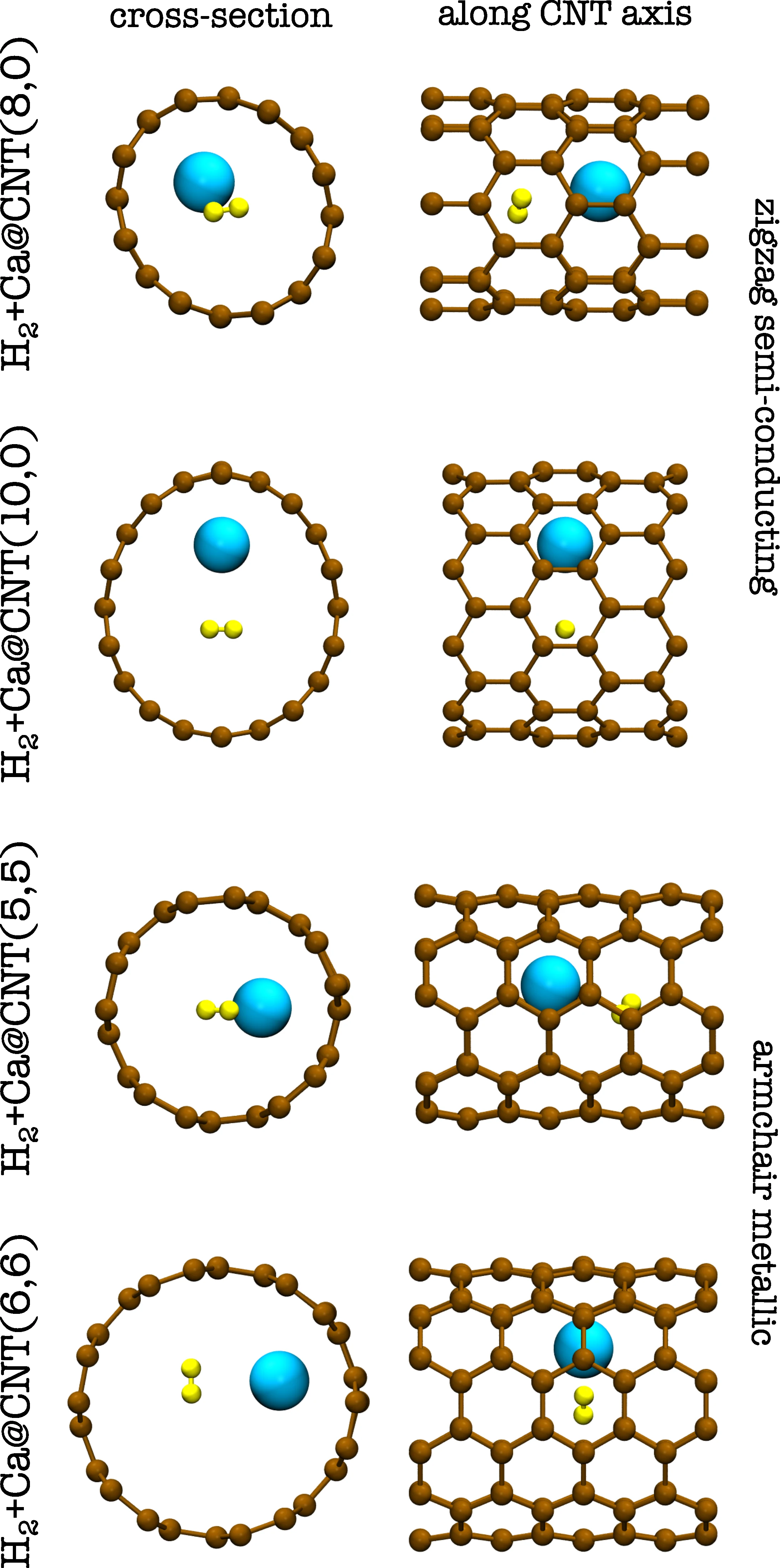
Researchers bypassed the problem without high pressure. They took carbon nanotubes—hollow cylinders just an atom thick, like a rolled-up mesh—and tucked calcium atoms inside. Calcium—the very metal our bones are made of—turned out to be the perfect 'Velcro': hydrogen sticks to it just enough to stay put, yet releases easily when needed.

This principle provides clear material design targets. If engineers can mass-produce these nanostructures, hydrogen cars will become truly lightweight and long-range.

🎯 Hydrogen is the most abundant element in the universe, but on Earth it's almost never found in pure form, so we have to extract it from water or hydrocarbons.

Scientists
Charles-Augustin de CoulombJames Clerk MaxwellJohannes RydbergTheodore LymanDaniel BernoulliLeonhard Euler
Tags
hydrogen carbon Water
Laws
Coulomb's lawRydberg formulaBernoulli's principleArchimedes' principleBalmer formulatriple-alpha process (Hoyle process)
Original: arXiv:2604.07110 · CC0 · bridge42worlds