Graphene is a two-dimensional form of carbon, where atoms are bonded in hexagons, like a beehive honeycomb. Such a lattice makes it both stiff and flexible. Electrons in it behave like massless particles, providing exceptionally high mobility (over 200,000 cm²/V·s) and the ability to move without scattering over large distances.
History
Theoretical studies of graphite layers began with P.R. Wallace in 1947. The term 'graphene' was introduced in 1987. The breakthrough occurred in 2004, when Andre Geim and Konstantin Novoselov, using Scotch tape, exfoliated a monolayer of graphite, proving the stability of two-dimensional crystals. In 2010 they received the Nobel Prize in Physics. This discovery triggered a wave of studies of other two-dimensional materials.
How it works
The electronic properties of graphene are determined by the symmetry of its lattice and the tight-binding approximation. Near the vertices of the Brillouin zone, the dispersion is linear: E = ħ v_F |k|, where v_F is about 10⁶ m/s. The chirality of the carriers (pseudospin rigidly linked to the direction of motion) suppresses backscattering, ensuring ballistic transport. Mechanical strength is provided by the high energy of sp²-bonds. By applying a voltage, one can change the type of conductivity (electrons or holes), so graphene is an ambipolar semimetal. The gapless band structure hinders application in digital logic.
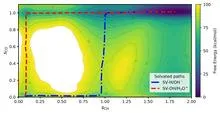
Picture a tiny hole in a sheet of graphene: a single missing carbon atom. It used to be thought that a water molecule splits apart at this defect only on its own, in dry gas. But if liquid water is sloshing all around, everything changes.
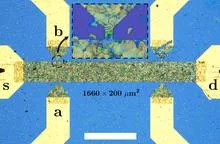
On the lab bench lies a piece of graphite grown from gas, like a deposit on the wall of a reactor. Usually, such material is not suitable for converting heat into electricity: inside it, electrons and holes run in opposite directions and cancel each other out.
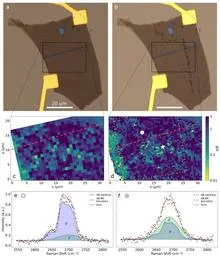
A Stradivarius violin can only be made from wood that grew under special conditions. For a long time, it was believed that graphene for delicate quantum effects had to be exfoliated from graphite with tape, and that a crystal grown in a test tube was incapable of such feats. This work shows that graphene grown from a gas mixture can sound like a Stradivarius.
The triptycene molecule resembles a three-pointed star with rigid arms. When such stars are scattered on a lead surface, they spontaneously assemble into a pattern like a woven basket: triangles and hexagons alternate, and at each node sits not one star but a pair.
A sheet of paper left on a wet table warps and lifts its edges. No one controls that motion, but it follows the same laws as plant growth: some areas of the sheet shrink more than others, and the flat form becomes three-dimensional. Engineers have long dreamed of taming this process so that a flat blank folds itself into a desired sculpture. In the new work, that trick succeeded with accuracy down to one percent.
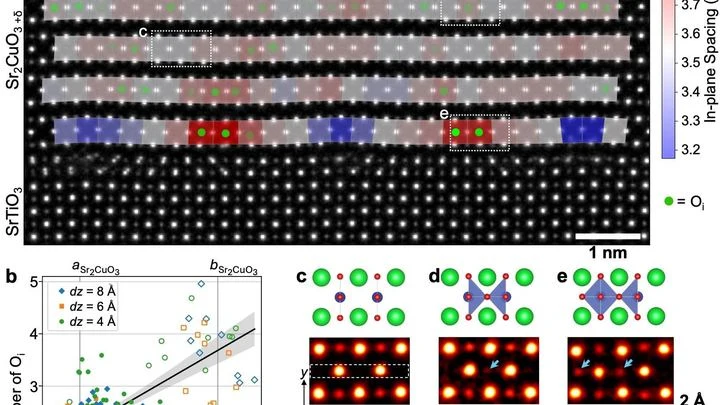
A superconductor is a material that conducts electricity without loss, like water flowing through a perfectly smooth pipe. In copper-based superconductors, tiny oxygen additions act like a volume knob: a bit more and the material starts superconducting; a bit less and it stops. But the oxygen atoms themselves are so small that seeing them directly was impossible.
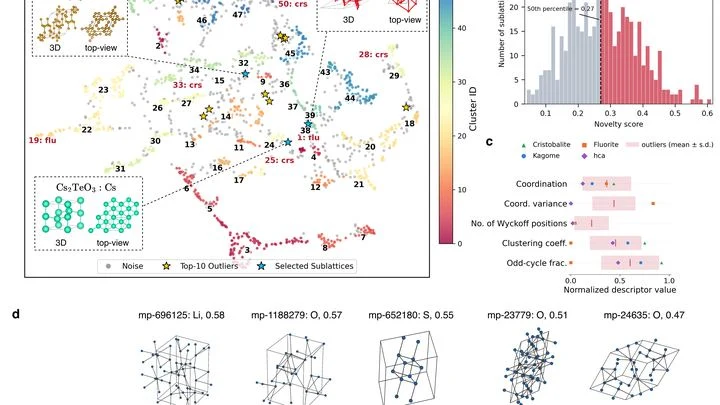
In chemistry's storeroom, records of substances no one thought were special gathered dust. It turns out that among them hide 2D materials — thin as a sheet of paper, but strong and with unexpected properties. Scientists ran a computer search through databases, and it pulled out 38 candidates that had not been recognized as 2D before.
Graphene, a sheet of carbon just one atom thick, can change its magnetic properties the way water changes shape: sometimes flowing, sometimes freezing into ice. In a new study, physicists peered inside this process for the first time using a sensor the size of a needle tip.
A water pipe: the wider it is, the more water flows through. In superconducting contacts — Josephson junctions (bridges through which current flows without resistance)—it's usually the same: the better the material conducts in its normal state, the larger the superconducting current that flows through it.
A ceramic plate as thin as a soap film, and through it flows current with zero resistance. That's the superconductivity achieved in nickelates, relatives of the famous cuprate superconductors. Previously, this required enormous pressure, comparable to that at the ocean floor.
Usually, light does not turn an insulator into a conductor: that requires powerful laser pulses that break the material's structure. But in twisted bilayer graphene at the magic angle, things are different.
Graphene, a sheet of carbon one atom thick, behaves like a calm water surface, until superconductivity appears. Then, unusual waves ripple across it, like the circles from a thrown stone: pairs of electrons move without friction.
In an ultrathin sheet of four-layer graphene, electrons can behave like a frozen liquid. When cooled strongly and subjected to an electric field, they stop darting around and line up into a regular pattern — a Wigner crystal. It's similar to how water droplets on a frosty morning turn into ice honeycombs.
A honeycomb made not of wax but of atoms is graphene — a flat crystal just one atom thick. Electrons in it are like runners at an intersection: they speed up here, slow down there, but never get stuck at the edge. Physicists call such a sheet "topologically trivial," meaning its edges are perfectly ordinary, with no special properties.
Now, let's knock out a single atom from the honeycomb.
Imagine a quantum phase transition as an intricate dance. Electrons whirl in strict order, each step representing their spatial arrangement, and the rhythm their dynamics. For decades, physicists could only see a blur of motion, unable to tell if the figures were changing or the music speeding up.
In the world of two-dimensional materials, states sometimes emerge that are as extraordinary as they are fragile. One of them — the fractional anomalous Hall crystal (FAHC)—is like a quantum centaur: half ordered lattice, half topological liquid.
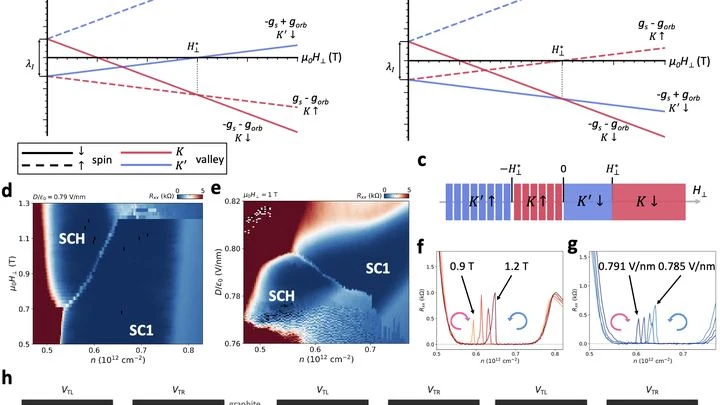
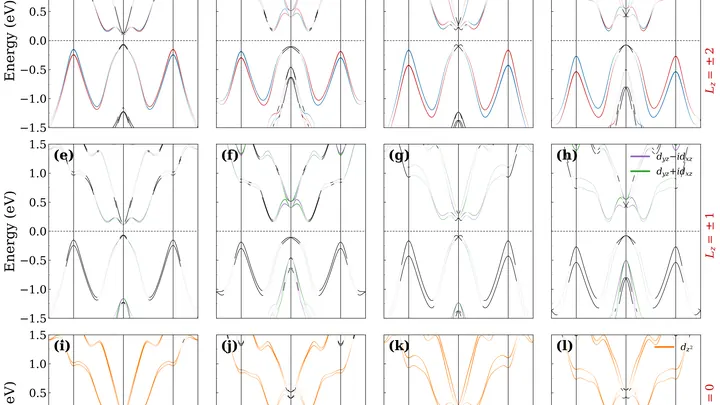
Superconductors usually don't get along with magnets: a strong field destroys the state in which current flows without resistance. But in thin layers of carbon, things are different.
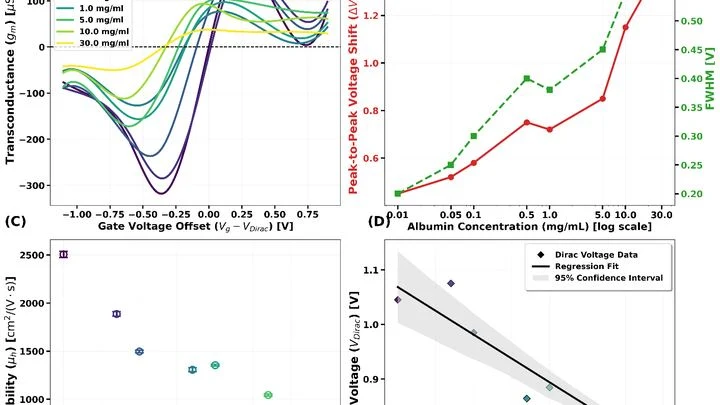
In a drop of blood float millions of albumin molecules — the main transport protein. Its level drops in kidney and liver diseases, so doctors need a fast and accurate way to measure it. Engineers have proposed a detector the size of a dust particle: a graphene transistor that works directly in liquid.
Graphene is a sheet of carbon one atom thick.
Graphene, a two-dimensional carbon crystal, has long tantalized physicists with the hope of high-temperature superconductivity. Its electrons obey the relativistic equation of Paul Dirac, racing at tremendous speed, barely noticing each other.
A charred lump the size of a fist is all that remains of a scroll from the library of the Roman city of Herculaneum. Buried by the eruption of Mount Vesuvius two thousand years ago, the text hidden inside has gone unread ever since. Physically unrolling such a scroll would turn it to ash. But now archaeologists no longer have to take that risk.
The thinner the ferroelectric film, the stronger the depolarizing field — a dictate of classical physics. Imagine a pencil balancing on a fingertip: the shorter it is, the harder to keep it upright. Nanoscale polarization likewise strives to vanish.
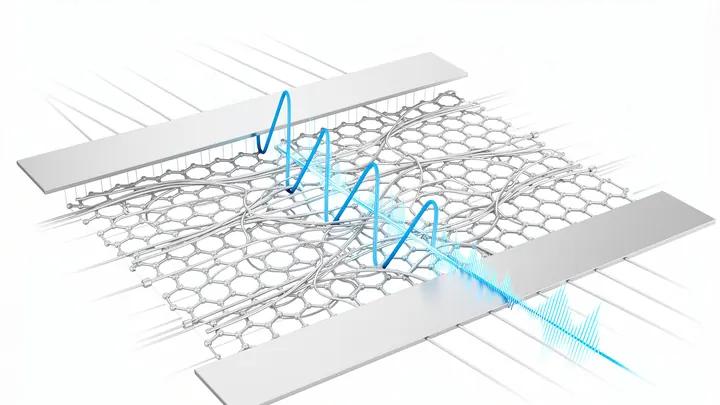
A switch that knows which way to let current flow. That's how a Josephson diode works — a superconducting bridge where current goes willingly in one direction but meets resistance in the other. In the new study, such a bridge was made from graphene — a sheet of carbon just one atom thick.
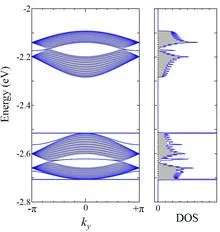
Electrons in a crystal are like cars on city streets: some race down avenues, others get stuck in traffic jams. In certain lattices, motion freezes entirely — velocity stops depending on energy, and electrons become "flat." This isn't a traffic jam but a special rhythm of the network where waves cancel each other out.
A potter uses a sharp stylus to trace a pattern on a still-damp clay tile. One wrong move, and the line blurs, the tile cracks. Physicists work with films of the high-temperature superconductor YBCO (a compound of yttrium, barium, copper, and oxygen) in much the same way.
In murky mud, between two electrodes, long chains of bacteria line up: each one as thin as a microscopic cable. Every such filament conducts current over a full centimeter, a true marathon for a microbe.
The Universe doesn't just expand — it resonates. After the Big Bang, stretched strings remained in its fabric — thin as a proton, yet heavy as a mountain range. Their oscillations give birth to gravitational waves, and in this radiation, like in a musical score, the history of fundamental symmetries is encoded.
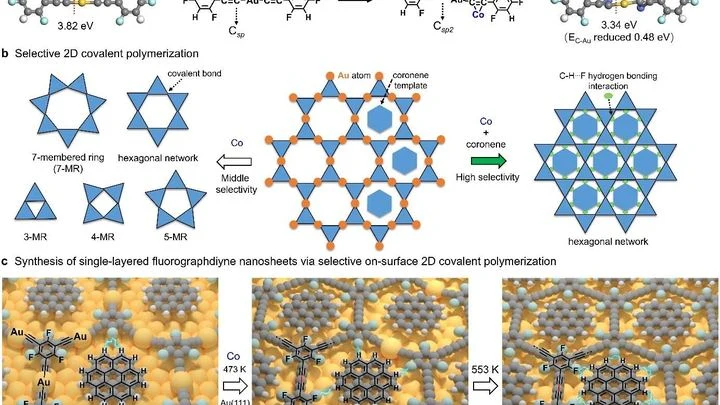
Crocheting, but instead of yarn you have individual molecules, and instead of a hook, a gold surface. Until now, attempts to knit such molecules into a smooth fabric ended in a tangle: the threads hooked where they shouldn't, and the pattern went awry.
A team of scientists has found a way to fix this.
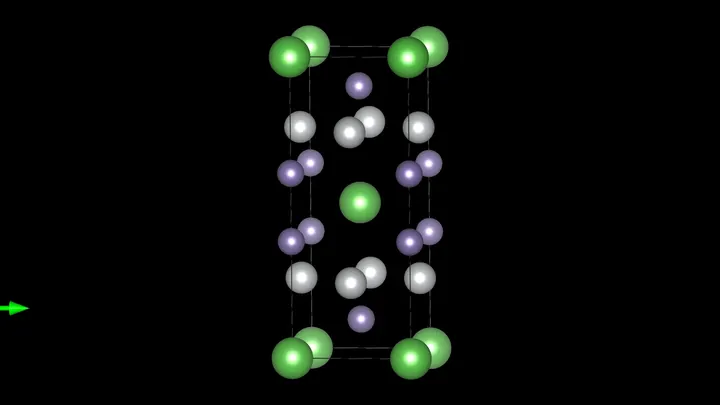
Each electron is a tiny magnet. In a single-atom-thick layer of iron chloride, they all align in the same direction, like dancers in a perfectly synchronized routine. Nature usually avoids such order (that's high entropy), but quantum forces compel them to comply.
A bridge made of two rows of planks bends under the feet of pedestrians, and each step gets a boost from the elastic motion of the deck. A similar principle underlies superconductivity: electrons glide without resistance because the atomic lattice itself adapts to them. In nickel-based materials, this picture has long been elusive.
Two ultrathin sheets, resembling mica, lie on top of each other. One shifts by a fraction of a nanometer, and a modest semiconductor turns into a magnet. That's roughly how the materials studied by the authors work: layered compounds of niobium and tantalum with sulfur or selenium.
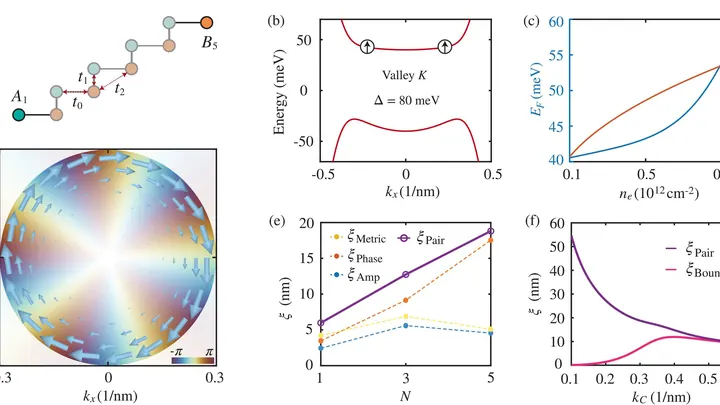
In a superconductor, electrons pair up like dancers holding hands. Usually, the distance between them, the pair size, depends on how fast they move and how strongly they are bound. But sometimes the dance floor almost disappears, and there's nowhere to move. This happens in materials with flat electronic bands: electrons nearly freeze, and the usual rules stop working.
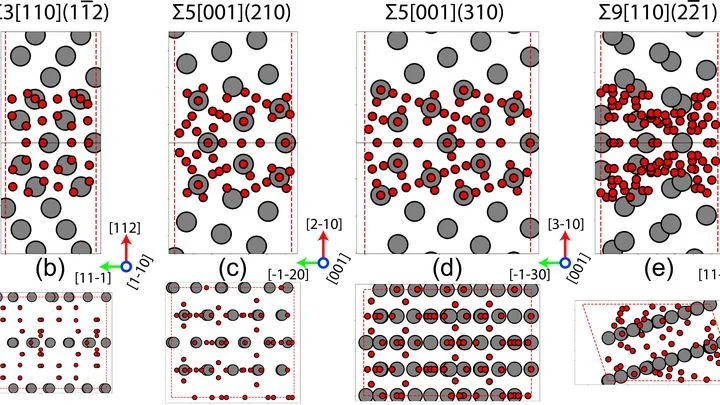
Steel is not a monolith but a mosaic of microscopic grains fused together. Their seams, the grain boundaries, are the most vulnerable spots: this is where cracks begin. Impurity atoms, even in negligible amounts, accumulate at these seams like sand between gears, and they can either lubricate the mechanism or jam it completely.
Every carbon atom in a molecule carries a passport — the energy with which its deepest electrons sit in their orbitals. This energy is sensitive to neighbors: add an oxygen nearby or a double bond, and the number in the passport changes. Chemists have long measured such energies with X-rays, but calculating each new molecule takes hours of machine time.
A graphene sheet is a one-atom-thick grid of carbon atoms. Stacking several such sheets with a specific twist yields a material with unusual properties: it can be a magnet or a superconductor depending on how you poke it. The trouble is that in natural graphite, such 'properly twisted' layers are rare, and growing them artificially is tricky.
Silicon carbide is the material used to armor electronics. It withstands heat, impacts, and radiation like the ceramic tiles on a spacecraft's heat shield. But even this armor has a weak spot: ordinary metal contacts quickly degrade under X-rays.
A crystal that looks like a stack of pancakes was placed on a smooth substrate of magnesium oxide. The result was a film only a few hundred atoms thick. When they ran a current through it and switched on a magnet, the resistance jumped by nearly a quarter—22.5% in a 9-tesla field.
Inside the film, electricity is carried by two streams of particles.
An ordinary crystal is like an apartment building: electrons move through shared hallways and staircases, influencing each other through the walls. Now, imagine removing all the walls, leaving just a single line of apartments. How would the residents behave?
Hydrogen has nothing to do with it, but the collective behavior of electrons takes center stage.
A single-atom-thick sheet of tungsten telluride is like thin foil: electrons can't pass through because there's a band gap between their possible states, like a moat you can't jump across. Add two more layers, and the moat disappears; the material becomes a metal, and current flows. Add more layers, and the properties change again, as if someone is flipping modes with a single button.
A sheet of paper weighs almost nothing, but stack a hundred sheets and you get a noticeable pile. That's roughly what scientists did with a material that excels at converting one color of light into another, but only when it's just one atom thick. A single layer is like a single sheet: it works beautifully, but it's too thin to produce much light.
A mosaic floor made of many small tiles, each turned in a different direction. It seems that any pattern trying to cross such a floor would get scrambled and vanish. That's how people usually think about disorder in crystals: if atoms aren't arranged in a perfect lattice, delicate quantum effects should fall apart.