How Metal Gets Stronger: The Dance of Defects express
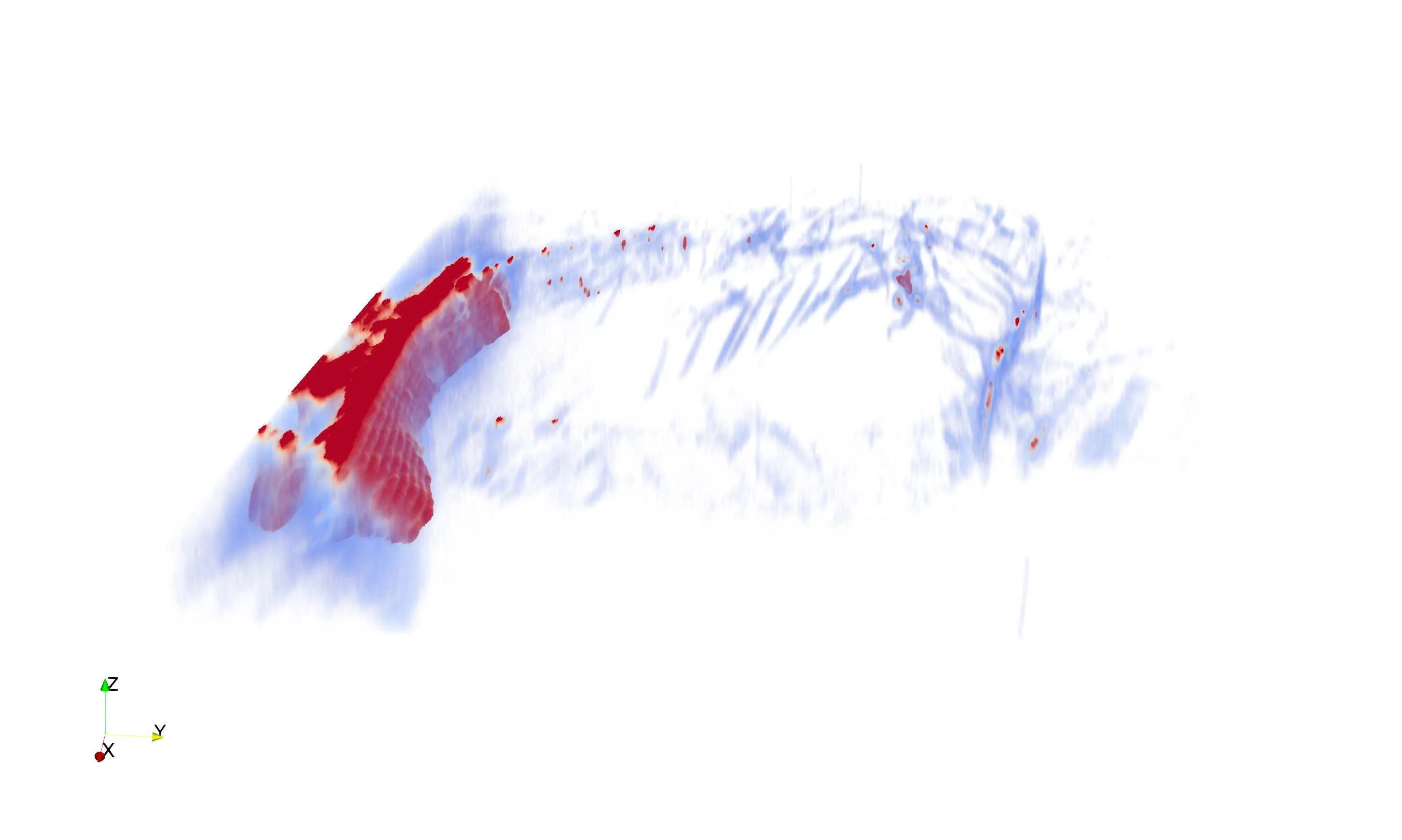
When you pull on a piece of metal, it changes shape and simultaneously becomes stronger. The secret lies in tiny defects in the crystal lattice called dislocations. They are like wrinkles in a rug: moving a wrinkle shifts the rug more easily than dragging the whole rug. But when there are many wrinkles, they start to interfere with each other and get stuck.
Until now, these processes couldn't be observed directly because they happen deep inside the metal. Now, researchers have recorded three-dimensional movies of dislocations accumulating near an obstacle inside a millimeter-sized sample of pure aluminum during stretching. It turns out that dislocations don't just pile up: they find a loophole: they climb into an adjacent slip plane and bypass the obstacle. This is like a traffic jam where some cars suddenly veer onto the shoulder and drive around the congestion.
Such behavior leads to intermittent, jerky motion: the metal deforms not smoothly but in spurts. These data will help create more accurate models of material behavior, which is important for designing strong and reliable structures — from aircraft fuselages to machine parts.
Dislocations in a crystal are like a queue at a store: if one person moves forward, the whole line shifts, even though each person only took a small step. Similarly, when a dislocation passes through the entire crystal, it shifts the upper part relative to the lower part by just one atomic layer.