How Neutrons Soften Nuclear Shells express
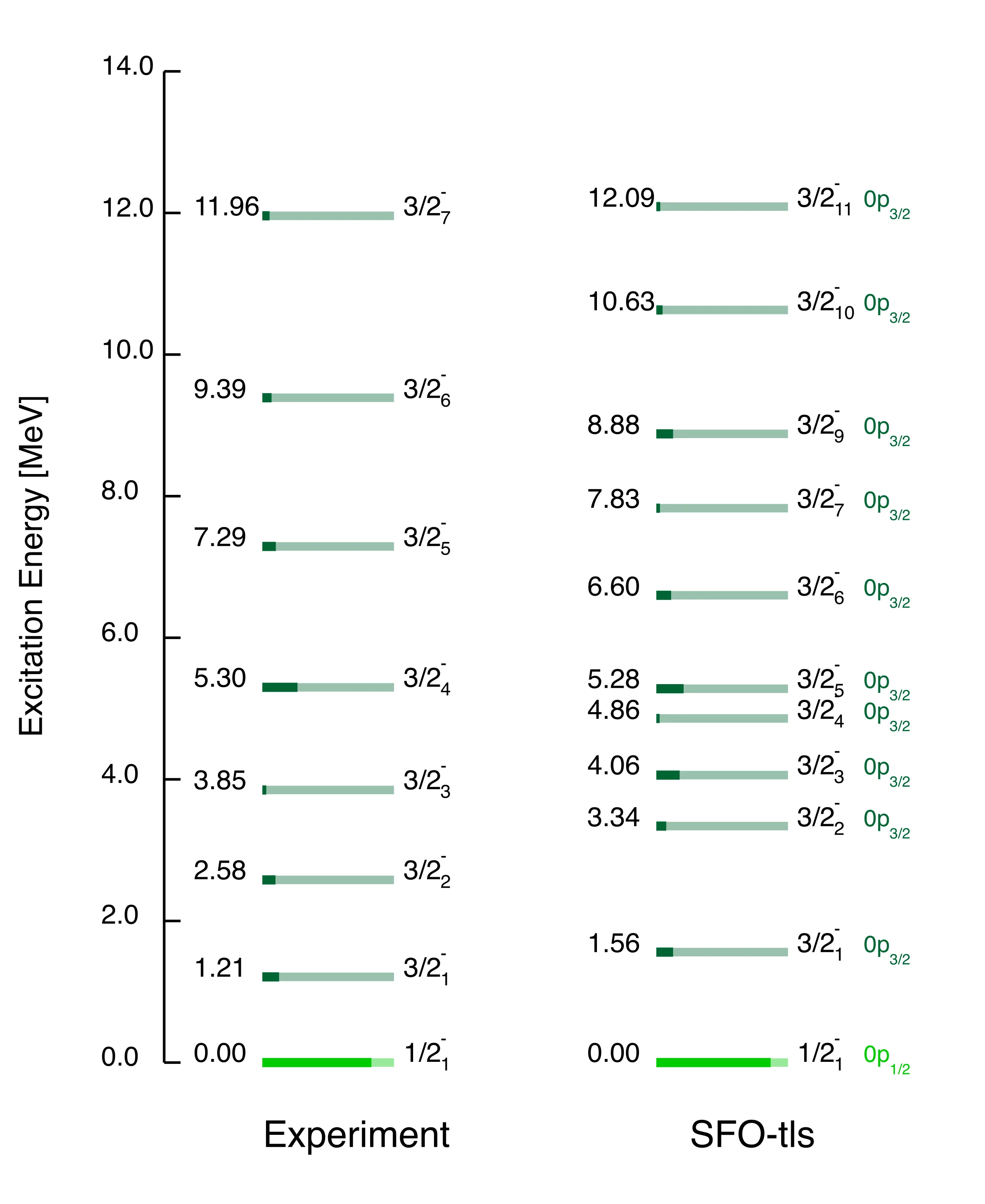
Imagine a multi-story building where protons and neutrons live on each floor. The floors are energy levels, and usually there's a stairwell of a certain height between the sixth floor and the one above — the so-called gap. In the oxygen-20 nucleus, this gap acts as a barrier that particles find hard to cross.
But when extra neutrons move into the building, they subtly start to change the layout. Using the ACTAR TPC setup at the GANIL laboratory, physicists carefully knocked a proton out of the oxygen-20 nucleus to peek inside its structure. They saw that the gap between the sixth and seventh floors had become lower — about 5.30 MeV. That's less than you'd expect if the neutrons weren't interfering.
The measurements showed that the proton levels with l=1 are 86% and 72% occupied, respectively. It's as if some rooms on the floors are vacant while others are occupied. This picture suggests that the neutrons added to the nucleus weaken the proton framework — an effect predicted by the SFO-tls model, where tensor interactions play a key role. It acts like neighbors above and below can affect the stiffness of the floors in a building.
In the end, the building turns out to be not as monolithic as previously thought. This discovery helps us understand how nuclei with an excess of neutrons behave — for example, in the interiors of neutron stars or during supernova explosions.
Oxygen-20 lives for only 13.5 seconds, but in that time physicists manage to study its internal structure.
In Peter Watts's novel Blindsight, alien spacecraft use exotic nuclear structures — possibly with unusual shell effects.