A Mirror That Doesn't Mess with Light express
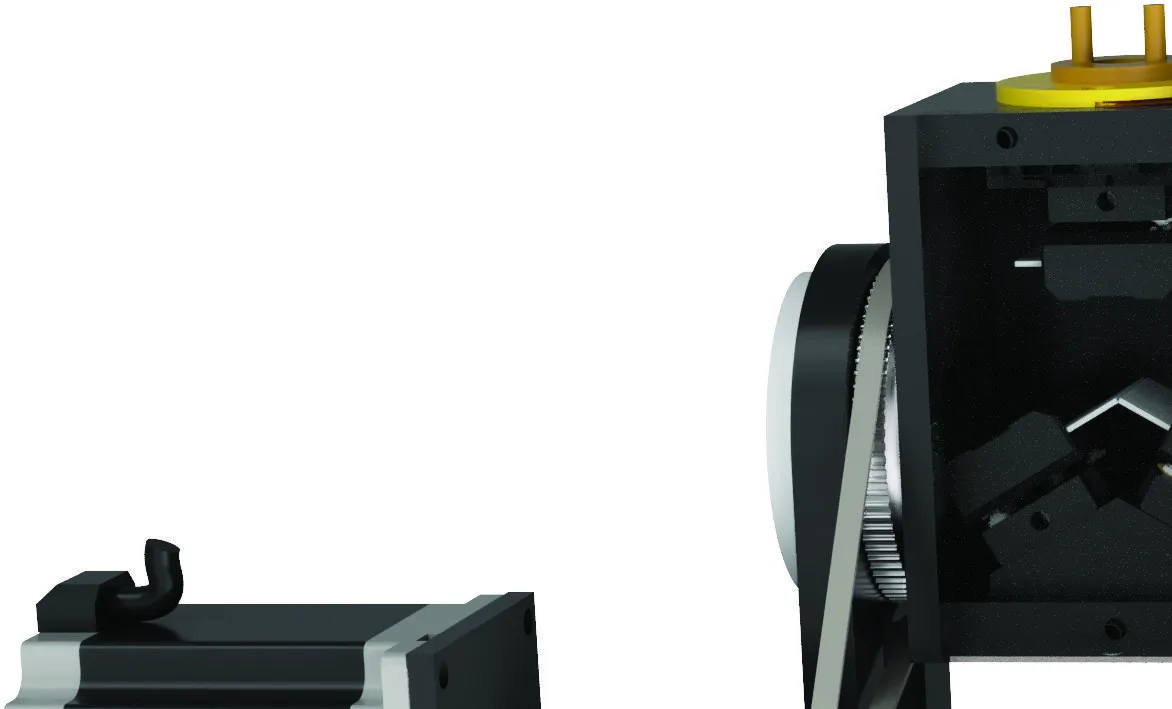
Light, like a shaken rope, oscillates in a specific plane. Astronomers and engineers often rotate images using a three-mirror system, the so-called K-mirror, but this inadvertently rotates the plane of oscillation as well. For precise measurements, that's a problem.
The authors of the new study found a simple fix: they placed a transparent plate before and after the mirror, each rotating the plane of oscillation, and made these plates spin at half the speed of the mirror itself. This way, all unwanted rotations cancel out, and the light exits with the same oscillation orientation as it entered.
This trick works for any mirror angle, any material, and any state of light. That means astronomers can see the sky more clearly, and quantum engineers can control light particles more precisely.
Original abstract
as written by the authors arXiv:2604.25475
A K-mirror rotates the wavefront of an incident optical field. However, the rotation always introduces polarization changes in the transmitted field. This is a serious concern for applications ranging from astronomical image derotation to orbital angular momentum spectrum characterization in photonic quantum technology. Recent efforts have shown that the polarization change can be minimized significantly, but these require either a very small base angle that limits the field of view, or mirrors with a customized refractive index. Making the transmitted polarization state completely independent of the rotation angle has remained an open problem. In this work, we show that placing half-wave plates before and after a K-mirror and rotating them synchronously at half the K-mirror rotation angle makes the polarization change in the transmitted field exactly independent of the rotation angle. This works for any wavefront rotator, any base angle, any mirror refractive index, and any input state of polarization. We experimentally demonstrate the approach using a K-mirror with a base angle of $$30^{\circ}$$, which gives the largest field of view among practical designs, and find a mean polarization error of ~1%, limited only by the retardance imperfection of commercially available half-wave plates. This has significant practical implications for applications that require precise wavefront rotation without polarization change.
You can see light polarization through ordinary sunglasses: they only let through oscillations in one plane, making the sky appear darker.