Scientist

Albert A. Michelson

1852–1931 · physics, optics, spectroscopy, metrology
American physicist known for his precise measurements of the speed of light and the creation of the interferometer, which became the basis for many optical experiments, including the Michelson-Morley experiment. His work laid the foundation for the special theory of relativity.

Biography

He studied at the US Naval Academy, then at the Universities of Berlin and Heidelberg. He worked at the Case School of Applied Science, Clark University, and the University of Chicago. He was the first American scientist to receive the Nobel Prize in Physics (1907) for his precise optical instruments and the spectroscopic and metrological investigations carried out with their aid.

Key discoveries

💡 Michelson measured the speed of light throughout his life, constantly improving accuracy, and his last measurement was completed after his death.
"He believed that future discoveries await us in the sixth decimal place."
Concepts
electromagnetisminterferometryquantum opticsspectroscopyspeed of light
Laws
principle of constancy of the speed of lightSagnac effect
Scientists
Henri PoincaréRobert HookeJohann Jakob BalmerJocelyn Bell BurnellArno PenziasCharles TownesJames Clerk MaxwellAlain Aspect

Related articles

Ionic Liquids on Rocky Exoplanets: Life Without Water
Water is the gold standard for life. We search for its traces on Mars, in icy moons, and in the atmospheres of distant planets. But what if life doesn't need water? On a warm rocky exoplanet with a thin atmosphere, water would evaporate within hours.
Cosmology2025-11-182 minarXiv:2511.14163express
Light Gets Even Lighter: New Upper Limit on Photon Mass
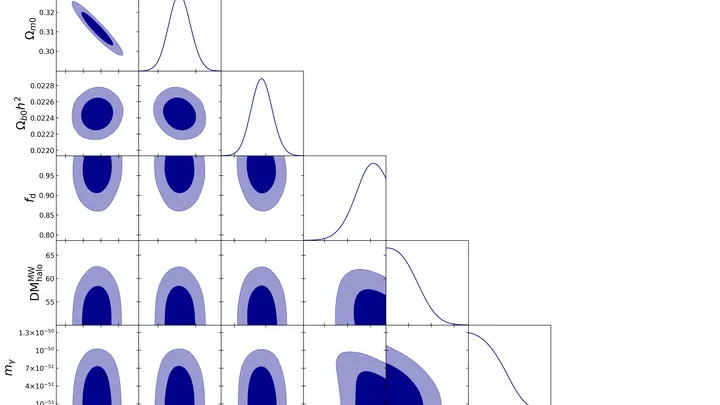
Fast radio bursts are brilliant cosmic flashes that, like a starting signal, set off a race of radio waves across the universe. Astronomers used them as a natural laboratory to test whether the photon, the quantum of light and the carrier particle of the electromagnetic interaction, has mass.
High Energy2025-11-191 minarXiv:2511.15542express
When the Speed of Light Stops Being the Limit
In October 2022, the LHAASO observatory measured the spectrum (energy distribution) of gamma-ray burst GRB 221009A — the brightest on record. Its light traveled for two billion years and was so intense that it disturbed the upper layers of Earth's atmosphere.
Galaxies2025-12-031 minarXiv:2512.04166express
Runaway Black Hole Leaves an Interstellar Trail
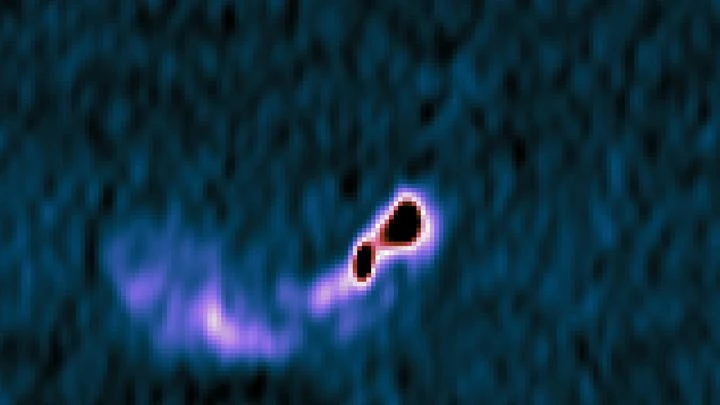
The James Webb Space Telescope spotted a luminous streak in a distant galaxy, like the wake of a speedboat, only two hundred thousand light-years long. At the head of this trail races a supermassive black hole, plowing through tenuous gas at 954 km/s. The gas gets compressed, heats up, and glows.
General Relativity2025-12-081 minarXiv:2512.07364express
Vortons: Invisible Rings of Dark Matter
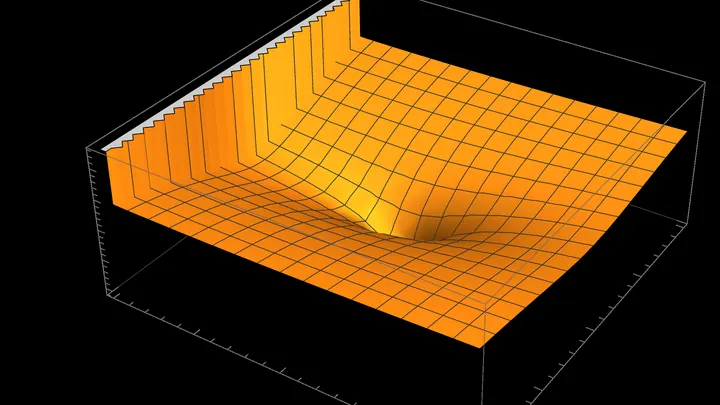
Vortons are invisible cosmic hoops, closed loops of curved spacetime. Thinner than an atom but heavier than stars, these Big Bang relics spin like giant carousels, churning everything around them. Einstein's equations describe how particles dance near such a hoop: paths twist into spirals or dart chaotically.
Pressure Instead of a Syringe: A New Way to Shield Cells from the Cold
The usual way to freeze a living cell is like trying to put a spacesuit on it: you first need to get a protective substance inside, but while it's crossing the membrane, the cell can burst from salt imbalances or get poisoned by the chemicals.
Optics2026-01-021 minarXiv:2601.00630express
A Hologram from a Speckle of Light
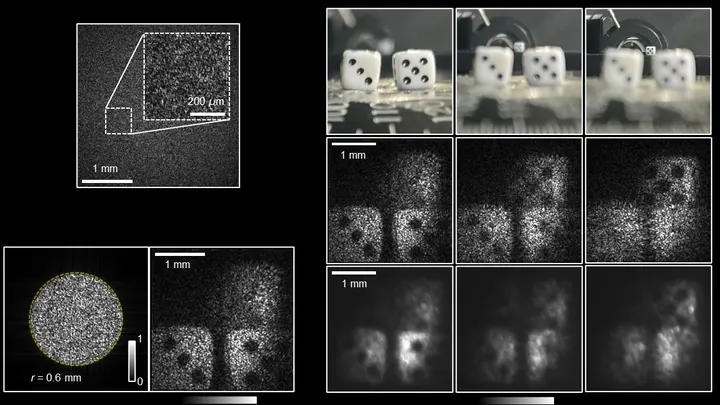
Shine a flashlight through rough glass, and the wall lights up with a speckled pattern of bright and dark dots. Once dismissed as useless noise, this pattern now serves as the key to reconstructing 3D images. In the new system, light from an object passes through a specially designed plate with known irregularities.
Fluid Dynamics2026-01-021 minarXiv:2601.00724express
How a Trickle Becomes an Ice Ridge
A thin stream of water flows down a cold inclined board and, before your eyes, turns into an ice ridge. At first, the water paves itself a straight icy path, as if reinforcing its own banks. Then the trickle starts to meander, and the ice quickly spreads sideways. Finally, the ridge stops growing outward and begins to thicken, smoothing out irregularities.
Geophysics2026-01-032 minarXiv:2601.01148express
The Clocks That Wake Up Space
Every hour, when the hands of a clock align at twelve, something happens in Earth's magnetosphere. It's as if an invisible conductor raises a baton, and waves race along magnetic field lines toward the surface. They're called pearls: on recordings, they look like a string of beads strung along time.
Galaxies2026-01-061 minarXiv:2601.02865express
Dust Beaten by Invisible Waves
At the center of nearly every large galaxy sits a supermassive black hole. It pulls in gas and dust, and a bright disk swirls around it. But the James Webb Telescope looked further out — into a region where the black hole's light is weaker, yet the dust still glows. Astronomers examined eight galaxies.
Stellar2026-01-081 minarXiv:2601.05313express
Why Cold Stars Lead Scientists Astray
Astronomers listen to starlight using spectroscopy: they spread it into a rainbow and read the dark 'voices' of chemical elements. But the very cool star TRAPPIST-1 didn't sound as the models predicted: water and iron were barely audible, though there should be plenty.
Exoplanets2026-01-131 minarXiv:2601.08390express
Quantum Physics2026-01-131 minarXiv:2601.09020express
Salt in the Cell Changes the Rules of the Game
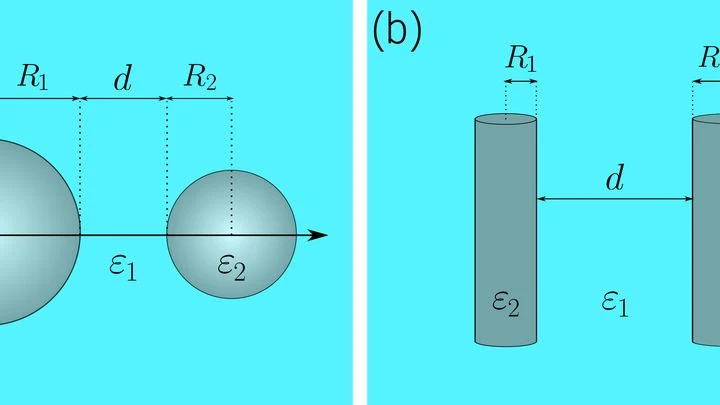
In a glass of salty water, even if it sits perfectly still, something is always happening. Tiny salt particles, ions, float and collide, sending ripples through the water. These ripples are invisible, but they create a force that attracts or repels nearby objects. Previously, it was thought that this force only acts over very short distances, as if it quickly fades out.
Optics2026-01-161 minarXiv:2601.11764express
Light in the Invisible Gap
There is a region of light that has long remained a blind spot: from 5 to 15 terahertz. It is not radio waves, nor infrared heat, but something in between, where molecules vibrate in particularly characteristic ways. Scientists from Germany have built a setup that finally peers into this 'new terahertz gap' and even beyond — past 25 terahertz. The secret lies in a crystal with the long name BNA.
Instrumentation2026-01-171 minarXiv:2601.11842express
Two Detectors Search for Coincidences: The New Hunt for Gravitational Waves
Detectors of gravitational waves usually compare the signal with ready-made templates, as if searching for a familiar melody in the noise. This allows them to track only known scenarios, such as black hole mergers.
Materials2026-01-191 minarXiv:2601.13009express
A Thermometer That Changes Color
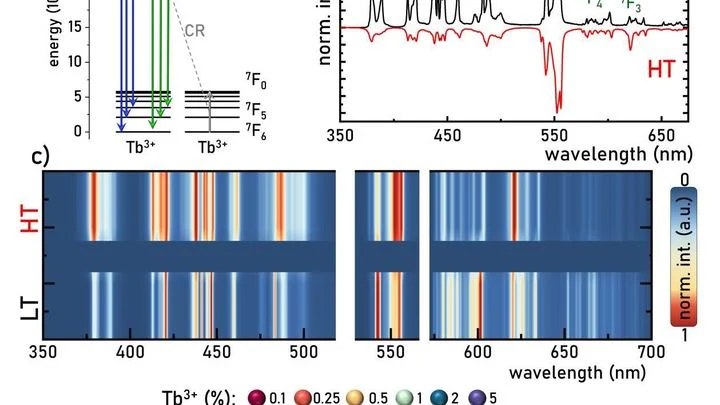
A piece of material glows blue. Heat it up, and the glow turns green, as if someone flipped a switch at a traffic light. That's how the new luminescent thermometer described in the paper works. Inside the material are terbium ions — a rare-earth metal that knows how to shine. At room temperature, they emit blue light.
Optics2026-01-201 minarXiv:2601.13703express
Laser Radar Hears Vibrations Through Noise
A piano tuner in a noisy hall doesn't listen to all sounds indiscriminately: they isolate one string among dozens. A similar challenge is tackled by the new laser radar: among the many reflected beams, it identifies those carrying information about the target's vibration. A conventional radar sends a short pulse and waits for the echo.
Quantum Physics2026-01-211 minarXiv:2601.15263express
Why Superluminal Signals Tangle Time
According to the laws of physics, nothing can outrun light, otherwise for some observers the effect would occur before the cause. Artur Ekert and Andrzej Dragan showed that this situation creates an uncertainty resembling quantum indeterminacy.
Salt, Water, and Invisible Pairs
Salt in a glass of water is a crowd of charged particles. When there's plenty of water, each particle floats on its own, wrapped in a thick fur coat of water molecules. But as you keep adding salt, the water runs out for everyone, and the particles start seeking each other out. First, they stick together in pairs, then in larger clumps.
Mesoscale2026-01-251 minarXiv:2601.17727express
Magnetic Vortices Attract and Repel in Waves
Two tiny magnetic vortices, called skyrmions, drift across a thin film. As they approach each other, the force between them isn't a simple attraction or repulsion, but an alternation of the two, as if two floats on water were converging and diverging, obeying an invisible wave.
physics.acc-ph2026-01-261 minarXiv:2601.18719express
Catching the Shivers: How to Detect Ultra-High-Frequency Gravitational Waves
Pluck a guitar string, and it vibrates — the air around it carries the tremor to your ear. Spacetime vibrates differently: when a gravitational wave passes through, it stretches and squeezes slightly. Spotting such a tremor at frequencies from 10 kilohertz to 100 megahertz is the challenge that new detectors are being built for.
General Relativity2026-01-272 minarXiv:2601.19464express
Diffusion and the Speed of Light: Resolving a Century-Old Paradox
The diffusion equation, a mathematical tool describing how particles spread out in space, has long painted a paradoxical picture: a disturbance, like ripples on Water, instantly engulfs the entire universe. This challenged the theory of relativity, which holds that nothing can move faster than light.
Chemical Physics2026-02-011 minarXiv:2602.00985express
How to Catch an Atom's Light
Light from a lamp or a star, passing through matter, leaves its mark: atoms absorb some colors and let others through. The result is a spectrum — a colored strip with dark lines, like a barcode that reveals the chemical composition. But some atoms and molecules have unpaired electrons — loners that behave unpredictably and complicate calculations.
Exoplanets2026-02-021 minarXiv:2602.02392express
Why Earth is Two-Thirds Ocean?
Earth is like dough mixed to a precise recipe: two parts water to one part land. Too much water, and the planet becomes a vast ocean where intelligence has nothing to grasp onto. Too much land, and water retreats deep, leaving a desert. Scientists put this culinary analogy to the test with statistics.
Stellar2026-02-022 minarXiv:2602.02870express
Stars Measured by Light Speckles
Light from a streetlamp passing through blinds flickers: the stripes shift, and brightness rises and falls. From that rhythm, you can guess how wide the lamp is. The new method for measuring stars works similarly: instead of capturing a sharp image, astronomers monitor the "twinkling" of light collected by two or more telescopes simultaneously.
Medical Physics2026-02-031 minarXiv:2602.03744express
Spectromicroscopy: Seeing the Unseen in Just 4% of Measurements
A chemical map of a sample is like a mosaic: each point has its own color, its own chemical composition. To assemble such a mosaic, a spectromicroscope scans the sample point by point, recording a spectrum at each location — a "fingerprint" of how the material absorbs or emits light.
HEP Experiment2026-02-052 minarXiv:2602.05455express
How Current in a Wire Explains Hydrogen Catalysis
Hydrogen is the lightest fuel, and its conversion into electricity on a metal surface resembles a game of ping-pong: hydrogen atoms alternately attach to and detach from the electrode. But the score in this game depends on solution acidity in ways that were unexpected. Classical formulas predict a smooth change, while experiments show jumps and kinks.
Optics2026-02-071 minarXiv:2602.07337express
A Comb of Light: How to Get Thousands of Precise Frequencies
Light can be combed like hair. Instead of hair, we have frequencies; instead of a comb, a laser. The result is a comb made of thousands of even 'teeth'—frequencies. Such an optical comb helps study molecules and measure time with precision down to quadrillionths of a second. An ordinary comb has teeth spaced evenly apart.
Optics2026-02-082 minarXiv:2602.08150express
How a Cell Sounds at Gigahertz Frequencies
Cells in our bodies are not rigid bricks but rather squishy sponges soaked in water. Their softness or stiffness matters: cancer cells are often softer than healthy ones, and cartilage must withstand pressure with every step. To measure this stiffness without touching the tissue, scientists use light.
Stellar2026-02-091 minarXiv:2602.08814express
Flare Temperatures Shift: A New Look at Stellar Energy
When a bright spot flares up on a star, astronomers want to know how much energy was released into space. They used to picture a flare as a growing campfire: the area of the fire increases, but the heat remains the same. That made calculations simpler, but reality turned out to be different.
Plasma Physics2026-02-132 minarXiv:2602.13408express
Laser Beam in a Plasma Channel: How to Measure Its Speed
A laser pulse racing through plasma is like a runner carving a path through a crowd. It shoves electrons aside, leaving behind a rarefied channel, just as the crowd parts for a sprinter. In this channel, the crest of the light wave moves slightly faster than light in a vacuum, and it is this speed that determines how efficiently the pulse transfers energy to particles.
Geophysics2026-02-142 minarXiv:2602.13820express
Water in the Mantle: A Hidden Ocean Beneath Our Feet
Deep beneath us, hundreds of kilometers down, lies a layer that can absorb water like a sponge. The minerals there, wadsleyite and ringwoodite, can hold up to 1–2% water by weight within their crystal lattices.
Optics2026-02-142 minarXiv:2602.13907express
Frequency Combs Catch Light That Used to Slip Away
An ordinary comb parts hair into even strands. A laser 'comb' does the same to light: it emits not one color but thousands, spaced at exactly equal frequency steps. Such a tool has already helped measure time to billionths of a second and peer inside atoms.
Instrumentation2026-02-172 minarXiv:2602.15296express
Orbiting Clocks Hunt for Invisible Fields
In August 2017, gravitational wave detectors caught a signal from the merger of two neutron stars — the ultra-dense remnants of exploded stars. At that very moment, life on Earth was business as usual: planes were landing, cars were driving, and navigators were plotting routes.
Applied Physics2026-02-211 minarXiv:2602.18730express
Liquid and Ultrasound Move Objects Without Touch
On the table sits a plastic figurine. Underneath it is a drop of water, and around it, a mesh that keeps the drop from spreading. From below, inaudible sound waves strike the drop, propelling it, and the figurine glides across the table like a little boat on an invisible river. No motors, no wires, just sound and water.
Chemical Physics2026-02-212 minarXiv:2602.18821express
The Quantum Kitchen of Water
A pot of water on the stove is just water, but inside each molecule, a continuous dance goes on. Hydrogen and oxygen atoms jitter, even at absolute zero, because that's how the quantum world works. These jitters change how much heat water stores and how it flows.
Optics2026-02-212 minarXiv:2602.18838express
Light Springs: Twisting a Beam to Outrun Light
A laser beam usually travels straight, like a jet of water from a hose. But what if you twist that jet like the thread of a corkscrew? You get a light spring — a beam that, as it moves, also spins around its own axis. At every point in space, its brightness traces a spiral, and if you place a flat screen in its path, you'll see a rotating spot of light.
Exoplanets2026-02-211 minarXiv:2602.18847express
Martian Ice: A Find Just a Meter Deep
Beneath a thin layer of red dust on Mars lies water ice. Its presence was confirmed by the Phoenix lander and orbital instruments, but the mystery remained: why is the ice always just a few centimeters below the surface? The answer lies in the wobbles of Mars' axial tilt.
Medical Physics2026-02-221 minarXiv:2602.19264express
A Carpet of Heartbeats
The heart beats, and on a paper ECG strip, each beat looks like a sharp spike with two humps: a quick rise, then a smaller wave, then a descent. A doctor looks at such a strip and sees the rhythm, but the shape of each spike, how exactly the muscle contracted, is hard to discern, especially if the recording lasts a full day. This new method turns that strip into a colorful carpet.
Light Faster Than Thought: Catching Particles in 33 Picoseconds
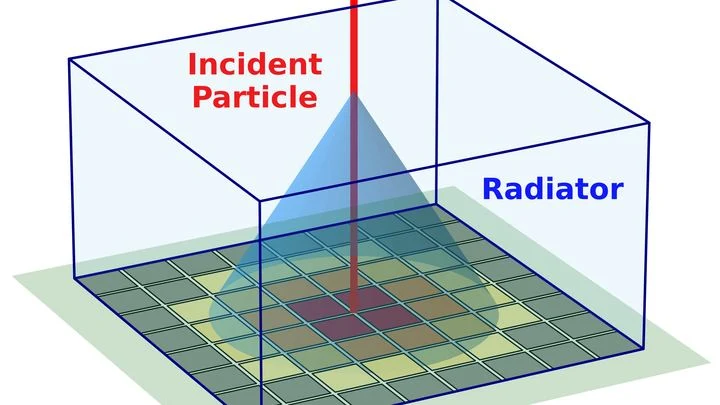
When a particle zips through a transparent material faster than light can travel through it, it leaves behind a faint blue flash, just as a jet breaking the sound barrier creates a shock wave. This Cherenkov radiation fires instantly, with no delay, making it perfect for ultra-precise timing in the world of elementary particles.