Hunting for Genes by a Single Word express
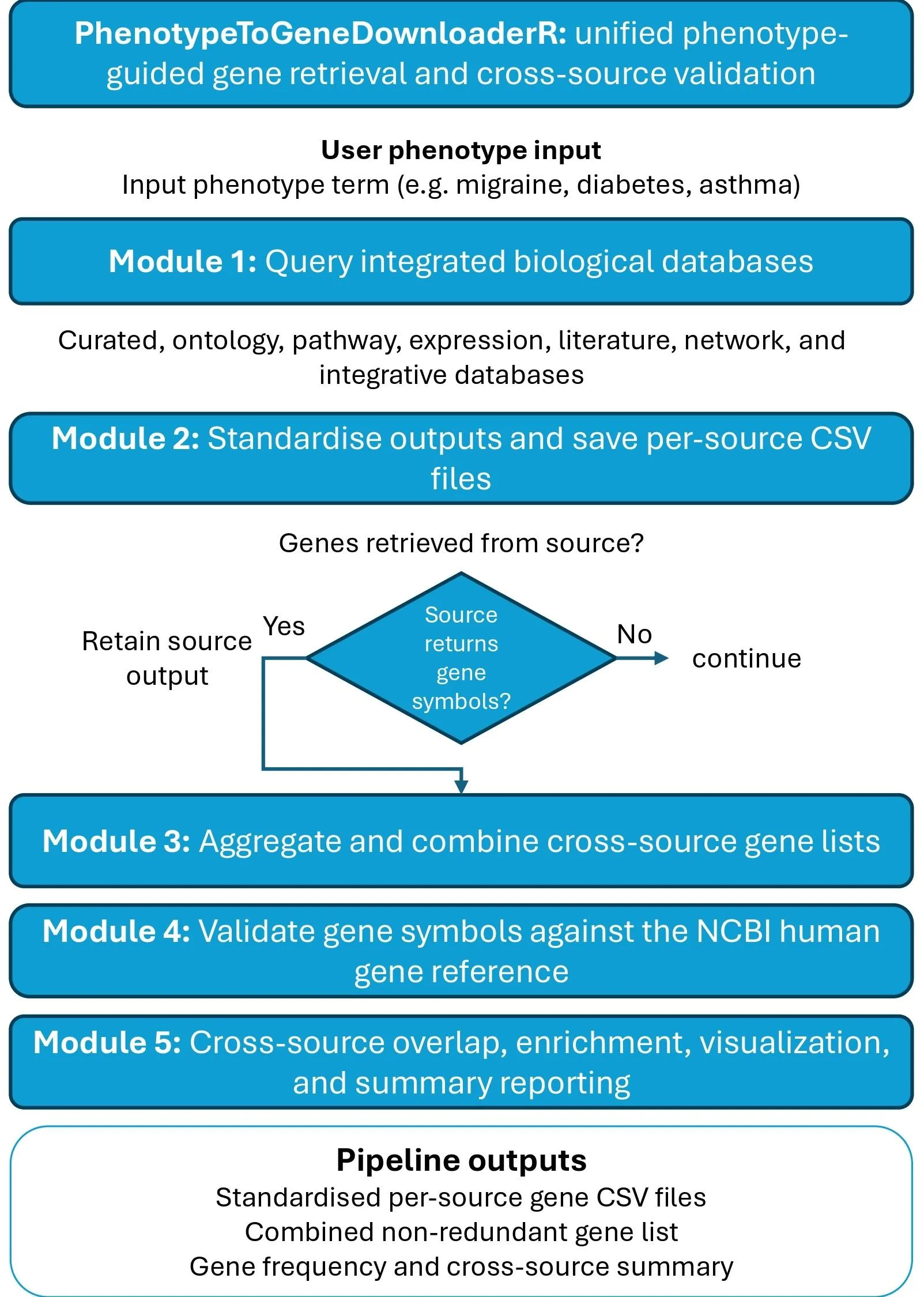
Assembling a puzzle when the pieces are scattered across 13 boxes with different numbering systems: that's roughly what it's like to search for genes linked to a specific disease. The data exist, but they're hidden in databases with their own interfaces, formats, and even descriptive languages. The new program PhenotypeToGeneDownloaderR acts as a translator and sorter: you give it a disease name, and it automatically visits all repositories, extracts gene lists, and brings them to a common denominator.
The collected lists often don't match each other — different databases view the problem from different angles, and that's the strength of the approach: by combining them, we get a more complete picture. When the program was tested against a 'gold standard' of three authoritative sources (HPO, ClinVar, and OMIM), it found 1,039 out of 1,056 known genes: that is, 98.4%. This means almost nothing is missed, and false positives are minimal. Such a tool saves weeks of manual work and reduces the risk of errors when a clinician or researcher manually transfers names from one system to another.
Gene names sometimes change, like street addresses when a city is renamed, and without checking against a fresh reference, you could be citing the 'old house' for years, even though it's no longer on official maps.