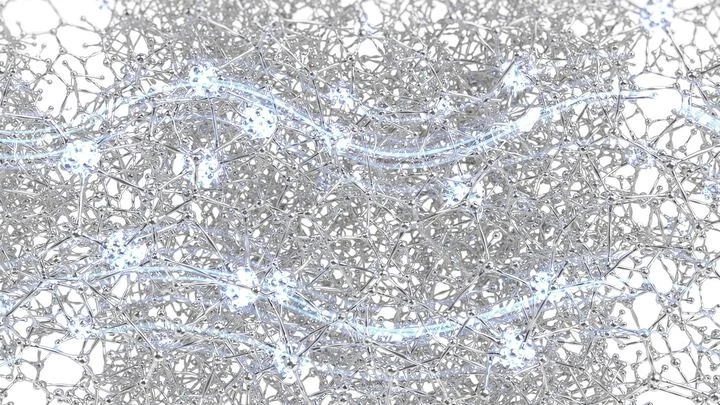
Gene expression noise — stochastic (probabilistic) fluctuations in mRNA and protein concentrations, caused by the small number of molecules and the random nature of biochemical reactions. Intrinsic noise — the inherent variability of transcription and translation processes due to the discrete nature of chemical events — and extrinsic noise — fluctuations in the numbers of transcription factors, ribosomes, and metabolites common to many genes in the cell — are distinguished. Intrinsic noise is usually measured as the squared coefficient of variation (σ²/μ²), and it is inversely proportional to the average number of molecules.
History
The concept of biochemical noise dates back to the work of Max Delbrück (1940s) on mutagenesis. In 1957, Aaron Novick and Milton Weiner experimentally recordedfluctuations of β-galactosidase in E. coli. However, wide recognition came after 2002 with the publication of Elowitz's paper, where using two fluorescent reporters (CFP and YFP) under identical promoters, intrinsic and extrinsic noise were quantitatively separated. Later, studies by Swain and Thatuv (2005–2010) showed the relationship between noise, gene network architecture, and evolutionary fitness. In the 2010s, super-resolution microscopy allowed visualization of individual transcripts in living cells, confirming the bursty nature of transcription (transcriptional bursts).
How it works
Noise is generated at all stages of expression: (1) transcription initiation — the promoter randomly switches between active and inactive states due to local chromatin rearrangements and dissociation of activators (bursts); (2) mRNA maturation and degradation — lifetime is determined by stochastic interactions with RNases; (3) translation initiation depends on ribosome collision with mRNA, which is a rare event in the cell volume; (4) protein secretion and degradation are also variable. Combinatorially, these processes amplify variation, and feedback loops (e.g., negative autoregulation) can reduce noise. In eukaryotes, noise is modulated by epigenetic factors and compartmentalization.
In practice
Explains why bacteria survive antibiotics and why tumors become resistant to therapy; used to create stable synthetic genetic circuits.
Fun fact
Bacteria use noise as a strategy: at any time, a few cells in a colony randomly become resistant to an antibiotic, even without encountering it — thus the population hedges against extinction.
Imagine a large orchestra without a conductor. Each musician hears everyone else and adjusts to the collective hum. If every instrument amplifies its neighbors, the sound builds to a screech; if some occasionally dampen it, the orchestra may fall into silence or break into cacophony.
Two different microphones are recording the same concert. One microphone stands by the stage and mostly picks up the loud sounds from the front row; the other hangs from the ceiling and hears the whole hall, but with the bass muffled. If you compare the recordings, you can figure out how much of the noise in them comes from the microphone and how much from the orchestra itself.
The orchestra starts playing, but each musician has their own tempo. If everyone plays at roughly the same speed, the music flows in a continuous stream. But if one group of instruments plays noticeably slower than the rest, the sound gathers into a dense clump that slowly moves forward.
Under an electron microscope, a protein looks like a series of blurry shadows — hundreds of thousands of images of the same molecule, but from different angles and with heavy noise. Previously, from these shadows, one first assembled a volumetric 'haze'—a map of how electric charge is distributed inside the protein.
As you slowly turn the tuning knob of an old radio, the sound doesn't fade in gradually from the static: it bursts forth in a sudden jump, the moment the antenna hits resonance with the wave. Genes in a living cell behave much the same way.
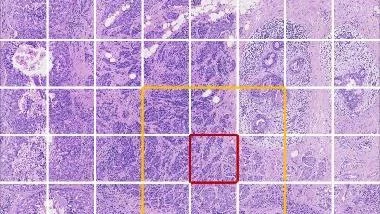
A huge orchestra without a conductor. Each musician is a gene, and the melody is the cell's complex work. Previously, looking at a tissue photo, a computer tried to guess each instrument's part individually. It didn't know that violins usually play with violas, and trumpets with trombones. The program just output a list of notes, without sensing the harmony.
In any complex community, whether an orchestra or a colony of microbes, you can notice a rhythm. In the mouse gut, bacteria change their abundance every day, and for a long time it seemed they were syncing their internal clocks with the host's. But when researchers looked closely at hourly measurements, the familiar picture fell apart.
A protein slides along the DNA strand like a key along a keyring, searching for its lock. One wrong turn and a gene stays switched off. To know where a protein will grip firmly, you need to measure the strength of that grip — the binding energy.
A tuning fork struck once rings pure and long. But if you shake the fork itself while it sounds, the tone wavers and dies out quickly. Something similar happens to electrons in any piece of matter. Atoms in a lattice never stay put: thermal vibrations keep them jittering.
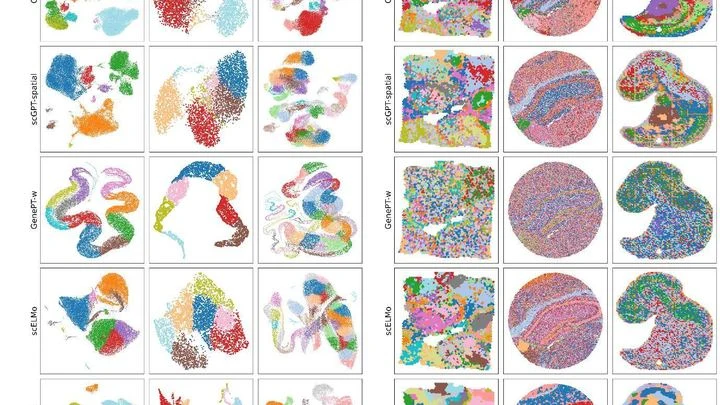
Biologists are increasingly trusting computers to read the "user manuals" of living cells. Six recent AI models (Nicheformer, CellPLM, scGPT-spatial, GenePT, scELMo, and Novae) are like six translators working from different dialects of the same cellular language.
The most abundant construction material on Earth, concrete, hides its deepest secrets at nanometer scales. Its strength and tendency to creep slowly under load are governed by a microscopic gel of calcium silicate hydrate (C-S-H), whose structure is as chaotic as a frozen vortex of atoms.
The cells of an organism are like twin chefs sharing a kitchen. They have the same cookbook (DNA), but when copying the recipe to a cheat sheet and assembling the dish, random errors occur. This unpredictability, entropy, means that in identical cells, protein levels are sometimes high, sometimes low.
In the depths of the Universe, when a massive star collapses into a black hole or a magnetar is born, a gamma-ray burst flares up — for an instant, it outshines all the stars in the observable Universe.
Erwin Schrödinger pondered how life maintains order despite the second law of thermodynamics. He could never have imagined that part of the answer lies hidden in the instability of giant stars.
A laser is like a tuning fork that rings at a single note. But even in complete silence, its sound trembles slightly. Previously, it was thought that this tremor, random kicks from spontaneous emission of light by atoms inside the laser, was the main limit to precision.
Imagine a packed subway car at rush hour. Passengers don't just stand there: they breathe, release moisture, squeeze toward exits, and sometimes get stuck in doors, blocking movement. Now imagine these passengers can remodel the car's walls, add handrails, or turn the floor into gel.
In embryonic development, a cell resembles a musician in a vast orchestra: it must play its part, following a conductor — the gradient of signaling molecules. But the conductor is unreliable: morphogen concentrations constantly fluctuate. How then does a cellist not veer into a violin melody?
60 mice, 1,980 samples, 234 lung cancer patients. Behind each number lie thousands of genes. Their activity is measured to understand the disease. But the data aren’t uniform: for one patient, you assess a protein level (a continuous number), make a diagnosis (yes/no), and determine the tumor subtype (a category).
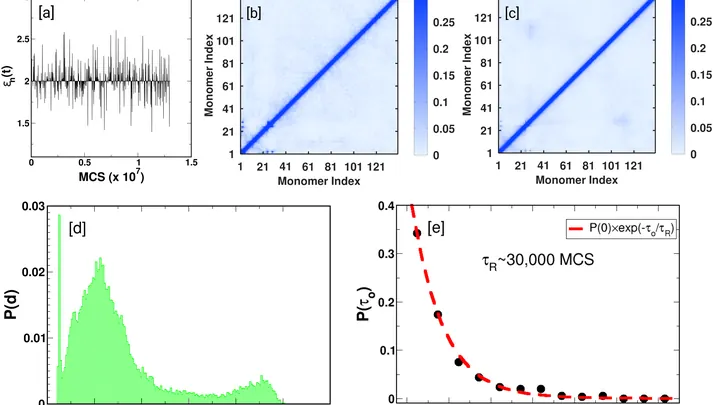
The crumpled DNA thread in the cell nucleus is not a chaotic knot, but an intricate melody played on a polymer string. Modern experiments Hi-C, like highly sensitive microphones, capture the echo of contacts between distant genome regions, turning spatial organization into a two-dimensional probability matrix.
Biological complexity has long eluded us: you can count genes, cells too, but how do you grasp the organization of the proteome itself — a multi-thousand ensemble of proteins woven from carbon, oxygen, and hydrogen?
A quantum computer is like an orchestra where each ion is a musician and laser pulses are the conductor's baton. But if someone in the audience rustles, the delicate melody of quantum states goes off key.
Inside every cell, construction never stops: molecules constantly cluster together and drift apart. Sometimes they form dense droplets, like oil in water, but without a membrane. These droplets act as temporary storage: they hold proteins, gene copies, or DNA repair tools.
Two clouds of ultracold atoms, almost frozen at temperatures of a few nanokelvins, mix in a trap. One cloud consists of light atoms, the other of heavy ones. They push each other differently. Physicists have long been able to describe such mixtures with simple equations, but those work only if the atoms are perfectly identical.
Population growth from a distance looks like a train picking up speed: it crawls at first, then gains momentum. But look closely at the data, and the picture blurs. One measurement shows a dozen individuals, another a hundred. Classical models wipe away this scatter like annoying smudges on a lens. They assume the noise is uniform and simply ignore it.
When the canary in the coal mine falls silent, the miners know: the gas is already here, time to get out. Tumor DNA floating in the blood behaves much the same way. The drug bears down on the cancer, and the level of this DNA drops to nearly zero. The test stops seeing it. The doctor sees 'clean' and breathes easy.
But silence can be deceptive.
A translator doesn't learn a language from a textbook but by listening to live speech and immediately seeing what people do in response to words. That's exactly how the new method C3P reads bacterial DNA. Standard genomic models try to learn the rules by simply "rereading" billions of letters of the genetic code, and often get confused.
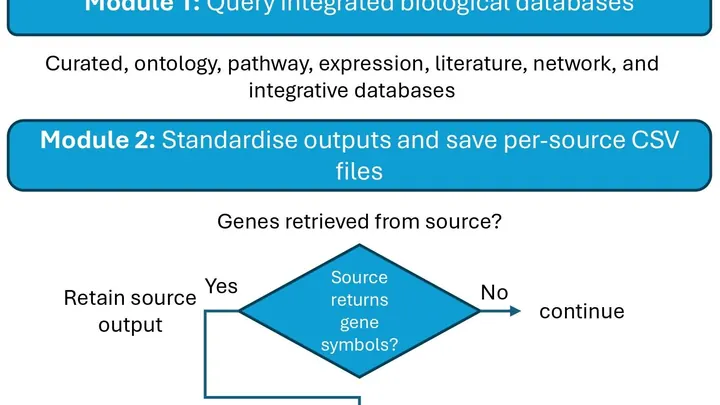
Assembling a puzzle when the pieces are scattered across 13 boxes with different numbering systems: that's roughly what it's like to search for genes linked to a specific disease. The data exist, but they're hidden in databases with their own interfaces, formats, and even descriptive languages.
Imagine a long corridor with an uneven floor: bumps here, pits there. If you roll a toy car along it, it will get stuck in the deepest pit, not where you gave it a push. That's roughly how sound behaves in a phononic crystal — a material made of periodically arranged elements that controls the propagation of elastic waves.
A person hears a ringing that isn't there. The doctor asks them to describe it — loudness, pitch, persistence. But it's subjective: one might say "like a mosquito," another "like steam from a kettle." We need a way to see tinnitus directly, in the brain itself.
Quartz microbalances are thin plates that vibrate at a frequency of five million times per second. When a drop of liquid lands on the plate, the vibration changes: from these changes, you can determine the drop's mass and its elasticity.
Two musicians play a duet. In a perfect hall, they hear each other perfectly and gradually fall into resonance. But try playing in a room where someone keeps slamming the door. You'd think the rhythm would be thrown off. But no: sometimes that very random slam makes both of them sync up instantly.
A drop of ink in a glass of water spreads evenly, but in a cup with chunks of fruit jelly, the ink will take winding paths — sometimes getting stuck, sometimes slipping through. Similarly, molecules in living cells or porous materials don't move on a smooth field but through a disordered medium: denser in some places, thinner in others.
A pot of water sits on the stove. The temperature drops: plus one degree, zero, minus one — the water stays liquid. But at some point, a light breath is enough to make the whole mass instantly freeze into ice. Physicists call such jumps first-order phase transitions.
An orchestra without a conductor. Each musician plays their own part, and the overall volume builds, but the melody falls apart — violins rush ahead, brass lags behind. Cells behave much the same way when their DNA is modified: they may shift, but some move far, while others stay put.
Inside a cell, there are tiny liquid droplets, like oil droplets in water. They form from proteins and RNA and serve all sorts of purposes, from storing molecules to speeding up reactions. But if droplets start merging with each other, you'd end up with one big puddle, which would wreck the cell's organization.
In a growing bacterium, genes that run protein factories don't drift solo. They clump into liquid droplets, like oily smears in water — no membranes, but sharp boundaries. The NusA protein fuels this condensation. When it piles up, it glues neighboring DNA stretches together, forcing them into foci.
A protein in a cell is like a tightly coiled spring. Its shape determines what it does, but seeing that shape in a single molecule without disturbing it was nearly impossible. The new microscope works differently: it sends a short laser pulse that slightly heats the molecule.
In a lab, you measure a very weak signal — say, a tiny change in a magnetic field. The instrument trembles from passing cars, from the experimenter's breathing, from wires heating up. This technical noise can't be fully eliminated, and it sets a limit on precision. An ordinary sensor works like a scale that sways with any draft.
Strike a tuning fork, and it rings with a single pure note. But if the fork is trembling and people are chattering nearby, the sound won't be perfect. Same with molecules: each one absorbs light of a specific color, but due to its own vibrations and the jostling of neighbors, that color gets smeared out.
The authors of the paper figured out how to show this to students without complex formulas.
A piece of dough, when pulled from the sides, doesn't stretch evenly: in one spot it thins and tears. Living tissue behaves similarly, but instead of a tear, shear bands appear — narrow zones where cells begin to slide past each other, like cards in a deck when cut.