Friction in the Early Universe: Saving Inflation express
The idea of inflation, the superfast expansion of space just after its birth, was proposed by Alan Guth in 1980. It explained why our world is so uniform. But fresh snapshots of the Big Bang from the ACT telescope showed a pattern that slightly didn't match the predictions of two leading models.
The solution was found by adding 'friction' to the equations. The field that triggered the expansion behaved like a gas pedal: the harder you press, the more resistance you get. Usually, the energy of motion depends simply on the field's speed, like a rolling ball. But here the connection is more complex: the faster the field accelerates, the more it brakes itself. This adjustment calmed the expansion and brought the theories back in line with observations.
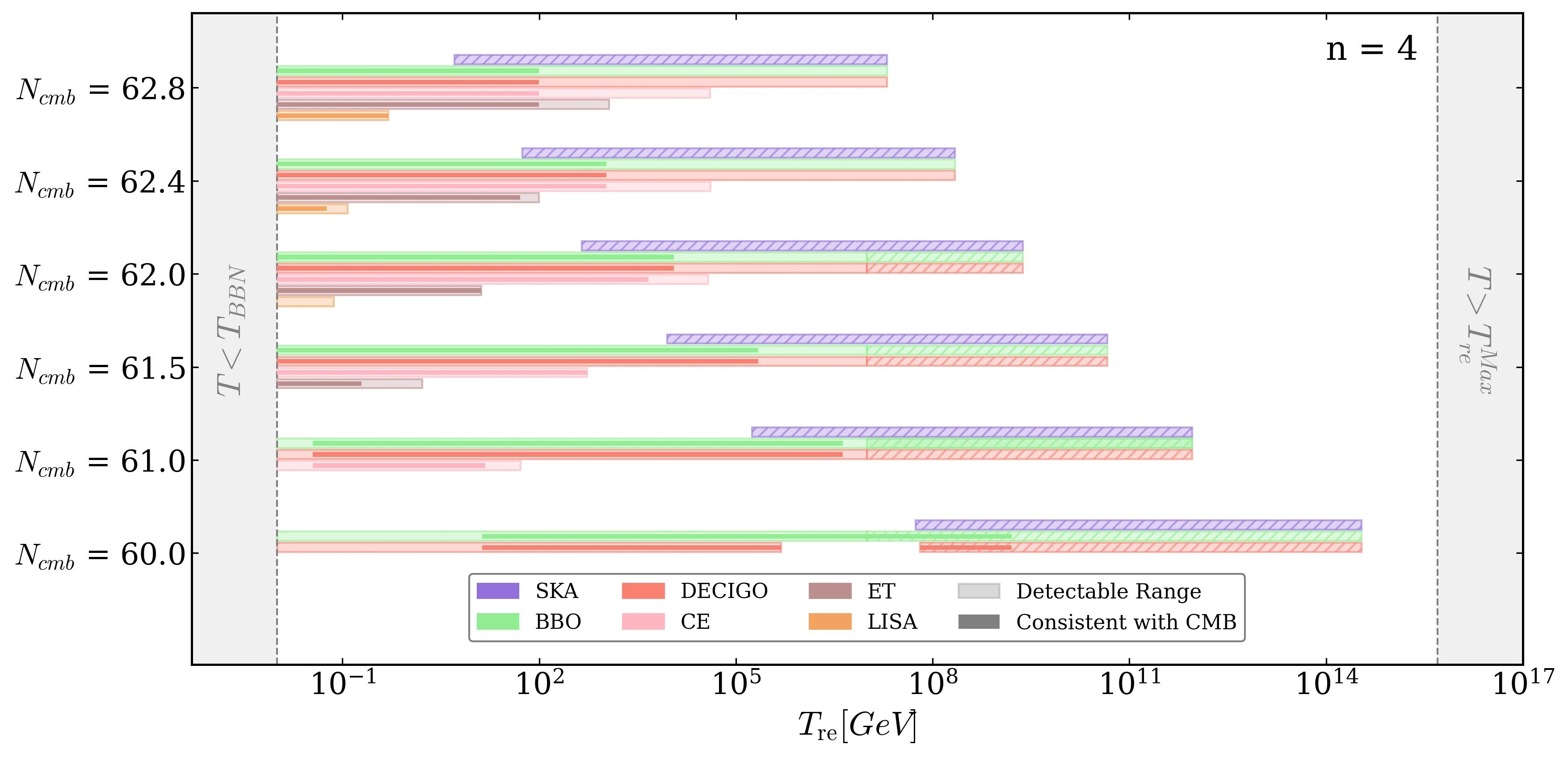
An unexpected bonus: this friction produces a characteristic background of gravitational waves. For one model, it's a hum with predominantly high frequencies; for another, low frequencies. Future detectors like LISA might pick up this echo of space expansion and reveal which theory is correct. It turned out that friction not only saves inflation but also aligns perfectly with the requirements of string theory, a candidate for the 'theory of everything'.
Before it was 380,000 years old, the universe was as opaque as thick fog. The light we see in the cosmic microwave background images is its first 'photo', taken when the fog cleared.
What if, encoded in the gravitational-wave background, there's not only the details of inflation but also the whisper of other universes breaking through the cosmic friction?