How to Tell a Dangerous Mutation from a Harmless One express
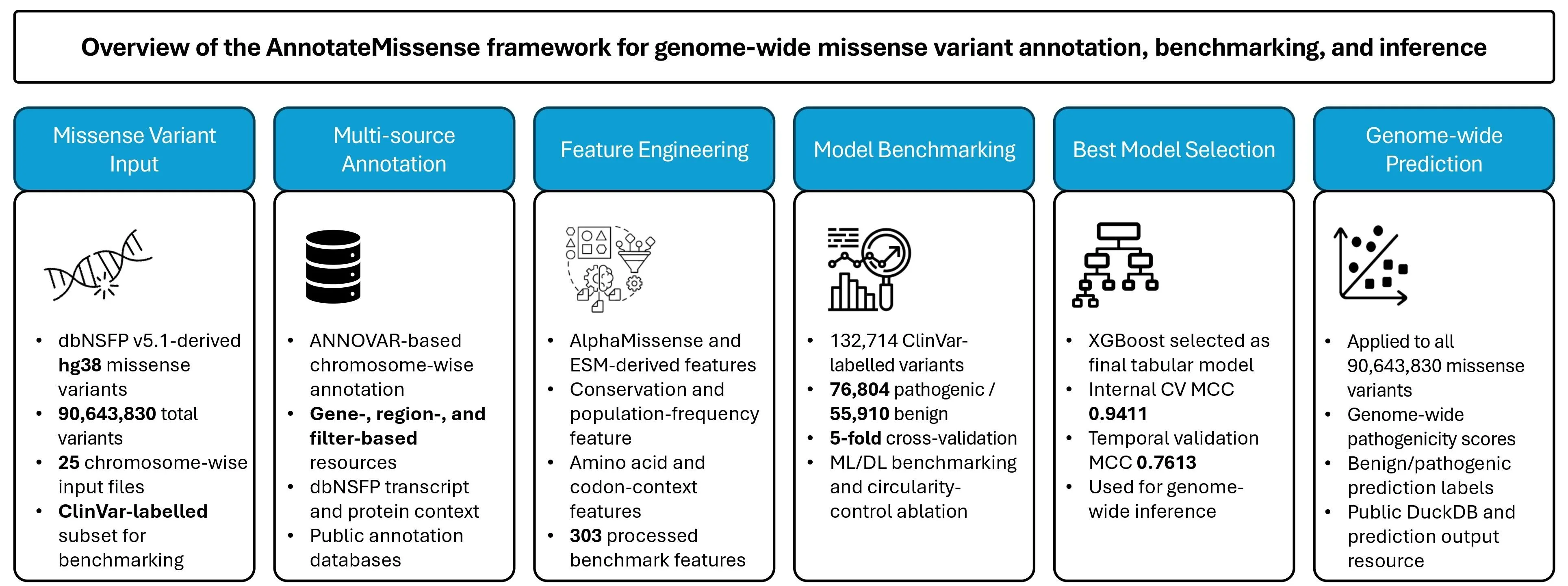
In a vast library where each book is a gene, you need to find a single typo. The error might be harmless, or it might completely change the meaning of the sentence. That's roughly what geneticists do when they hunt for harmful mutations among millions of harmless differences.
The program, named AnnotateMissense, works like a meticulous proofreader. It doesn't just look at the letter substitution itself; it gathers every possible clue: how often this substitution occurs in healthy people, how much the protein's shape changes, what other prediction programs say, and even what evolution's 'handwriting' looks like — whether this region has remained unchanged across species. In total, 303 such clues were collected.
The most interesting part came when the program was stripped of clues. Without data on mutation frequency in the population and without hints from other predictors, accuracy plummeted, like a proofreader losing their dictionary and grammar guide. But removing trendy assessments from protein language models barely affected the results. The final version was tested on fresh data that appeared after training: accuracy remained high at 88%. After that, the program scanned the entire human genome and assigned danger scores to 90 million mutations.
The word 'missense' in the name means the mutation changes just one amino acid in the protein, like swapping one letter in a word. But even such a small change can turn 'house' into 'horse'.
In the movie Gattaca, society was divided into 'valid' and 'invalid' based on genetic predictions — programs like this bring that scenario a little closer to reality.