How to Get Quantum Communication from Nothingness express
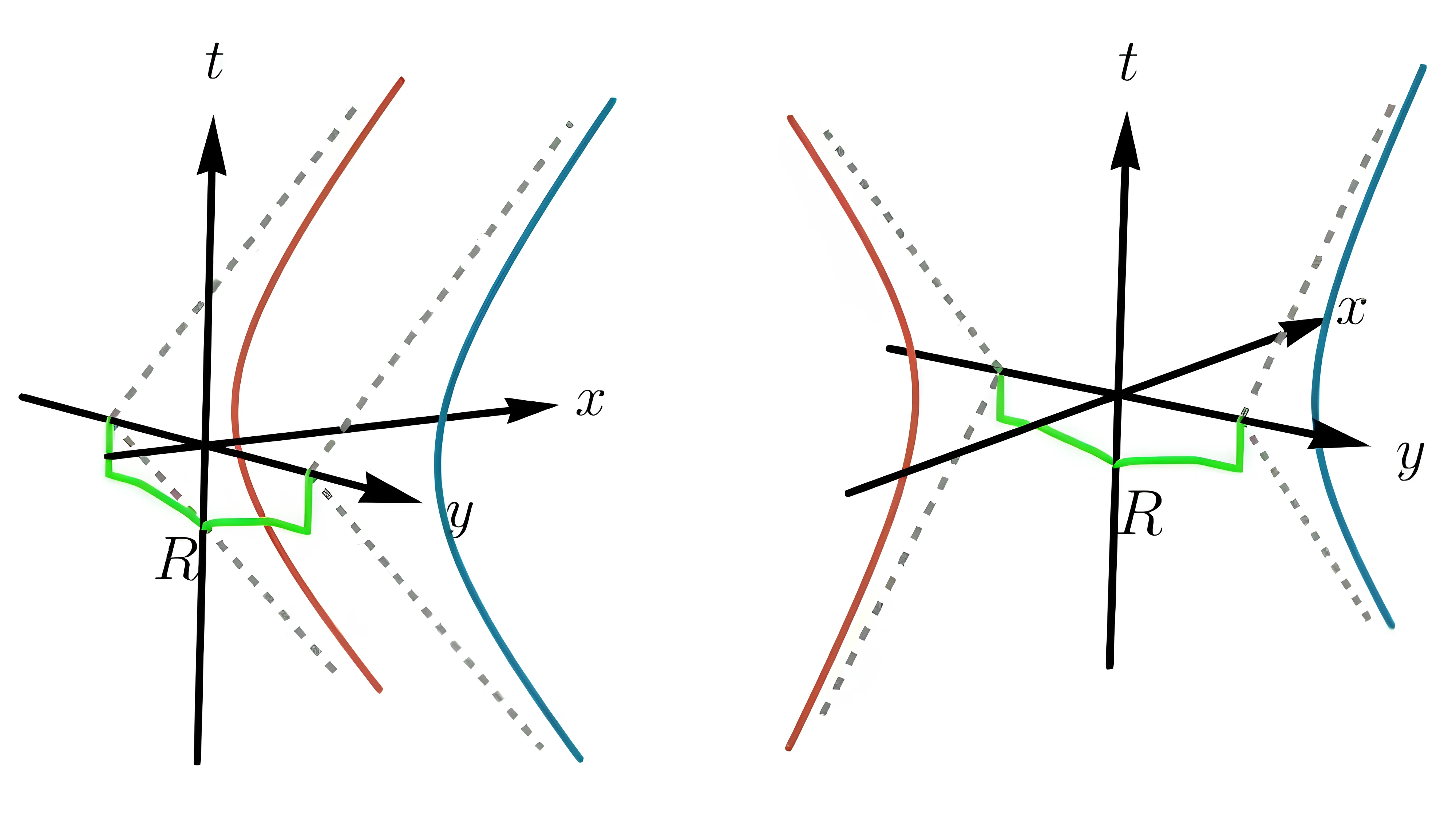
Two antennas in a soundproof room pick up only noise. But if you spin them, especially in opposite directions, a common signal emerges from the static. Quantum sensors in a vacuum work similarly: acceleration helps them pull quantum entanglement out of the void — an invisible link akin to what forms near the horizon of a black hole.
Physicists then made the geometry more complex: first they ‘curled’ the room into a ring, and the signal started arriving from both sides. Next, they superimposed two shapes of the room, like two versions of spacetime, and their interference, overlapping waves, dramatically boosted the entanglement. Surprisingly, sensors accelerated in opposite directions feel each other far more strongly than when moving in parallel.
All this shows that the vacuum isn't empty: it teems with short-lived ghost particles that carry entropy and can weave quantum networks. For now, it's just a theory, but in the future, secure communication channels may be built on such principles.
The quantum vacuum isn't empty: it's populated by ghost particles that pop in and out of existence, building bridges for quantum entanglement.
The idea of extracting something from the vacuum inspires science fiction writers: for instance, the vacuum engines in the series ‘Stargate’ run on the energy of quantum fluctuations.