Where Do Supermassive Black Holes Come From? express
A field sown with seeds. Some seeds are large and sprout at the slightest rain; others are finicky, requiring special soil and rare conditions. Which seeds fall into the ground determines what kind of forest will grow years later. Astrophysicists think about the birth of black holes in the early universe in much the same way.
The James Webb telescope looked back 12–13 billion years and saw black holes with masses of billions of suns. Such giants could not have grown from small seeds in that time: there simply wasn't enough time. So we need "heavy seeds": gas clouds that collapse directly into a hole with a mass of tens or hundreds of thousands of suns, bypassing the star stage. But how often did that happen?
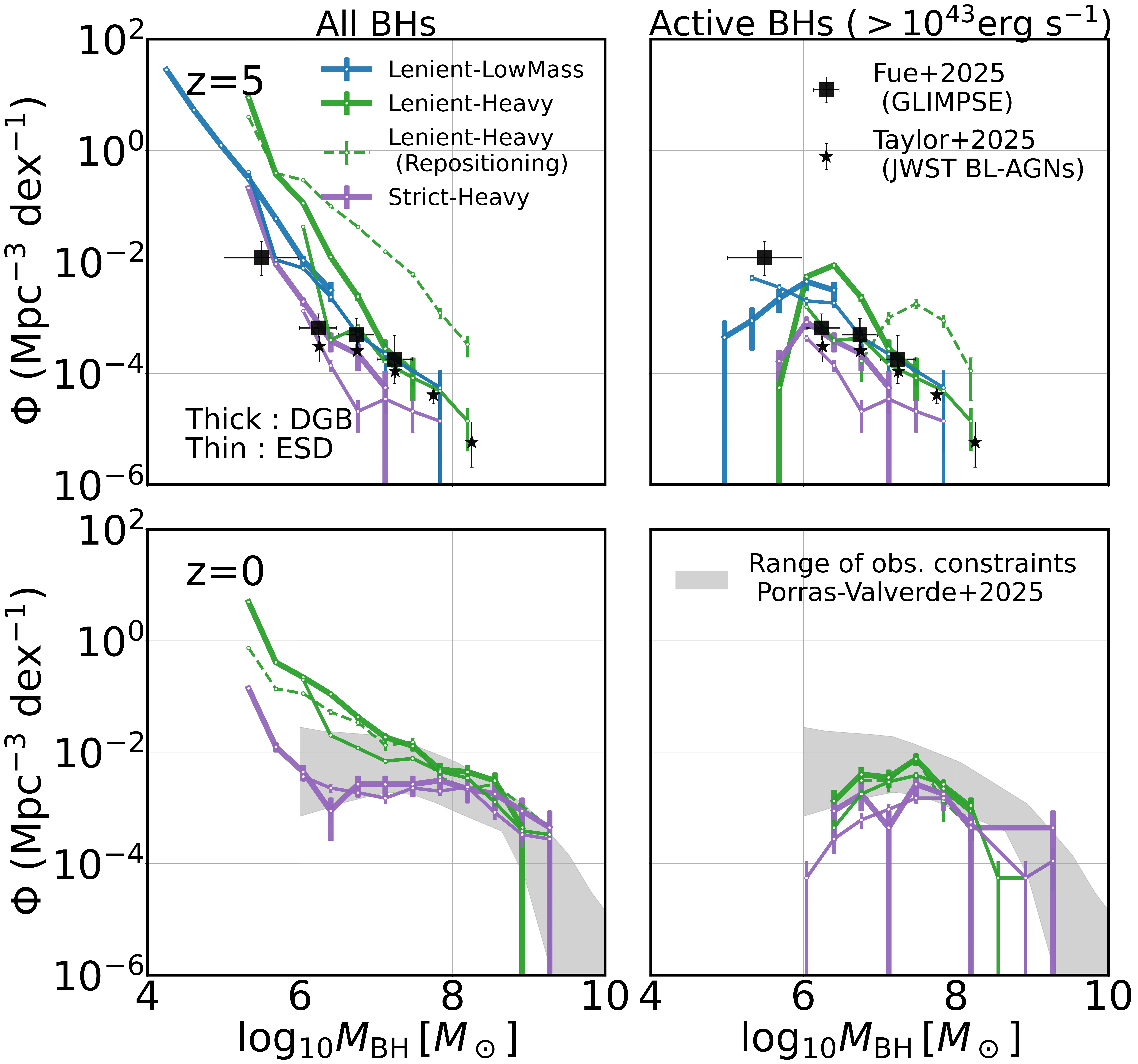
The authors ran three scenarios. In two "generous" versions, seeds appeared in almost every suitable cloud of cold, metal-poor gas. In the "strict" scenario, they formed only under rare circumstances, like direct collapse. By the time the universe was about a billion years old, all models produced roughly the correct ratio of black hole mass to stellar mass in large galaxies. But only the generous scenarios produced many "overgrown" systems where the hole rivals the stars in mass. These are exactly the ones that shine as brightly as those seen by Webb.
The difference becomes crystal clear when you look at mergers. In the generous models, black holes collide frequently — more than a hundred events per year across the observable universe, and almost every galaxy, even dwarf ones, harbors a hole at its center. In the strict model, mergers are rare, and small galaxies almost never host holes. Future gravitational wave detectors will be able to count these mergers and tell us which "seed" was the right one. Thus, the forest of today will tell us about the soil of the past.
In the generous scenarios, black holes exist in almost every galaxy, even those with only a few million stars, like having a skyscraper in every village.
In Terry Pratchett's novel "The Pillars of Creation," the world rests on elephants and a turtle; here, the fate of galaxies is decided by tiny seeds in the first moments.