Paul Torrey

4 articles · 30 co-authors · latest: 2026-06-11
30 citations · h-index 3 · 15 papersData: Semantic Scholar

We have retold 4 papers by this author. most often about: galactic evolution, stellar evolution, expansion of the universe. 30 co-authors across our retellings.

Links in the knowledge graph
Galaxies2025-12-181 minarXiv:2512.16989express
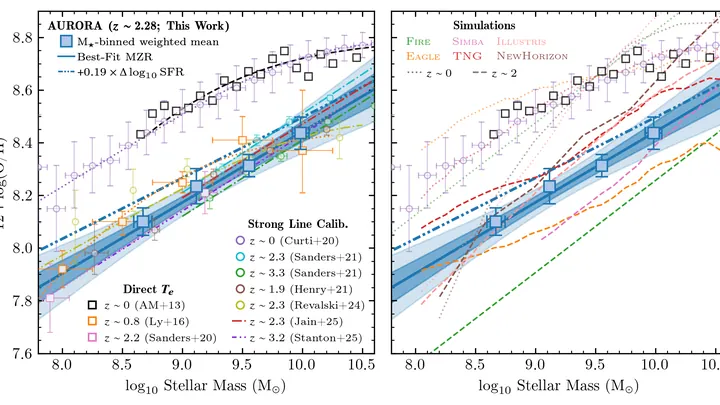
How Galaxies 'Simmered' Metals in the Cosmic Noon Era
Galaxies are like giant kitchens where, in stellar cores, light atoms are fused into heavy ones — much like flour and water becoming bread. When a star dies, it spills its accumulated riches into the interstellar gas, seasoning it with 'spices': oxygen, carbon, iron.
Galaxies2026-04-011 minarXiv:2604.01123express
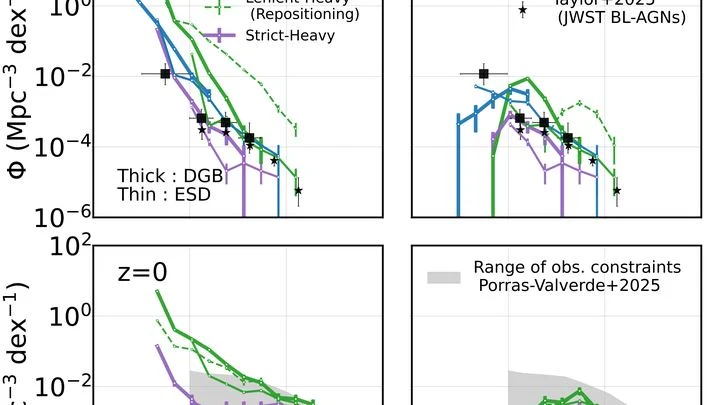
Heavy 'Seeds' and Mergers: The Recipe for Black Hole Growth
The James Webb telescope discovered black holes — so named by John Wheeler, and Karl Schwarzschild described them as a light trap — which, just 500 million years after the Big Bang, already weighed more than a million Suns.
Galaxies2026-04-272 minarXiv:2604.24494express
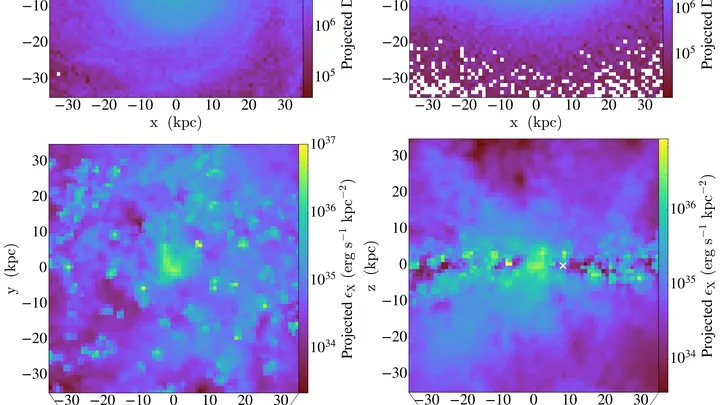
The Milky Way's Hot Halo in Simulation
Around our Galaxy, like an invisible crown, stretches a tenuous cloud of gas heated to millions of degrees. It is called the galactic halo. Seeing this glow directly is difficult: it emits soft X-rays that are absorbed by Earth's atmosphere.
Galaxies2026-06-112 minarXiv:2606.12851express
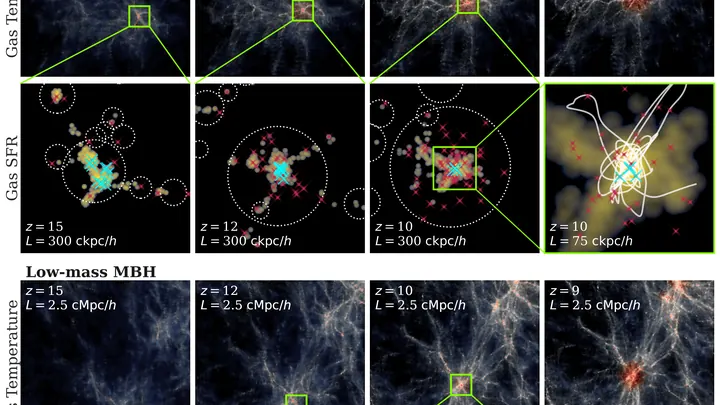
Where Do Supermassive Black Holes Come From?
A field sown with seeds. Some seeds are large and sprout at the slightest rain; others are finicky, requiring special soil and rare conditions. Which seeds fall into the ground determines what kind of forest will grow years later. Astrophysicists think about the birth of black holes in the early universe in much the same way.