Quantum Tunneling: Together or One by One? ✛
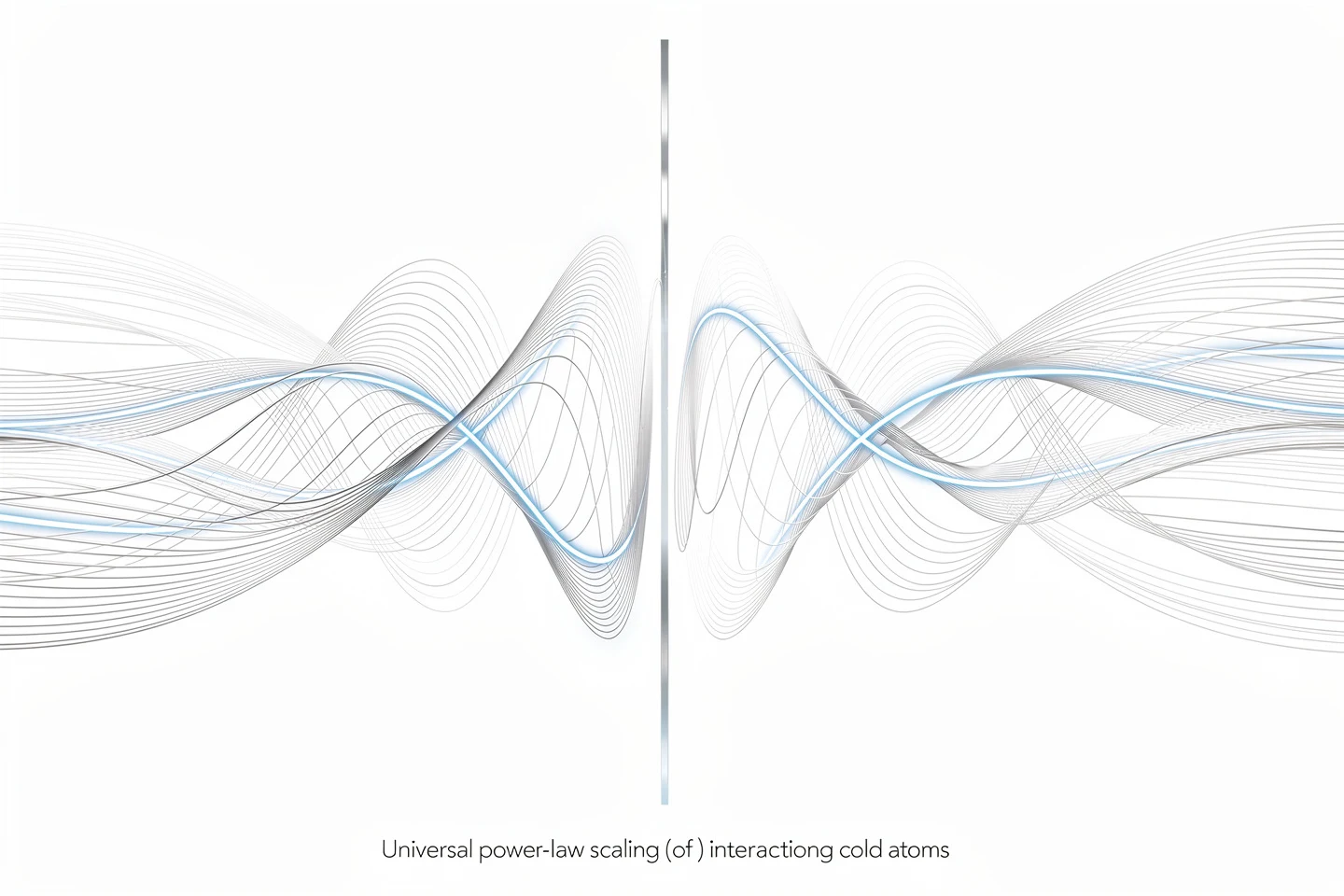
Quantum tunneling is an amazing phenomenon: a particle can pass through a barrier like a ghost through a wall. It's not science fiction but an everyday reality of the microworld that explains, for example, nuclear fusion in the hearts of stars and the birth of elements after the Big Bang. But until now, it was unclear what happens when many particles are involved and they interact. Imagine a crowd of people trying to get through a narrow door: if they hold hands, they go through together, but in a crush, each person pushes through on their own. Quantum atoms behave similarly. Scientists created a Bose-Einstein condensate — a special state of matter at ultracold temperatures where atoms act as one. Using laser lattices, they built a "light maze" and watched atoms tunnel between its cells.
Using computer simulations and precise measurements, physicists confirmed that this shift from collective to individual behavior is described by a single mathematical rule. It depends on how particles sense each other. This discovery not only clarifies fundamental laws of the quantum world but also provides a key to controlling tunneling in superconductors and quantum computers, where such processes determine device performance. In the future, this will enable the creation of more advanced quantum systems and may shed light on the mysteries of high-temperature superconductivity.
If people could tunnel, with weak interactions they'd pass through walls in a group, as if holding hands, and with strong interactions — one by one.