Quantum simulation of physical systems uses quantum computers to model and study complex phenomena that are intractable for classical computers. This includes molecular interactions, plasma dynamics, and even aspects of cosmology. The core idea is that a quantum system can naturally represent another quantum system, allowing researchers to simulate behavior that would otherwise require exponential classical resources. This matters because it offers a path to understanding fundamental physics, chemistry, and biology at a level of detail that is currently impossible.
History
The concept was proposed by Richard Feynman in 1982, who noted that quantum systems are best simulated by other quantum systems. Early experimental implementations began in the late 1990s and have advanced significantly with the development of programmable quantum devices in the 2010s.
How it works
A quantum simulator encodes the problem's parameters into the state of a controllable quantum system, such as trapped ions, superconducting qubits, or ultracold atoms. By manipulating these qubits according to the target Hamiltonian, the system evolves in a way that mimics the real physical process. Measurements on the simulator then reveal properties of the simulated system, such as energy spectra, phase transitions, or dynamical behavior.
In practice
It is used to study high-temperature superconductivity, protein folding, and plasma behavior, with potential applications in drug design and materials science.
Fun fact
Quantum simulators have been used to observe the 'long-term memory' of plasma, a phenomenon that classical simulations struggle to reproduce.
Quantum tunneling — the ability of particles to pass through barriers forbidden by classical physics — powers stars with thermonuclear fusion, ignites primordial nucleosynthesis, and gives us flash memory.
In the 1990s, philosopher John Searle devised a thought experiment: a person sits in a room and, without knowing Chinese, follows instructions to produce correct answers in Chinese. From the outside, it seems they understand the language, but inside, it's just mechanical rule-following.
Understanding the photoelectric effect — where light knocks electrons out of a material — is like learning to cook without a recipe. That’s where digital tools help: games provide intuition, and simulations provide precision.
Energy transfer in photosynthesis is like a children's slide: it bends under the weight of one, reshaping the path for the next. That's what happens in a leaf: an excited molecule instantly reshapes the 'landscape' of its neighbors.
Physicists reproduce this effect using ions suspended in a vacuum trap.
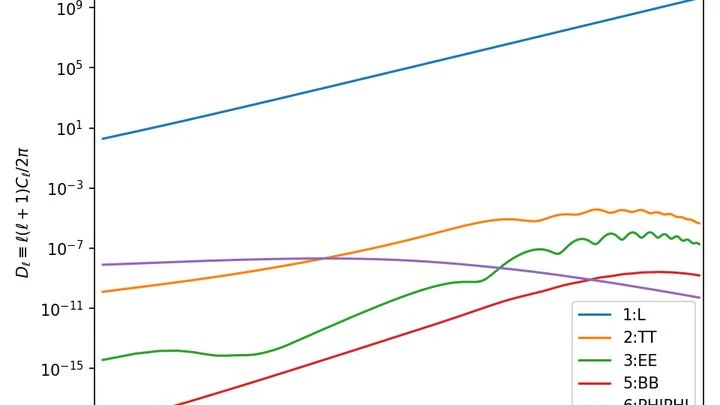
The Universe's expansion is accelerating, and maybe gravity doesn't work the way we think. Physicists come up with alternative theories, but to test them, they need to calculate how ripples after the Big Bang grew into galaxies. Such calculations involve long equations with hundreds of terms, where it's easy to get lost.
Quantum computers promise to solve problems that regular computers can't. But where is the line? The authors of a new study stumbled upon a surprising case: electrons paired up behave like a well-behaved orchestra. Even if you add a bit of "magic"—a special quantum resource: their behavior remains predictable.
Inside an exploding star, neutrinos race so densely that they start to influence each other. Their quantum states become entangled, like threads in a tight ball where you can no longer tell which is which. Ordinary computers struggle with this task, as the number of possible states grows avalanche-like.
Magnetic monopoles are like halves of a magnet that cannot exist alone in ordinary materials. But in spin ice, they appear in pairs connected by an invisible thread — a Dirac string. Previously, such monopoles were only seen in artificial systems at room temperature, but their quantum motion remained a mystery.
A laser beam holds a single ion in a vacuum, and that ion behaves like a ball trapped between two cups. The cups aren't pits in the ground but regions where the ion energetically prefers to be. In the classical world, a ball would roll into one cup and stay there.
A pot of water on the stove is just water, but inside each molecule, a continuous dance goes on. Hydrogen and oxygen atoms jitter, even at absolute zero, because that's how the quantum world works. These jitters change how much heat water stores and how it flows.
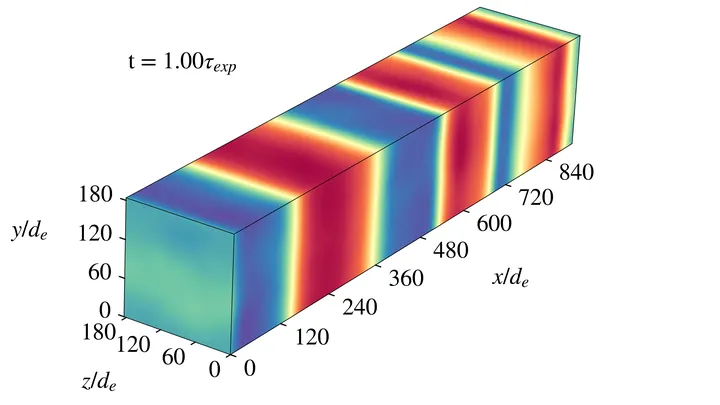
Plasma is a gas in which electrons are stripped from atoms, and it conducts electricity. In space, such gas is often so rarefied that particles rarely collide, and its behavior is described by the equations of motion for each particle. The computer method Particle-in-Cell (PIC) does exactly that: it tracks millions of particles and the electric fields they create.
A quantum computer made of trapped ions played the role of a tiny universe. In it, particles didn't just move; they wove into knots that change their properties when swapped. Such knots are called Fibonacci anyons: they aren't ordinary particles but rather vortices in the fabric of space.
Plants employ an army of perfect couriers to deliver energy. Each photon of sunlight is absorbed, and its energy is instantly, with almost no loss, transferred to reaction centers where nutrient synthesis occurs.
Intelligent action begins with a plan. Just as an architect needs blueprints to evaluate options, any agent with will needs to repeatedly copy data about reality.
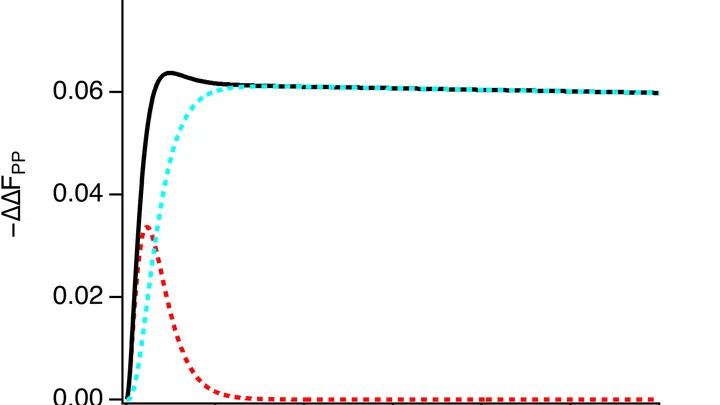
Inside every living cell, chemical transformations are constantly taking place. Some of them create unstable particles whose electrons behave like paired magnets. Their interaction resembles a dance: each movement of the pair responds to external magnetic fields, as if to a changing rhythm.
Two vortex rings launched one after the other pass through each other and swap places. This dance, first seen in the 19th century with smoke rings, has now been reproduced on a quantum processor. Vortices are the actors on a quantum stage where time plays the role of an extra dimension.