Low temperature, in physics, refers to a range significantly below ambient conditions, often approaching absolute zero (0 Kelvin, -273.15°C). At these temperatures, quantum mechanical effects become macroscopically observable, such as superconductivity, superfluidity, and Bose-Einstein condensation. Low temperatures are essential for studying the fundamental properties of matter and for operating sensitive quantum devices, as thermal fluctuations are suppressed, allowing fragile quantum states to persist.
History
The concept of absolute zero was first proposed by Guillaume Amontons in 1702, and the Kelvin scale was introduced by William Thomson (Lord Kelvin) in 1848. The first successful liquefaction of helium was achieved by Heike Kamerlingh Onnes in 1908, which opened the door to reaching temperatures below 4 K. Onnes later discovered superconductivity in 1911 while studying mercury at these low temperatures.
How it works
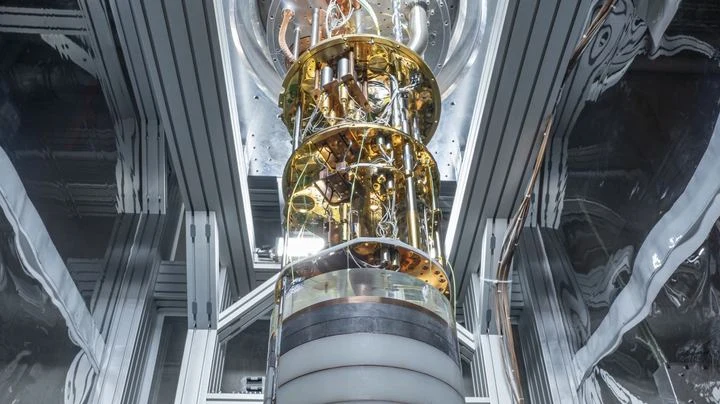
Cooling matter to low temperatures is typically achieved using cryogenic techniques, such as using liquid helium (boiling point 4.2 K) or dilution refrigerators that can reach temperatures below 0.01 K. At these temperatures, the thermal energy (k_B T) becomes smaller than the energy scales of quantum interactions, so the system's behavior is governed by quantum mechanics rather than classical thermal motion. This allows for the observation of phenomena like superconductivity, where electrical resistance drops to zero, and quantum entanglement, which is otherwise destroyed by thermal noise.
In practice
Low temperatures are used in quantum computing to maintain qubits in their coherent states, in MRI machines to cool superconducting magnets, and in particle accelerators to operate superconducting cavities. They are also essential for studying the cosmic microwave background radiation and for detecting dark matter particles.
Fun fact
At temperatures below 2.17 K, liquid helium becomes a superfluid with zero viscosity, allowing it to flow through microscopic cracks and even climb up the walls of its container.
Units by system: SI: kelvin · CGS: kelvin · Planck: planck temperature · natural: kelvin
Quantum tunneling — the ability of particles to pass through barriers forbidden by classical physics — powers stars with thermonuclear fusion, ignites primordial nucleosynthesis, and gives us flash memory.
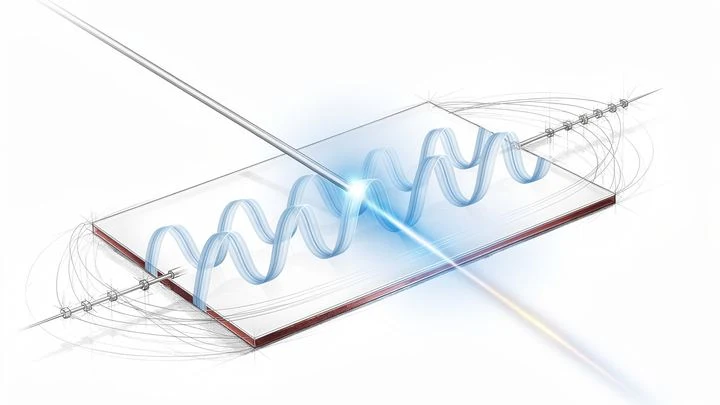
Quantum technology urgently needs a universal 'translator' between the languages of microwaves and light. Superconducting qubits communicate on centimeter wavelengths, while photons in optical fiber talk at optical frequencies.
At the center of many galaxies lurks an invisible halo of dark matter: it holds the stars at the edges, keeping them from flying apart. For a long time, it was described as a dilute gas of particles, but new work offers a different view: dark matter might gather into a quantum droplet.
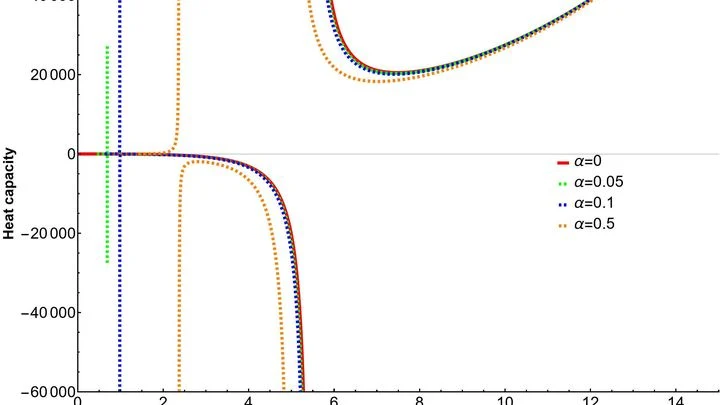
An ordinary black hole is like a stove that heats up more as its mass shrinks. A tiny hole should glow at unimaginable temperatures and evaporate in an instant. But that scenario ignores quantum corrections — what happens when the very fabric of spacetime begins to tremble.
In the first moments after the Big Bang, the universe was a boiling soup of elementary particles. Even the light neutrinos were actively colliding with everything around. But the rapid expansion cooled this soup, and the neutrinos broke free, becoming almost indifferent to the surrounding world.
A tuning fork grows quieter not because someone stops holding it, but because the very hand that strikes it creates an invisible haze around it that damps the vibrations. A superconducting resonator behaves much the same way — a tiny track along which a microwave signal runs with almost no loss.
A superconductor is a material through which current flows without loss, like water through a perfectly smooth pipe. But to make the pipe perfect, you have to cool it to very low temperatures. Physicists have long been looking for ways to make such a pipe at warmer temperatures, and one clue is the quantum critical point.
In superfluid helium, a vortex is like a tornado in a bottle, but instead of water, it's a quantum liquid that flows without friction. Such a vortex doesn't dissipate on its own, so the question of where its energy goes has long remained open.
Water in a cup cools down in minutes. Gas in a room spreads evenly in seconds. But if you trap atoms in a tube as thin as a laser beam and give them a good kick, they will take several seconds to "cool" toward equilibrium — an eternity by atomic standards.
In a dark chamber where the temperature sits just four degrees above absolute zero, a sapphire crystal the size of a grain of rice lies waiting. When a neutrino, a ghostly particle that barely notices matter, flies through it, the crystal shudders and warms by a tiny fraction of a degree.
A tiny cloud of 300,000 ytterbium atoms, cooled to near absolute zero, was shuttled along a light track 34 centimeters long, like transporting a fragile cargo over a bumpy road without shaking it apart.
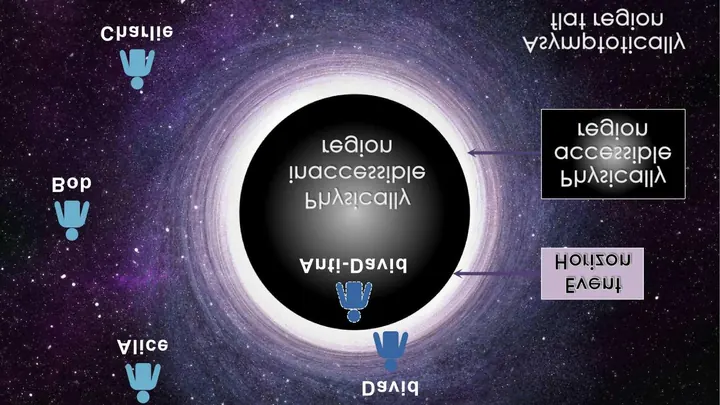
Fragile as ice in a furnace, quantum entanglement usually perishes from the slightest heat. Near a black hole, where space is twisted by Einstein's gravity and Hawking radiation Hawking's heats things up, any bond should be destroyed.
Light and matter in the tiny world obey laws that are hard to compute even on a supercomputer. Physicists build special "quantum simulators"—setups where cold atoms play the roles of particles and fields. But until now, such simulators could only depict the field in its simplest form: as if it were either present or absent.
Cooling usually brings order: water freezes into ice. But in the quantum world, order takes unexpected forms. Experimenters cooled polaritons — particles that are both light and matter — to near absolute zero.
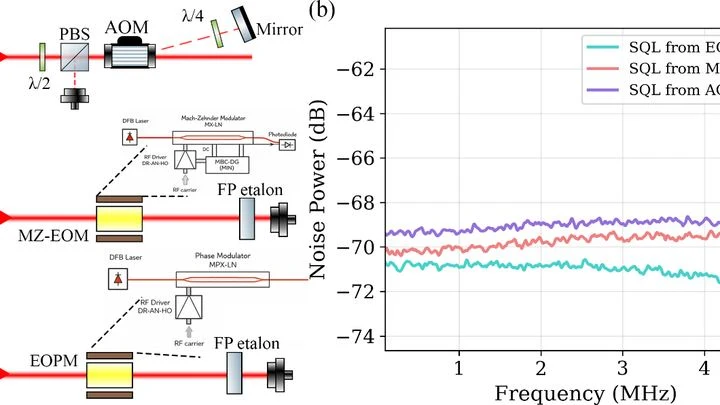
Ordinary light is a stream of photons flying every which way: sometimes more, sometimes fewer, and in that chaos, measurement precision gets lost. Physicists have learned to "tame" this stream by creating squeezed light — where the noise in one characteristic drops below the vacuum level.
A quantum computer is like an orchestra that can only perform in complete silence. The slightest noise, and the delicate melody falls apart. For quantum devices, heat is that noise: even faint infrared radiation from nearby components heats up the qubits and erases their quantum states.
Spacetime at ultra-short distances resembles a digital screen: it's not smooth but made of tiny 'pixels.' This minimum length was calculated by Max Planck, and Heisenberg's uncertainty principle explains why the world cannot be continuous: precise measurement always…
A qubit, the heart of a quantum computer, is like a soap bubble: the slightest puff and it bursts. On Earth, gravity pulls bubbles down, creating vibrations, and the thermal hustle of atoms adds jitter. Entropy, the measure of this chaos, destroys quantum information.
Quantum entanglement is a fragile resource. Heat a system, and thermal fluctuations will tear the delicate threads of correlations: at a sufficiently high but finite temperature, the Gibbs state of a local Hamiltonian becomes separable, that is, representable as a probabilistic mixture of products of local states.
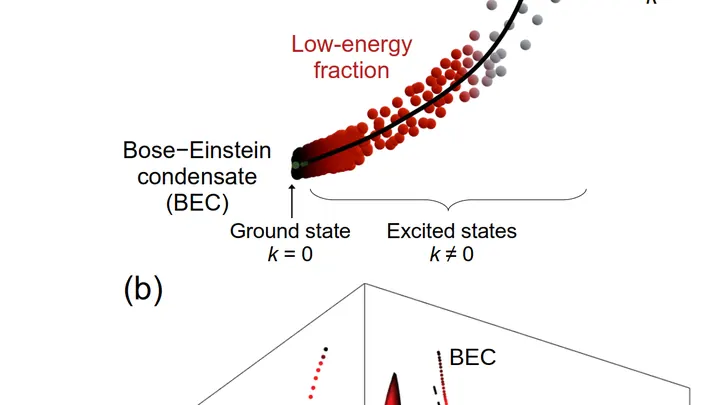
In laboratories on Earth, Bose-Einstein condensates are created by cooling a cloud of atoms to billionths of a kelvin. The atoms lose their individuality and merge into a single quantum wave that behaves as one entity. But in space, such conditions are not needed: gravity itself creates deep wells where matter compresses and cools into a state of quantum fog.
In a dark room, a laser beam draws a bright spot on the wall. Light seems warm and uncontrollable, but for three decades physicists have used it as a conductor's baton, making atoms dance in unison.