Map of Stellar Nurseries: Program Outlined 6410 Clusters in the Fireworks Galaxy ✛
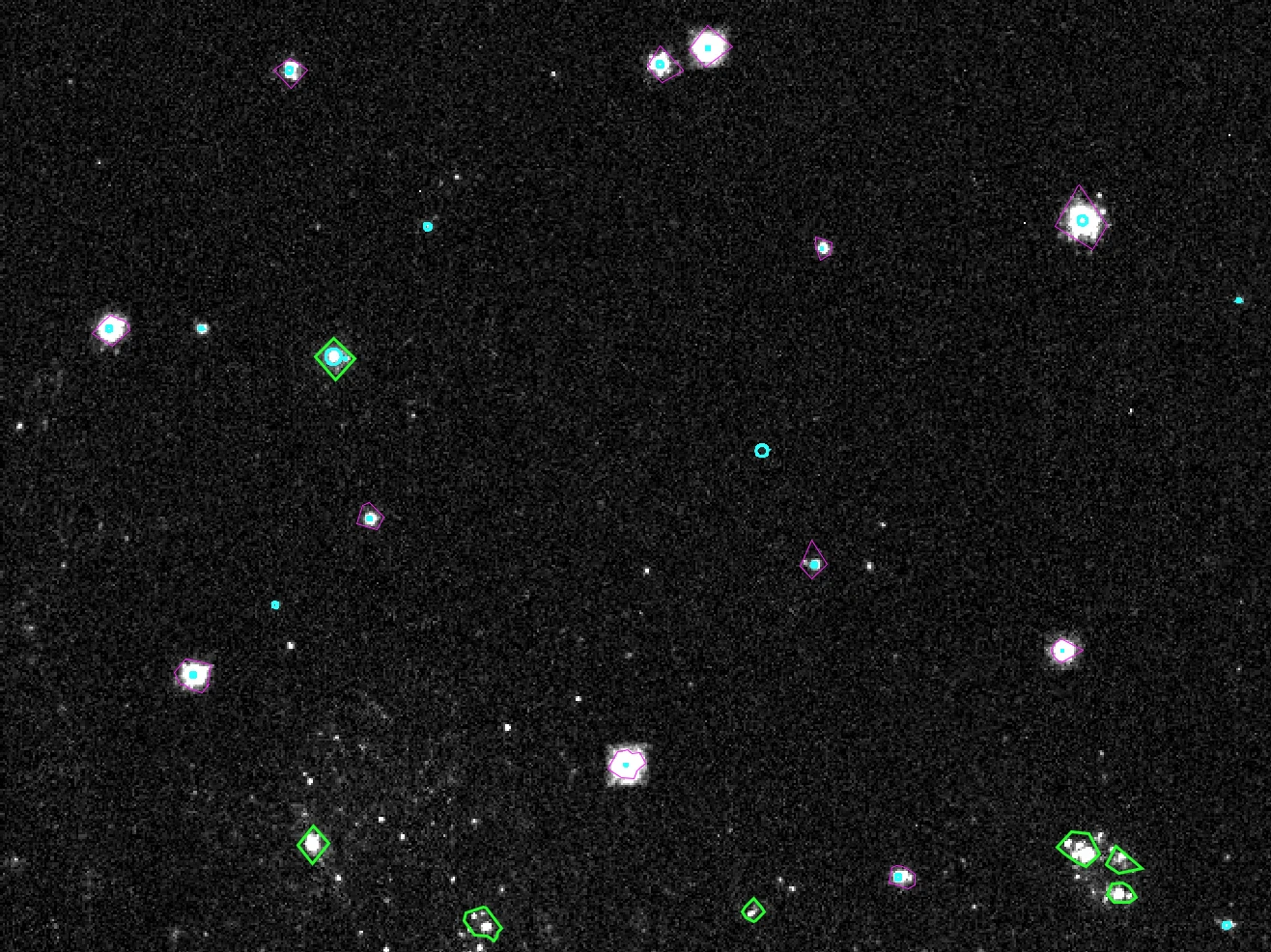
The Fireworks Galaxy was imaged in ultraviolet. This invisible light (shorter than violet) picks out only young, hot stars. In the Hubble telescope images: a scatter of points. How to tell where a cluster is versus a random bunch? The cartographer program turned the points into a density map: stellar 'hills' and 'valleys'. Then it drew lines where density drops sharply — thus yielding the boundaries of 6410 star birth sites.
They measured the brightness and size of these clusters. It turned out that small stellar nurseries are fewer than expected — the slope of their count plot is steeper than usual. Perhaps faint clusters in NGC 6946 lose stars faster. Now, with a ready contour map, astronomers can check this on other galaxies.
NGC 6946 truly earns its Fireworks nickname: over the past century, it has produced 10 supernovae, more than any other known galaxy, making it a perfect laboratory for studying the link between the birth and death of massive stars.
The motif of galactic fireworks calls to mind scenes from Dan Simmons’ Hyperion, where entire star clusters become the stage for interstellar conflicts and ultraviolet bursts serve as beacons of ancient civilizations.