Scientist

Rashid Alievich Sunyaev

1943–present · astrophysics, cosmology
Soviet and Russian astrophysicist, known for predicting the Sunyaev-Zel'dovich effect, which allows observing galaxy clusters through distortions of the cosmic microwave background. He made fundamental contributions to relativistic astrophysics and accretion theory.

Biography

He studied at the Moscow Institute of Physics and Technology, a student of Yakov Zel'dovich. He worked at the Space Research Institute of the Russian Academy of Sciences, head of sector. Laureate of numerous international awards, including the Breakthrough Prize in Fundamental Physics.

Key discoveries

💡 The Sunyaev-Zel'dovich effect allowed astronomers to create catalogs of galaxy clusters visible from the farthest distances.
"He saw the cosmic microwave background as a window into the history of the Universe, and noted that galaxy clusters leave their imprint on it."
Concepts
galaxy clusterbig bang
Laws
Sunyaev–Zeldovich effect
Scientists
Arno PenziasRalph AlpherStephen HawkingEdwin HubbleFred HoyleGeorges LemaîtreGeorge GamowBrian Schmidt

Related articles

Dense Connections vs. Residual Paths: How DenseNet-121 Outperforms ResNet-50 in Brain Cancer Detection
A brain tissue slice is just 5 microns thick, twenty times thinner than a human hair. On such a slice, a pathologist looks for signs of a tumor: altered nuclear shapes, cell crowding, abnormal blood vessels. It is painstaking work, and two specialists can disagree on the same image.
All tracks at once: how LHCb reads the birth of B mesons in full
In 2016, the LHCb detector at the Large Hadron Collider recorded millions of proton-proton collisions. Among the debris of these collisions, neutral B mesons were born—particles that can spontaneously transform into their antiparticles and back.
High Energy2025-12-181 minarXiv:2512.16568express
Intermediate-Mass Black Hole: The AT2018cqh Flare as a Key to the Missing Link
When a star wanders too close to a black hole, an object with gravity so intense that not even light can escape, tidal forces shred it like dough caught in a mixer's beaters. This event, known as a tidal disruption event (TDE), unleashes a powerful flare of radiation.
Threads in the Flow: How Noise Creates Order and Chaos
A thin thread in a water flow is like a hair in a shower stream. If you jerk the water back and forth, the hair either stretches out with the flow or crumples up. The researchers took real protein threads (actin, which makes up muscles) and placed them in a microscopic channel where the fluid oscillated at different frequencies.
Medical Physics2026-01-021 minarXiv:2601.00685express
Brain Radiation Therapy: One Click Instead of Manual Setup
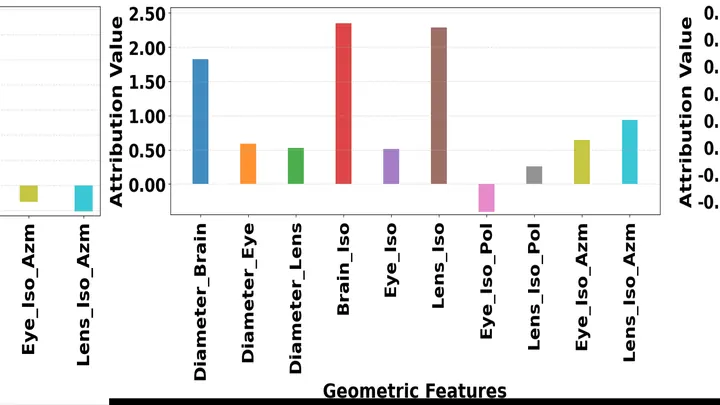
When a tumor affects the entire brain, doctors irradiate the whole organ. It's a reliable method, but setting up the radiation is painstaking: you need to adjust parameters so the tumor gets the right dose while the eyes and lenses suffer as little as possible. A specialist typically spends about 15 minutes manually tweaking settings in the software.
Mesoscale2026-01-031 minarXiv:2601.01074express
The Tip That Listens
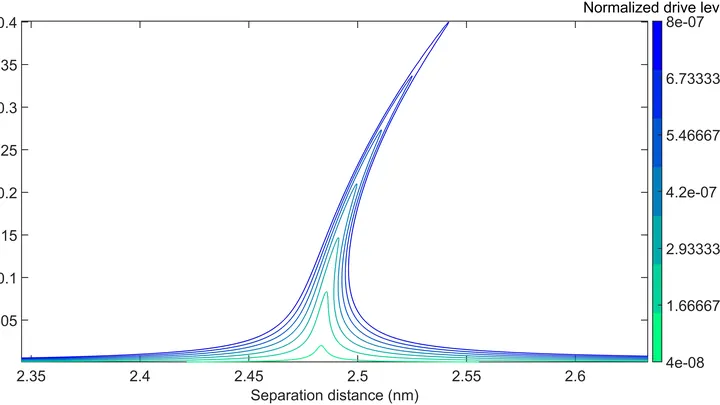
The tip of a tunneling microscope hovers above a surface at a distance smaller than the diameter of an atom. Usually, it feels out the topography like a finger reading a page of Braille. Now, that same tip has learned to listen to how a membrane the size of a fingernail trembles.
Chemical Physics2026-01-031 minarXiv:2601.01135express
Ion Transistor in a Nanopore
In a narrow slit between two plates, ions don't behave like free particles but like a crowd in a packed bus: pressed tightly together, they form dense clusters. This very property, the ability of ions to bunch up in extremely confined spaces, underpins a new mechanism for controlling ion transport. Researchers studied ion behavior in two-dimensional nanochannels just a few atoms wide.
Machine Learning2026-01-111 minarXiv:2601.07035express
How MRI Predicts Chemotherapy Response in Glioblastoma
Glioblastoma, a brain tumor, is a tricky foe: in some patients, the drug temozolomide works, while in others it barely helps. The difference often lies in a small stretch of DNA — the MGMT gene. If this region is chemically switched off (methylated), the tumor is worse at repairing its cells, and the drug hits harder.
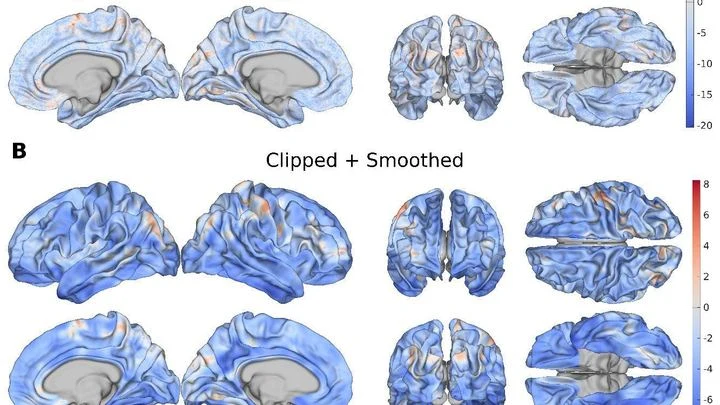
A Map of Brain Aging
The cerebral cortex is like a crumpled sheet of paper: it has thickness, curves, and folds of varying depth. With age, this sheet changes unevenly — thinning in some places, losing the sharpness of its folds in others. Previously, doctors assessed brain age as a whole, as if looking at the sheet from a distance.
Medical Physics2026-01-211 minarXiv:2601.14654express
A Crystal Keeps an Eye on the Proton Beam
Treating cancer with a proton beam is a bit like archery: you need to hit the bull's-eye without hitting anything else. Protons release their energy at the end of their path, so healthy tissues are largely spared. But to make the shot safe, every treatment plan is checked in advance — measuring the dose the tumor will get and what the surrounding organs will receive.
Machine Learning2026-01-213 minarXiv:2601.15530express
Catching Alzheimer's Without a Poke
A detective is looking for a criminal in a file of mugshots, but the portraits are mixed up. Usually, they expect a man with a gray beard, but the culprit is young and clean-shaven. Similarly, doctors often fail to recognize Alzheimer's disease in those who show unusual symptoms — not memory loss, but problems with vision or speech.
Computer Vision2026-01-242 minarXiv:2601.17504express
Brain Tumor on Scans: Where Certainty Ends
Brain tissue on a scan looks like a stormy sky: bright patches, dark hollows, blurred edges. The tumor hides among these patterns, and the doctor needs to outline its contour to plan surgery or radiation. One MRI mode highlights edema, another the tumor core, a third dead areas.
Medical Physics2026-01-261 minarXiv:2601.18219express
Diagnosis Without Lenses: Breast Cancer Seen Through Shadows
In a dark room, on a table, sit a laser pointer, a piece of glass with tissue, and an ordinary phone camera. Light passes through the sample, and the image shows not cells but a pattern of bright and dark stripes, like the shadow of leaves on a wall.
Machine Learning2026-01-272 minarXiv:2601.19876express
Predicting a Vessel Rupture in Seconds
An aneurysm is a weak spot in a blood vessel wall that bulges out like a bubble on an old bicycle inner tube. If the bubble bursts, blood floods into the brain. Doctors need to know how stressed the aneurysm wall is to decide whether to operate or just monitor.
Cosmology2026-01-283 minarXiv:2601.20551express
Cosmic Microwave Background: New Measurements from the South Pole
At the South Pole, where the air is dry and transparent to millimeter waves, stands a telescope that looks not at stars but at the oldest light in the universe. This light is the cosmic microwave background — the radiation left over from the Big Bang, filling the entire sky.
One Hundred Ions in a Trap: How Quantum Noise Gives Birth to Chaos
A hundred violinists in an orchestra all play from the same score. As long as the conductor keeps a steady tempo, the music sounds predictable. But once the players begin to hear one another, each adds their own tiny inaccuracies, and within a few bars the coordinated melody gives way to an improvisation no one could have foreseen.
Medical Physics2026-02-052 minarXiv:2602.06212express
Rays That Heal and Harm
When a person receives radiation for a tumor in the head or neck, the rays pass through healthy tissue as well. Sometimes the jawbone starts to die afterward — a severe complication called osteoradionecrosis. The question isn't whether it happens, but how much the radiation dose itself increases the risk.
q-bio.CB2026-02-082 minarXiv:2602.08008express
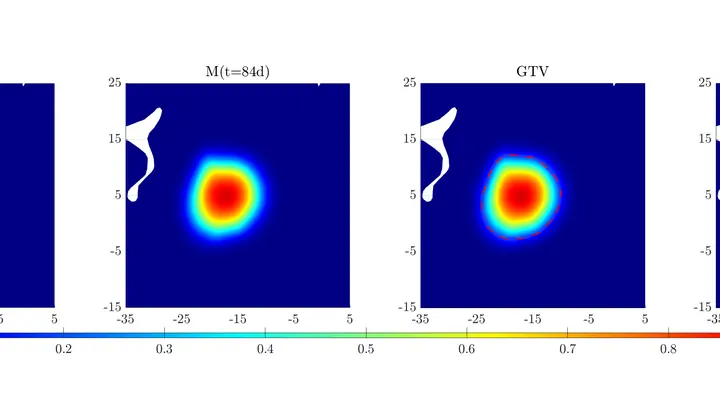
How tumor cells wander through the brain's maze
A brain tumor is like a traveler trudging through a dense forest: trees and bushes are the different types of brain tissue, some easier to traverse than others. Glioma cells don't move in a straight line; they constantly loop around, bumping into obstacles and going around them.
Cosmology2026-02-102 minarXiv:2602.10107express
Thermal Map of Galaxy Clusters
In the frozen desert of Antarctica, the SPT-3G telescope peers deep into the universe. Its target is the ancient microwave radiation left over from the Big Bang. But on its way to us, this radiation passes through giant galaxy clusters filled with scorching gas.
Statistical Mech2026-02-122 minarXiv:2602.11813express
How Cancer Chooses Its Path
A tumor doesn't stay put. Individual cells or whole groups break off and set off on a journey through the body. Some crawl solo, like scouts; others stick together, like a flock. Scientists built a computer model to understand how these cells pick a direction. In the model, cells respond to two signals.
Chemical Physics2026-02-201 minarXiv:2602.18284express
Glowing Probe for Cancer Detection
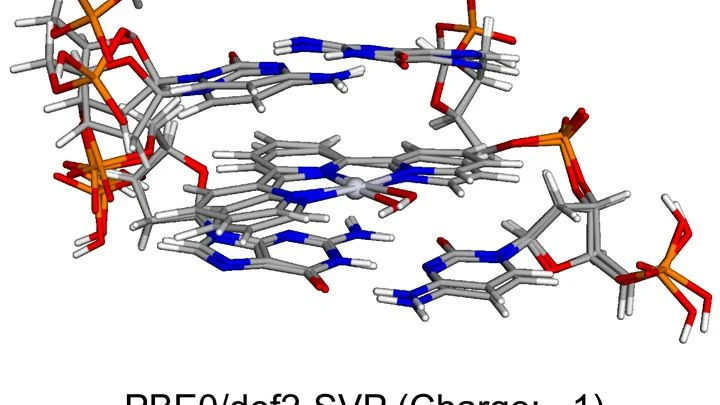
Standard chemotherapy hits the whole body like carpet bombing: both cancerous and healthy cells suffer. Scientists are hunting for more precise weapons — molecules that light up when they slip into a cancer cell's DNA, revealing its location. Such glowing probes could help doctors spot tumors early and even destroy them with pinpoint accuracy, leaving neighboring tissue untouched.
Medical Physics2026-02-241 minarXiv:2602.21354express
The Brain Under a Magnifying Glass: A Tomograph That Catches Every Detail
A camera that captures not your face but your brain itself — from the inside, layer by layer. Conventional tomographs often produce blurry images: fine details merge like letters on a fogged-up window. Engineers set out to build a device that sees clearly even what is smaller than a millimeter.
Cosmology2026-02-282 minarXiv:2603.00584express
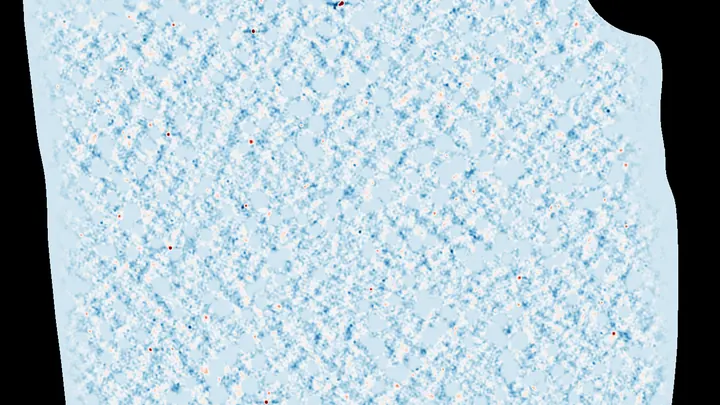
Radio Telescope Spots Shadow Cast by Galaxy Cluster
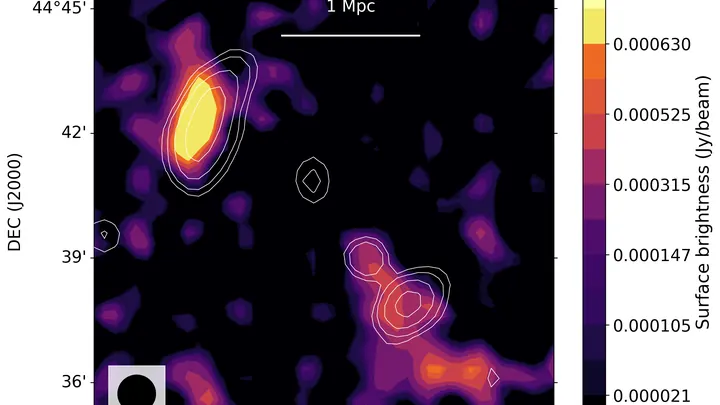
The cosmic microwave background is faint light left over from the Big Bang. It fills the sky uniformly, but it encounters obstacles along the way. One such obstacle is galaxy clusters, which contain very hot gas. When CMB photons pass through this gas, some of them get an extra kick and change energy.
q-bio.QM2026-03-011 minarXiv:2603.02274express
Inside the Cell: How Cancer Dodges the Drug
A cancer cell is like a stubborn lock that changes its keys as you try to pick it. The drug acts as a lockpick, but the cell quickly finds a way to keep it out. In a new study, scientists built a computer model that mimics how cancer cells behave with various genetic glitches.
Atomic Physics2026-03-111 minarXiv:2603.10740express
Zero in the Spectrum: How Atomic Clocks Found a Point of Stillness
A barium ion trapped in a cage behaves like a tuning fork: its internal vibrations set the pace for the most accurate clocks. But even this tuning fork shivers from heat — infrared radiation from the walls slightly shifts its frequency. To keep clocks from lying, this shift must be known down to the last detail.
Statistical Mech2026-03-141 minarXiv:2603.13918express
Pores in the Membrane: Three Keys to Accurate Calculation
A cell is a city with gates. Each gate is a protein channel in the membrane: through it, ions, sugars, and signaling molecules pass in and out. Some gates are almost always open, while others open and close randomly, like subway doors that let a passenger through one moment and slam shut in their face the next.
Quantum Physics2026-03-141 minarXiv:2603.14144express
Noise in Diamond: How a Neural Network Hears Magnetic Fields
Inside a piece of diamond hides a tiny defect — a nitrogen atom next to a vacancy. This defect catches magnetic fields like an antenna catches radio waves and responds with flashes of light. Such sensors already measure temperature inside living cells and find defects in microchips.
HEP Lattice2026-03-192 minarXiv:2603.18438express
Rare Decay of a Heavyweight Particle
A heavy stone falls into a pond, and ripples spread across the water with a distinctive pattern — from that pattern, you can infer what lies beneath the surface. Physicists study particle decays in much the same way: rare transformations in which a heavy particle suddenly becomes a lighter one, emitting light or a pair of charged particles.
cs.CE2026-03-202 minarXiv:2603.19829express
The Brain as Clay: Why It Shrinks in Alzheimer's Disease
Alzheimer's disease begins quietly: deep in the brain, two proteins, tau and amyloid-beta, start to accumulate. They behave like weed seeds: one clump that appears causes neighboring cells to produce similar clumps. Gradually, the proteins spread along nerve fibers, like water through the capillaries of a paper towel, and invade new areas.
Chemical Physics2026-03-201 minarXiv:2603.19912express
How to Find a Cancer Drug Among Millions of Molecules
Tumors grow fast, and oxygen inside them often runs short. Conventional drugs that need oxygen are powerless there. But some molecules work differently: they pull electrons from neighboring molecules and trigger a chain reaction that destroys cancer cells. Such molecules are called photosensitizers: they are activated by light.
Biological Physics2026-03-211 minarXiv:2603.20764express
Artificial Intelligence Tracks Microbes
To avoid losing a fast soccer player in the frame, a drone doesn't need a bright beacon — recognizing the silhouette is enough. Similarly, a neural network now tracks microbes: the algorithm analyzes an ordinary microscope image and instantly finds a bacterium in a drop of water.
Mesoscale2026-03-232 minarXiv:2603.21827express
An Atom-Sized Pore Controls Electric Current
The cell membrane isn't just a wall; it's a turnstile gate. Embedded within it are protein channels that let ions in and out, creating an electric charge, like a battery that powers nerves and muscles.
Superconductivity2026-03-232 minarXiv:2603.22145express
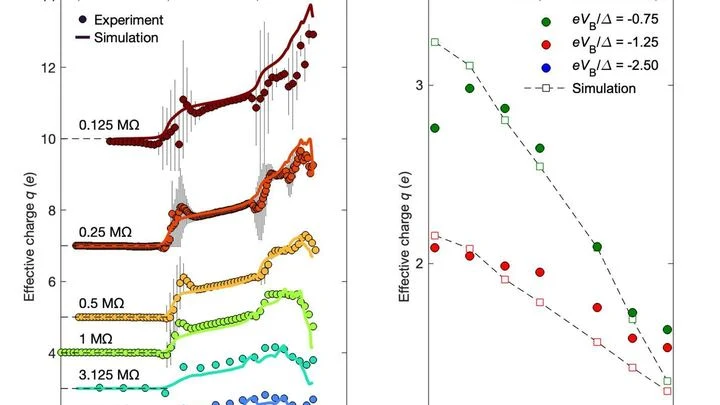
The Noise That Gives Away the Charge
Current flowing through a wire is never perfectly smooth. If you listen closely enough, you hear a rustle — shot noise. It arises because charge is not carried as a continuous stream but in discrete portions, like raindrops on a roof. From the character of this noise, you can tell how much charge each 'drop' carries.
Medical Physics2026-03-241 minarXiv:2603.22666express
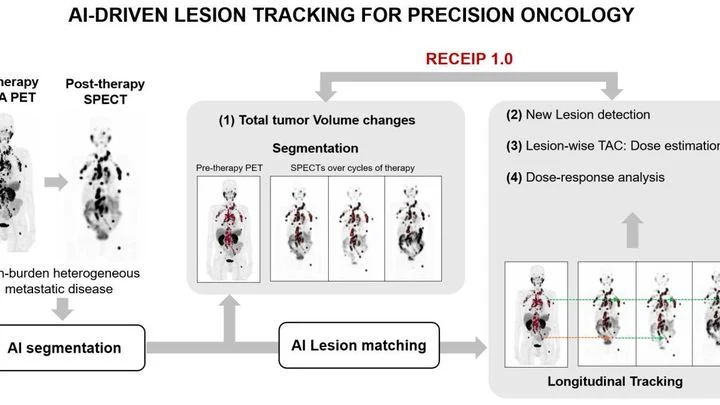
Tracking Prostate Cancer Metastases in Scans
When treating prostate cancer, doctors often see not one tumor but many lesions in bones and lymph nodes. Each lesion can respond to therapy differently: one shrinks, another stays the same, a third grows. Previously, the disease was assessed as a whole, like judging the weather by the average temperature over a year.
Machine Learning2026-03-272 minarXiv:2603.26994express
How T Cells Recognize the Enemy: A New Look at the Immune Passport
When a virus enters the body or a cancer cell appears, T cells, the immune system's fighters, take the stage. Each T cell has its own receptor, a lock-like molecule that searches for the right key: a piece of protein (peptide) on the surface of the diseased cell. If the key fits, the T cell activates and destroys the enemy.
A Virtual Brain Chooses the Right Treatment
The brain of a person with Parkinson's disease works like an orchestra where the conductor either freezes or waves the baton off-beat. Medications don't help everyone, so doctors turn to stimulation — weak electrical pulses that restore the rhythm.
Medical Physics2026-04-021 minarXiv:2604.02053express
A Radioactive Glowing Marker for Targeted Therapy
The radioactive isotope terbium-149 acts like a tiny homing bomb: it latches onto cancer cells and detonates with alpha particles that destroy the tumor from within, barely touching healthy tissue. But this bomb has a quirk: it also glows with positrons, and that glow can be captured by a special camera.
High Energy2026-04-021 minarXiv:2604.02410express
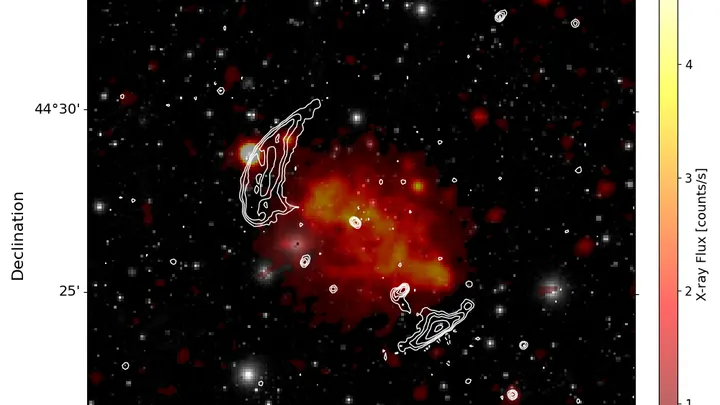
Double Radio Echo from a Galaxy Cluster Collision
When two galaxy clusters collide, shock waves are born in the space between them, like the sonic boom from a supersonic jet, but instead of air, it's the tenuous gas. These waves compress the gas and accelerate charged particles to enormous energies.
Medical Physics2026-04-032 minarXiv:2604.03431express
A Fluorescent Flashlight for Surgeons
In the operating room, the surgeon illuminates the tumor with a special agent that makes it glow. But how do you know whether it glows brightly because there are many cancer cells or simply because it lies close to the surface?
Biological Physics2026-04-042 minarXiv:2604.03538express