Bubbles in Cosmic Foam: A New Look at the Breathing of Stars express
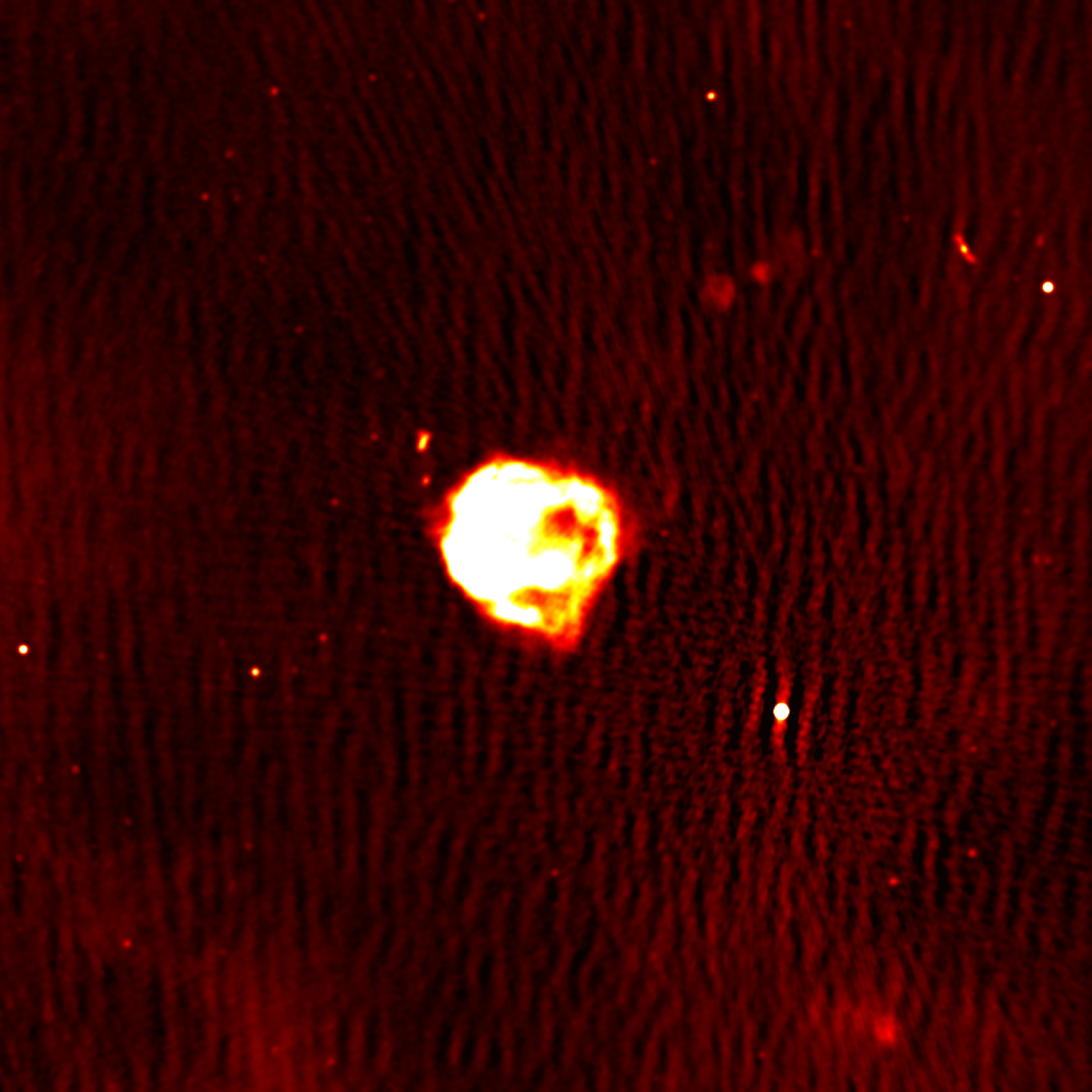
A pot of boiling porridge: bubbles burst, steam escapes, and everything gets mixed up. Massive stars in giant gas clouds behave in much the same way. Their radiation and stellar winds blow out enormous cavities, molecular bubbles, scattering material all around. This process is called stellar feedback, and it is a key mechanism in the evolution of galaxies.
But how do you find these bubbles in vast datasets? Previously, astronomers had to scan images by eye, trying to guess the outlines of the cavities. It was like looking for soap bubbles in a photo of churning foam — tedious and subjective. The new method BWFields tackles this differently: it analyzes "cubes" of data from radio telescopes, where the two sky coordinates are joined by the gas velocity. The algorithm automatically finds regions where the gas appears to part, forming a cavity, and estimates how strongly it is expanding. For the first time, this is done fully objectively and for large sky surveys.
This approach paves the way for a systematic study of the breathing of stars across the entire Milky Way. Instead of manually hunting for individual objects, we can compile catalogs of thousands of bubbles and understand exactly how stars mix the interstellar medium. They enrich it with heavy elements and trigger the birth of new stars, and now this cycle is as clear as the pattern in cooling porridge.
The largest molecular bubbles can be bigger than the distance between the Sun and its neighboring stars — a whole planetary system could fit inside such a cavity.
In Stanisław Lem's novel "Solaris," the planet's ocean also created mysterious structures resembling bubbles, but there they were the manifestation of an alien mind, whereas here they are a natural mechanism of stellar evolution.