Black Hole Without a Singularity Emerges from a Dust Cloud
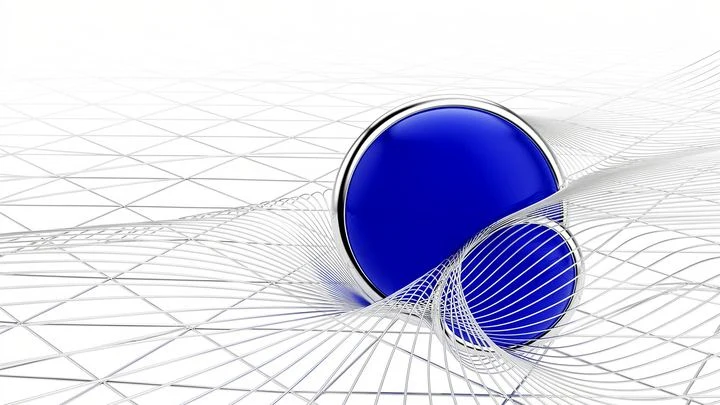
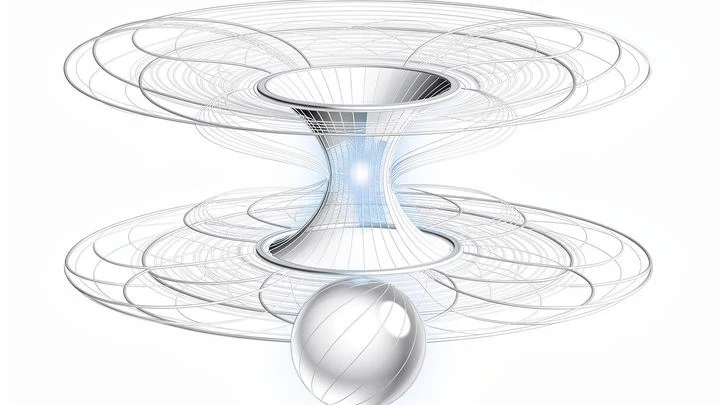
A homogeneous, spherical cloud of cosmic dust begins to contract under its own gravity. At some point, by classical laws, it should collapse into a point of infinite density — a singularity.
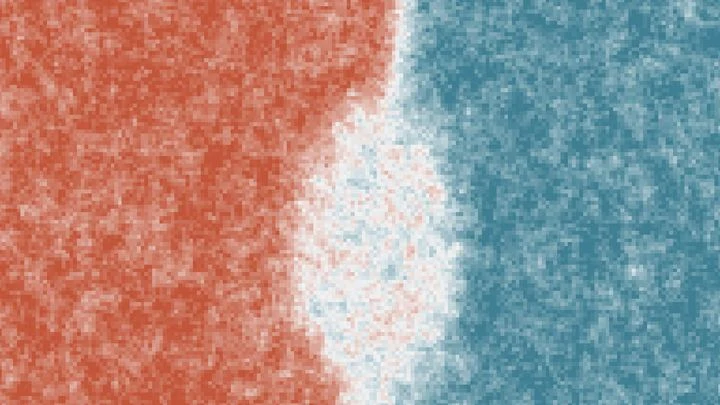
A region of a new state of space in the early Universe with a large number of microscopic states, leading to quantum entanglement.A quantum bubble is a hypothetical region in the early Universe where a new phase of space emerges, characterized by a large number of microscopic quantum states that give rise to quantum entanglement. This concept arises in cosmological models that propose the Universe underwent a first-order phase transition shortly after the Big Bang, during which bubbles of the new phase nucleated and expanded. Within these bubbles, the vacuum state is not unique but has many possible configurations, leading to a rich structure of entangled quantum states that could have observable consequences in the cosmic microwave background or gravitational waves.
The concept of quantum bubbles in cosmology is rooted in the 1980s development of inflationary theory and the study of phase transitions in the early Universe, particularly by theorists like Sidney Coleman and Frank De Luccia, who analyzed vacuum decay and bubble nucleation. The specific idea of quantum entanglement within these bubbles is a more recent development in quantum cosmology.
In a first-order phase transition, the Universe tunnels from a false vacuum to a true vacuum, forming bubbles of the new phase. Inside each bubble, the quantum field can occupy many different microscopic states, each corresponding to a different configuration of the field. These states are entangled across the bubble's interior, and as the bubble expands, this entanglement is stretched to cosmological scales. The resulting quantum correlations could leave imprints on the Universe's large-scale structure or produce gravitational wave signals.
Quantum bubbles are primarily of theoretical interest, but they could be tested through observations of primordial gravitational waves or non-Gaussianities in the cosmic microwave background, which might reveal signatures of the entangled states within these bubbles.
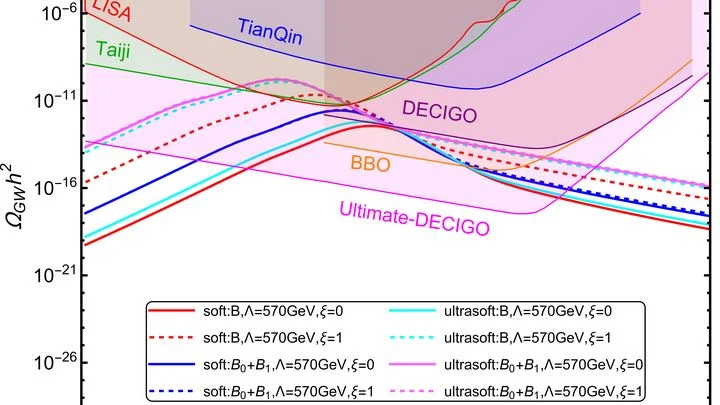
If quantum bubbles existed, they could have produced a stochastic background of gravitational waves that might be detectable by future space-based observatories like LISA, offering a direct window into the earliest moments of the Universe.