In astrophysics, a bubble is a local region of enhanced cosmic-ray source density within the galaxy, as proposed in certain models. These bubbles are not literal soap bubbles but rather volumes of space where cosmic-ray production is more intense, often associated with supernova remnants, pulsar wind nebulae, or active galactic nuclei. The concept helps explain observed anisotropies in cosmic-ray arrival directions and the distribution of gamma-ray emission across the sky.
History
The bubble concept in cosmic-ray physics emerged in the late 20th century as models of cosmic-ray propagation became more detailed, though the specific term 'bubble' has been used in various contexts, including the Fermi Bubbles discovered in 2010.
How it works
Cosmic rays are charged particles accelerated by violent astrophysical processes. A bubble model assumes that within a certain volume, the density of sources is higher than the galactic average. As cosmic rays diffuse through the galaxy, these bubbles create local enhancements in particle flux, which can be detected as hotspots in gamma-ray maps or as deviations in the cosmic-ray spectrum. The size and location of such bubbles are inferred by comparing observed data with propagation models that include source distributions.
In practice
Bubble models are used to interpret data from gamma-ray observatories like Fermi-LAT and to refine our understanding of cosmic-ray sources and their contribution to the interstellar medium.
Fun fact
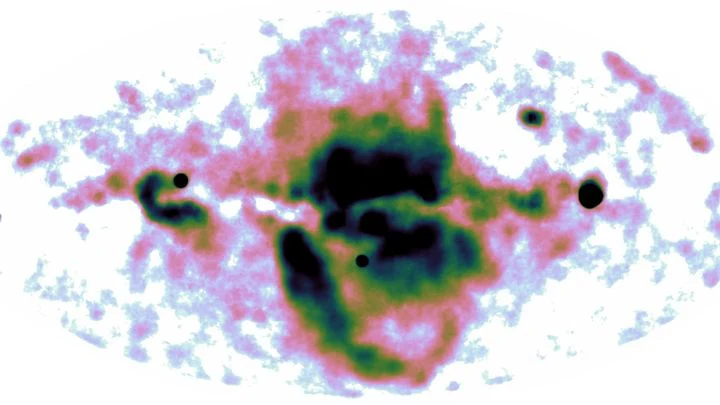
The Fermi Bubbles, giant structures extending 25,000 light-years above and below the Milky Way's center, are a real example of a cosmic bubble, likely created by past activity of the supermassive black hole Sagittarius A*.
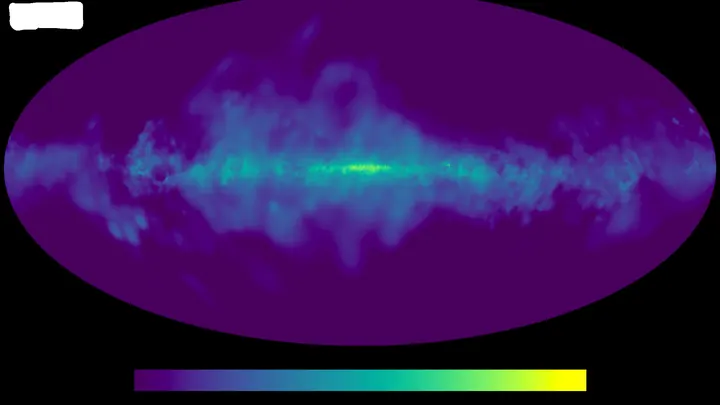
At the center of the Milky Way, where the supermassive black hole Sagittarius A* churns gas clouds like a millstone, astronomers have caught an irregular pulse. Gamma-ray emission, the most energetic light in the universe, arrives not as a smooth wave but with a break, as if the Galaxy's heart beats with arrhythmia.
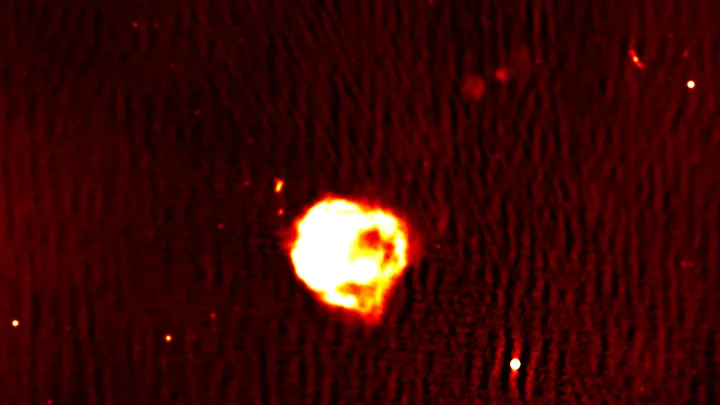
The night sky is full of rings and bubbles, but in the radio band they look different. In data from the Australian radio telescope ASKAP, a structure has surfaced that resembles two soap bubbles blown from the same straw.
The night sky in neutrino light resembles a canvas worked on by two hands. One holds a broad, soft brush: these are supernova remnants, the shells left behind after stellar explosions. The other grips a fine, hard pen — microquasars, binary systems where a black hole twists matter into narrow jets.
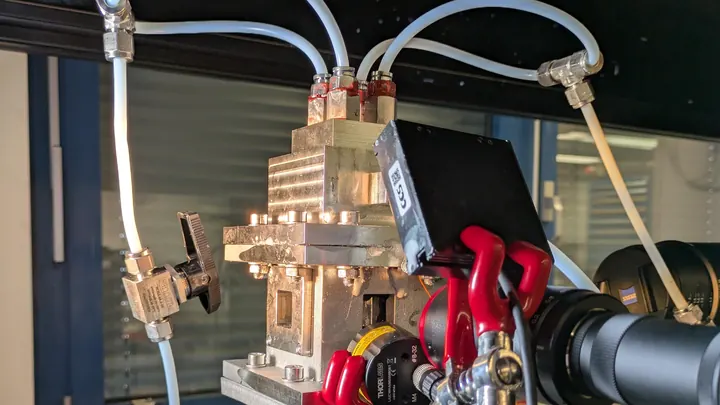
A copper plate the size of a coin vaporizes under the laser's strike in billionths of a second. The hot copper cloud slams into cold helium like a jet of steam into frosty air. The images show a distinct bubble with thin filaments at the edges — the plasma doesn't expand uniformly but breaks into fibers as thin as a human hair.
The night sky looks calm, but in reality, invisible particles, cosmic rays, are constantly flying through us. Among them are electrons and their antimatter counterparts, positrons. When they collide with detectors on satellites or balloons, the instruments record their energy.
A pot of boiling porridge: bubbles burst, steam escapes, and everything gets mixed up. Massive stars in giant gas clouds behave in much the same way. Their radiation and stellar winds blow out enormous cavities, molecular bubbles, scattering material all around.
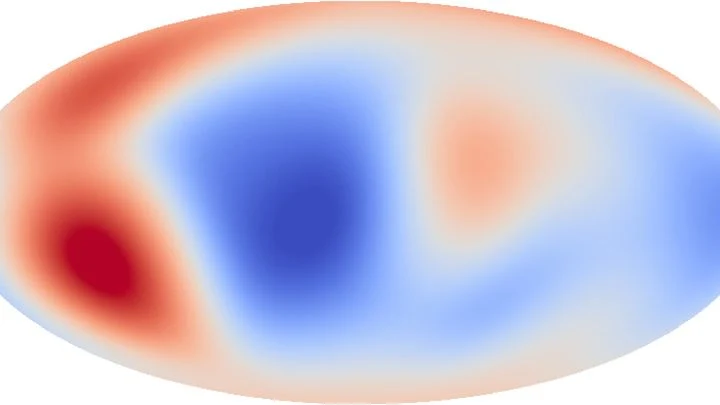
Light from the very beginning of the cosmos has been traveling toward us for 13.8 billion years. During that time, its polarization, the direction of its oscillations, might have been twisted, like a compass needle that someone quietly nudged. Physicists call this phenomenon cosmic birefringence.
A weather forecaster draws a thick black line across Europe: north of it, frost; south, a thaw. That boundary, the zero isotherm, won't tell you the temperature in Stockholm or Rome, but it honestly marks where winter ends. In recent cosmology, a map has emerged where a similar frontier can be drawn.
For a long time, astronomers searched for the 'factories' of the most energetic cosmic rays — particles that carry the macrocosm compressed to the size of an atomic nucleus. Colossal star-forming regions like Cygnus OB2, where winds from young giants collide, were prime suspects.
The cosmological principle – the notion that the Universe is homogeneous and isotropic on large scales – has guarded our understanding of the world since the time of Edwin Hubble and Georges Lemaître, whose ideas formed the basis of the Big Bang model.
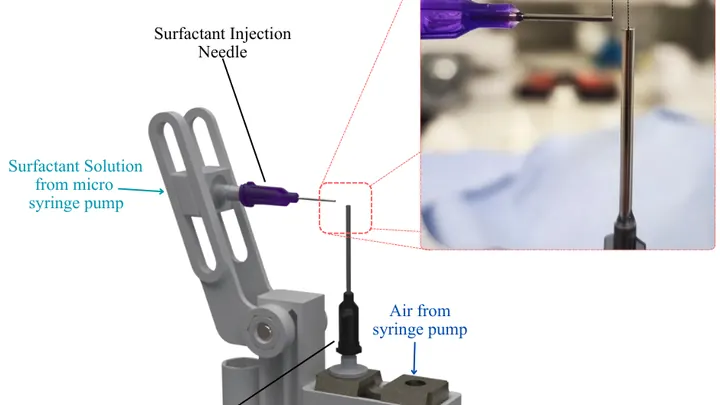
An air bubble escapes from a thin needle at the bottom of a glass and shoots upward. In clean water, it behaves like a spring: it flattens, then stretches, exchanging energy between motion and shape. Add a drop of soap to the water, and the bubble immediately calms down, becomes an almost perfect sphere, and rises smoothly without trembling.
The night sky looks as smooth as the surface of a calm lake. But if you look at gamma-ray bursts (brief, blinding explosions visible across the entire universe) you'll find ripples in that smoothness.
Scientists took a catalog of such bursts and divided the sky into two hemispheres. In the southern one, they found a tiny group: 4–5 bursts huddled together.
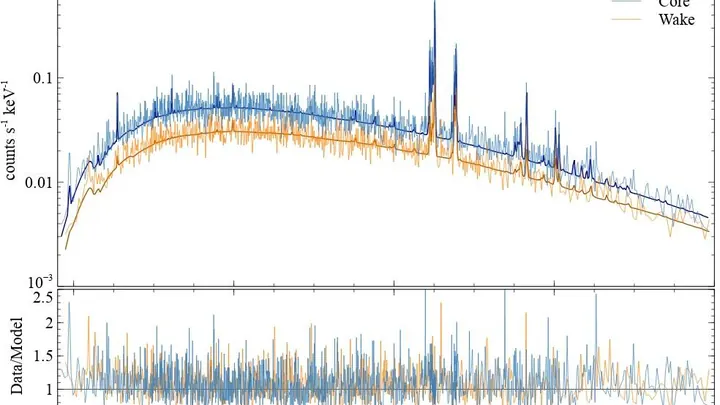
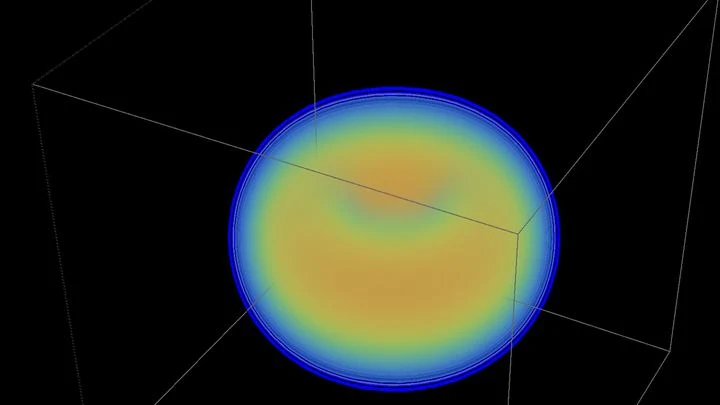
At the heart of the Ophiuchus galaxy cluster floats a bubble of hot plasma the size of several galaxies. It rises like a giant hot-air balloon in the atmosphere, leaving a wake behind it — a region where gas is set in motion.
Two galaxy clusters collided like two swarms of bees flying through each other. One of them is the famous "Bullet." After the collision, the hot gas, which makes up most of the ordinary matter, slowed down and stayed in the center, while the galaxies, like small dense pebbles, flew on.
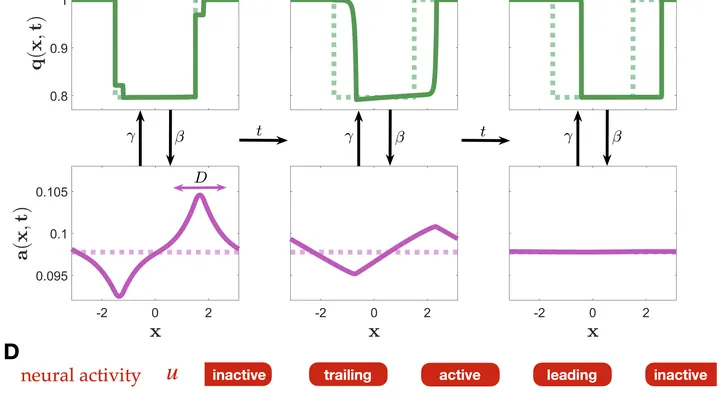
Holding a phone number in your head while you dial it: that's working memory. In the brain, a group of cells is responsible for this, sending signals to each other like people passing a bucket along a chain. But every transfer has a cost: it requires messenger substances that get used up.
A gas bubble in water sings loudly — this is Minnaert resonance: the heavy liquid prevents the bubble from compressing quickly, forcing it to vibrate. In air, there's no such effect: air is too light. But if you dress the bubble in a soft silicone shell, like rubber, it plays the role of the water mass. You get an 'elasto-bubble'.
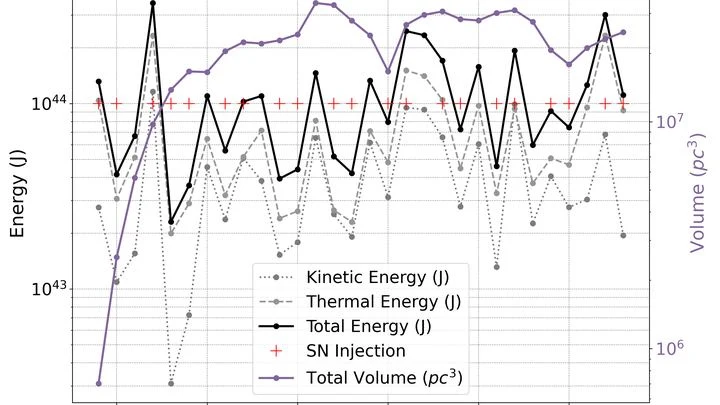
Superbubbles are cosmic giants, akin to soap bubbles, but instead of soap film, they contain rarefied interstellar gas, and they're inflated not by a breath but by a series of supernova explosions. In computer simulations, they behave like living things: they grow, cool, and move. But until now, we couldn't precisely trace their boundaries.
Splitting water into hydrogen and oxygen with electricity is an age-old dream of clean fuel. But tiny gas bubbles stand in the way: they cling to the electrodes like foam on the side of a soda glass, interfering with the current's work. Each bubble is a tiny plug, blocking part of the surface where the reaction should occur.
In 2020, the eROSITA X-ray telescope discovered a pair of enormous bubbles looming above and below the disk of our Galaxy. These clouds of gas heated to millions of degrees are the aftermath of a colossal energy release from the center.
If you look at a map of distant galaxies, it is not perfectly uniform: on one side of the sky there are slightly more, on the other — slightly fewer. This lopsidedness has been noticed in several sky surveys, and it does not look like a random fluke. Usually, it is explained by the fact that our Galaxy itself is flying somewhere, making distant objects appear shifted.
In a narrow vertical tube, alcohol flows upward, surrounded by water, and carbon dioxide bubbles are born inside it. As soon as they appear, they rush toward the axis of the flow, as if an invisible hand gathers them into a neat chain.
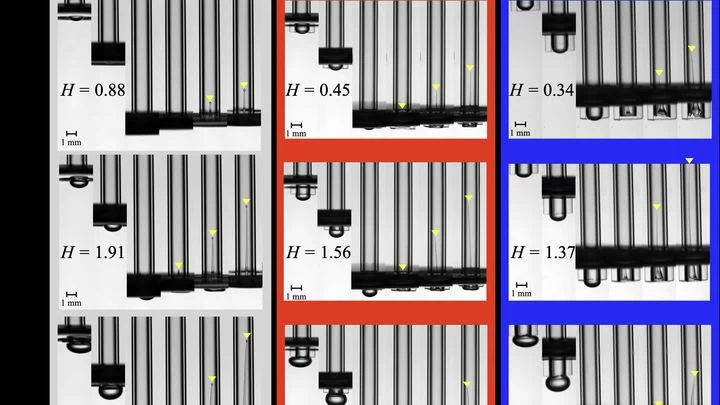
A drop falls into a glass, and a tiny jet, a thin fountain, shoots up from the surface for an instant. Something similar happens with a bubble stuck to the wall of a tube when you yank the tube downward. Water around the bubble rushes in, and a jet fires from its top. The speed of this jet depends on the bubble's shape — how much it bulges, like an umbrella dome.
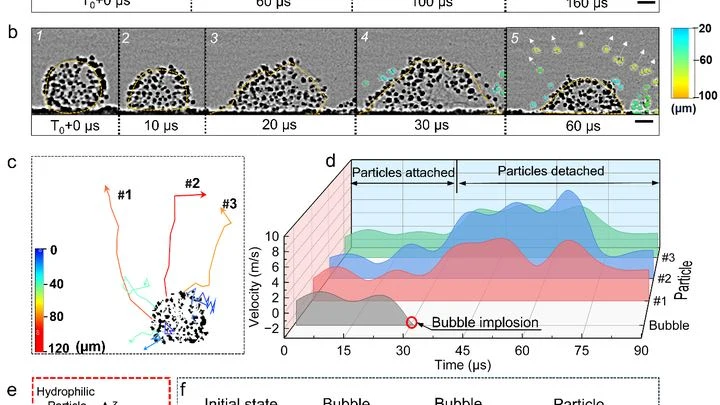
In a glass of water, ultrasound creates tiny bubbles. They grow and shrink, and sometimes they collapse sharply, like a popping soap bubble, but thousands of times faster. Near these bubbles float small particles — for example, nickel spheres the size of dust motes.
A spinning black hole acts like a cosmic generator: its rotation pumps energy into an invisible scalar cloud — a prime candidate for dark matter. A scalar field is like temperature: at every point in space it's just a single number, with no arrows or vectors. The cloud grows until it overflows.
In a blacksmith's forge, a blast of air fans the glowing coals, and shock waves blow bubbles of hot gas. In galaxy centers, a supermassive black hole drives the same process. Its narrow plasma jets, like bellows, punch through the surrounding space and create bubbles visible in X-rays.
In a cloud, billions of droplets swirl around, collide, and merge: that's how rain is born. But exactly how turbulence, those invisible air swirls, helps or hinders droplet growth has been unclear. In the lab, researchers recreated a slice of a cloud and tracked every droplet.
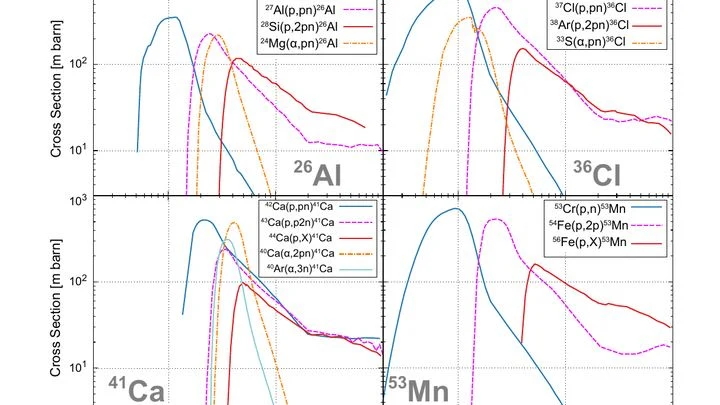
Just as yeast turns flour into fluffy dough, radioactive 'seasoning' from a supernova — the explosion of a massive star at the end of its life helps mold a rocky planet. The key ingredient here is aluminum-26, a radioactive isotope that releases heat as it decays.
At the center of the Milky Way, a giant stellar cauldron boils. Massive stars are born and die there: each death is a supernova explosion, hurling clouds of charged particles into space.
Every day, particles with colossal energy enter Earth's atmosphere, like unsigned letters. Their source long remained a mystery. New research shows: these 'visitors' point to nearby galaxies, where from time to time catastrophes occur — collisions of neutron stars, ultra-dense spheres the size of a city but with the mass of the Sun.
In the quiet harbor of the Local Bubble, a rarefied cavity of hot gas around the Sun, an explosion recently thundered. A supernova went off tens of parsecs away, and its echo still lingers in the neighborhood, reshaping the cosmic-ray landscape.