Compression Reveals the Hidden Dance of Magnetic Moments express
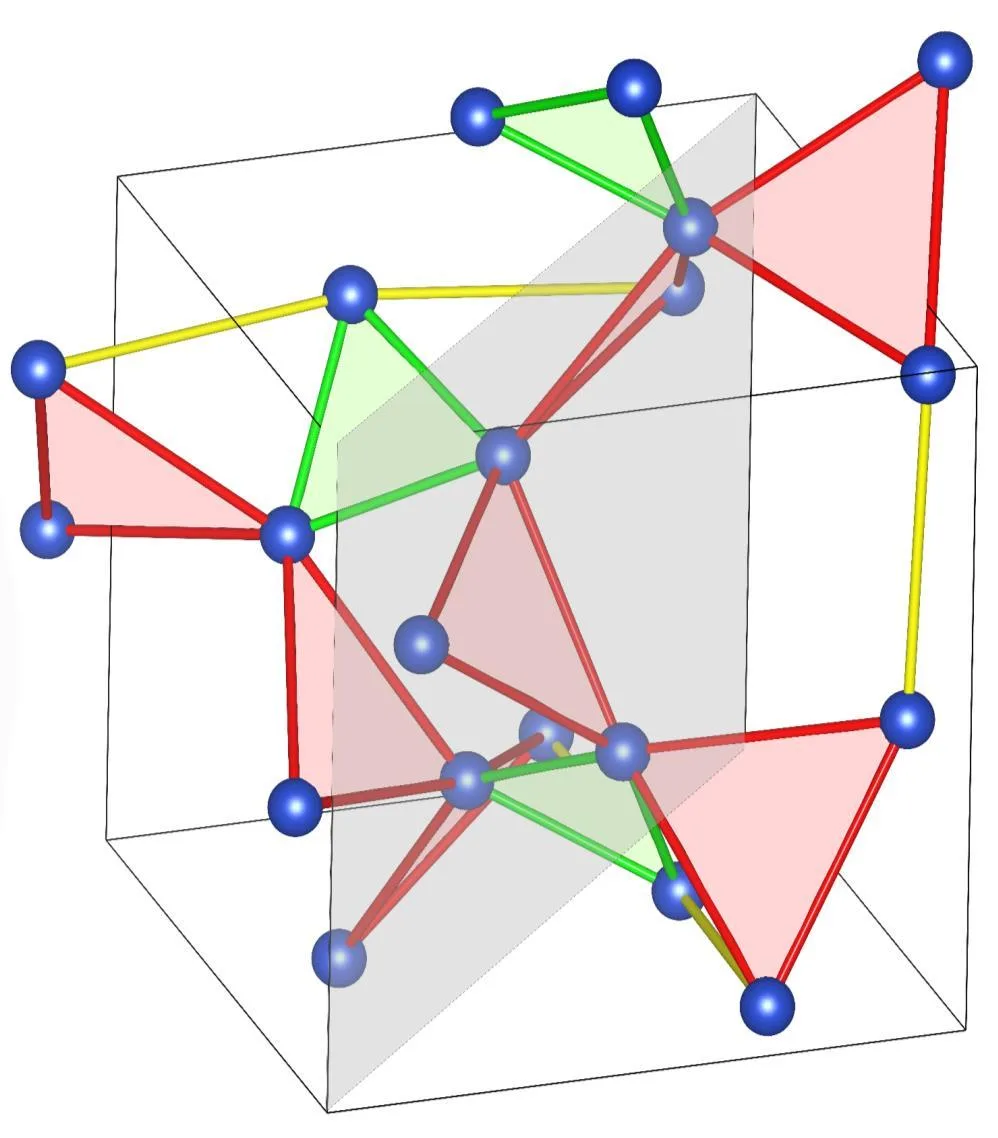
The PbCuTe₂O₆ crystal resembles a three-dimensional web of copper, tellurium, and oxygen. Inside, the magnetic moments, tiny arrows tied to electron spins, are so entangled that they can't settle into an orderly arrangement even near absolute zero. This state is called a quantum spin liquid: the magnetic arrows constantly fluctuate but never freeze.
Physicists led by Johannes Kepler (no, not that one, but researchers from the Institute for Complex Systems Physics) applied directional pressure along the [110] axis — up to 37.7 megapascals, about three times less than the pressure in a bicycle tire. This gentle squeeze altered the distances between atoms, slightly skewing the web of magnetic bonds. Above 10.8 MPa, magnetic fluctuations sharply increased, and internal fields became more broadly distributed. It's like a taut fishing net starting to sway more vigorously in a crosswind, even though the mesh remains intact.
No conventional magnetic order, where all arrows align in one direction, emerged. Instead, the system entered a new state: slow collective oscillations coexisting with nearly static correlations. In other words, the magnetic web became stiffer in some places but retained mobility in others. This opens a clean way to manipulate entangled magnetic systems without introducing chemical impurities, simply by slightly altering the crystal's geometry.
The 37.7 MPa pressure used in the experiment is equivalent to the weight of a small car distributed over the area of a postage stamp.