The kagome lattice is a two-dimensional pattern of interwoven triangles and hexagons, resembling a traditional Japanese woven bamboo basket. This geometry creates a highly frustrated magnetic system, where the arrangement of spins cannot simultaneously satisfy all interactions. The lattice has become a central model for studying exotic magnetic phases, including spin liquids, spin ice, and quantum spin states. Materials with kagome structure often exhibit unusual electronic properties, such as flat bands and Dirac points, making them a focus of condensed matter physics research.
History
The kagome lattice was first described by Japanese physicist Kōdi Husimi in 1951, who named it after the bamboo basket pattern. Its magnetic properties were later explored in the context of frustrated magnetism, with significant theoretical work in the 1980s and 1990s.
How it works
In a kagome lattice, each vertex is shared by two triangles and one hexagon. The triangular arrangement of spins leads to geometric frustration: for antiferromagnetic interactions, it is impossible for all three spins on a triangle to be antiparallel to each other. This frustration prevents the system from settling into a simple ordered state, instead allowing for a continuum of low-energy configurations. The resulting magnetic behavior can be described by quantum spin liquids, where spins remain dynamic and entangled even at low temperatures.
In practice
Kagome lattice materials are studied for potential applications in quantum computing, spintronics, and the development of new magnetic materials. They are also used to explore fundamental physics, such as the behavior of electrons in flat bands and the search for quantum spin liquids.
Fun fact
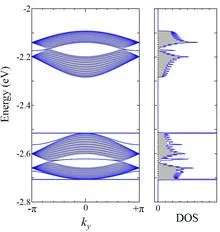
The kagome lattice is one of the few two-dimensional lattices where the electronic band structure can feature a perfectly flat band, where electrons have zero effective mass and can exhibit strongly correlated behavior.
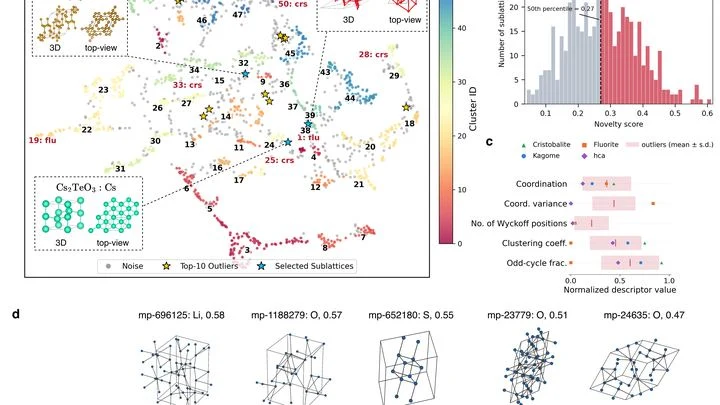
In a Japanese woven basket, triangles and hexagons combine into a pattern that physicists call a kagome lattice. This pattern turns out to be more than just pretty: electrons in such a material behave unusually because the lattice splits into three groups of nodes, three sublattices.
In a Japanese woven basket, triangles and hexagons combine into a pattern that physicists call a kagome lattice. This pattern turns out to be more than just pretty: electrons in such a material behave unusually because the lattice splits into three groups of nodes, three sublattices.
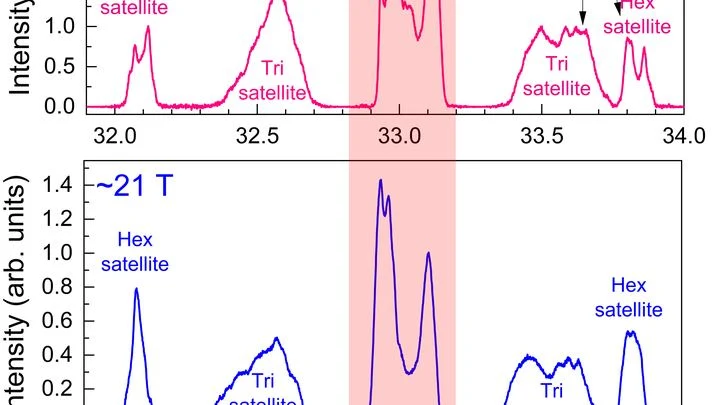
In a ballroom where couples were dancing, the music changed, and the pairs lined up in rows suddenly spun into whirlpools. That is how the magnetic crystal Fe3Ge rearranges its internal pattern once the temperature climbs above 375 kelvins, which is about a hundred degrees of heat.
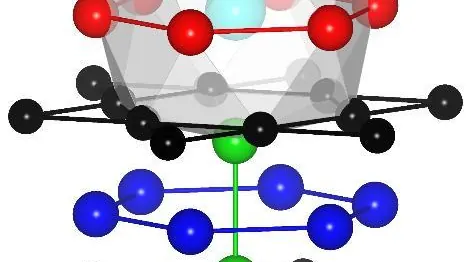
The triptycene molecule resembles a three-pointed star with rigid arms. When such stars are scattered on a lead surface, they spontaneously assemble into a pattern like a woven basket: triangles and hexagons alternate, and at each node sits not one star but a pair.
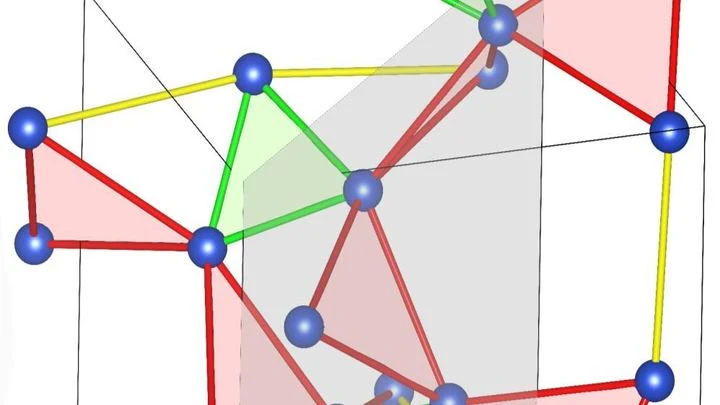
The PbCuTe₂O₆ crystal resembles a three-dimensional web of copper, tellurium, and oxygen. Inside, the magnetic moments, tiny arrows tied to electron spins, are so entangled that they can't settle into an orderly arrangement even near absolute zero.
In a pot of boiling water, steam bubbles appear and disappear — a similar struggle takes place in two-dimensional materials. Here, electrons both create magnetism and try to extinguish it.
In the world of magnetism, a simple dichotomy long reigned: ferromagnets, where spins point in one direction, and antiferromagnets, where they line up in a checkerboard pattern, canceling each other out. But a recent 'third player' — altermagnets — forced a rewrite of the rules.
Magnetic vortices just tens of nanometers across are like tiny tornadoes frozen in metal. Called skyrmions, they are remarkably stable: hard to destroy but easy to move. That's why engineers see them as ideal 'bits' for future memory — fast, energy-efficient, and resilient.
But until now, no one knew how such a vortex is structured within the material's depth.
A quantum spin chain is like a string of beads, where each bead is a microscopic magnet pointing up or down. In the XXZ model, these little magnets interact differently along the three axes, and at special parameter values, roots of unity, the system awakens with a hidden memory.
An ionic conductor resembles a crowded bus where passengers (ions) try to squeeze toward the exit. Previously, it was thought that fast exit could be achieved either by a gently swaying bus (soft lattice) or by passengers standing in chaotic order (geometric disorder). The new work shows these are not two different tricks but the same one.
Electrons in a crystal are like cars on city streets: some race down avenues, others get stuck in traffic jams. In certain lattices, motion freezes entirely — velocity stops depending on energy, and electrons become "flat." This isn't a traffic jam but a special rhythm of the network where waves cancel each other out.
In a pot of soup, every grain is a tiny magnet that wants to flip opposite to its neighbor. Heat the soup, and the magnets start jittering, obeying the heat. But how do you know how unruly they are at each temperature? For an ordinary material, you'd calculate this on powerful computers by enumerating possibilities.
The magnetic field increases, but the magnetization stays put. It's like a scale where you add weight, yet the needle doesn't move until enough has accumulated to jump to the next mark. That's exactly how rare-earth tetraboride crystals behave, and physicists have been puzzled for decades.
If you squeeze an ordinary piece of metal, it heats up — even those who have pumped a bicycle tire know that. But what happens if you squeeze a magnet in which atomic arrows refuse to freeze even at absolute zero?
Take a long thread, close it into a ring, and tie a knot in it. The knot slides along the thread until it hits something. Now imagine the thread is made of two different segments: one stiff and slippery, the other soft and sticky. When heated, the sticky segment softens, and the knot can slide off it, like a sled sliding off a melting hill.
If you toss a handful of coins onto a table, they land in a jumble. But in some crystals, atoms arrange themselves into a pattern reminiscent of a woven basket — the kagome lattice. In the metal MgMn₆Sn₆, manganese atoms form such a lattice, and at room temperature they act like tiny magnetic needles.
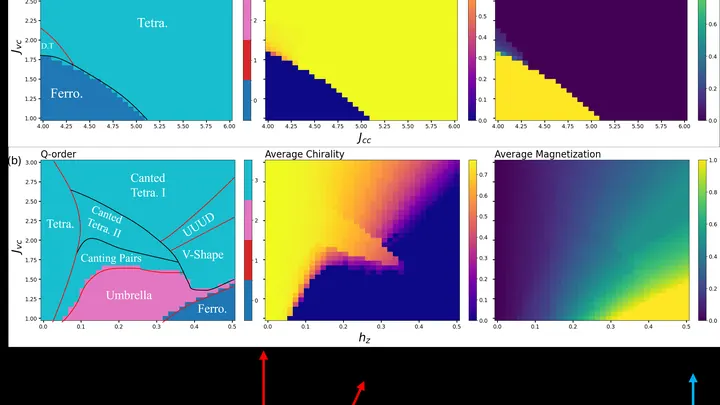
A handful of copper coins scattered on a triangular grid freezes into a strange order when a current is passed through them. That's roughly how tiny magnetic arrows, electron spins, behave in a crystal with the rare name Y-capellasite.
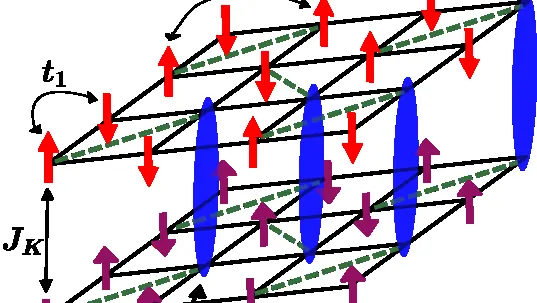
Imagine a triangular grid with tiny magnetic arrows at each node. Electrons, the charge carriers, run across this grid. Usually, the arrows align simply: all pointing the same way (ferromagnet) or alternating in the plane.
The dance floor is packed with people, each moving on their own. Suddenly, some of them break into pairs (spinning around, barely noticing their neighbors) while the rest line up in chains. That's roughly how atoms behave in the metal CsCr₃Sb₅, a member of the kagome metals, whose crystal lattice resembles a woven basket.
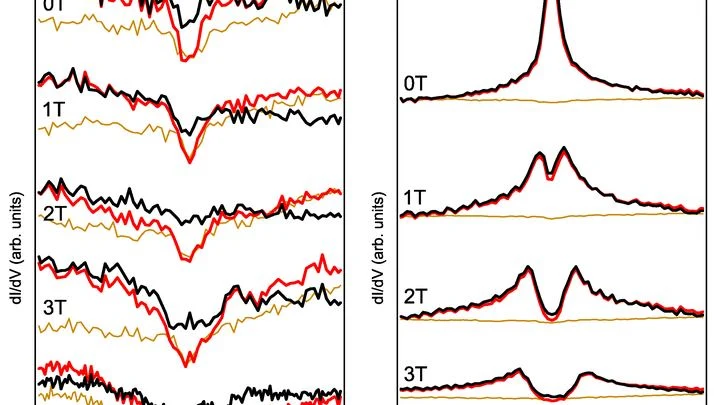
A tiny magnet, made from just two molecules, was placed on a metal surface, and it behaved like a temperamental conductor. Normally, electrons in a metal move in a coordinated way, like a crowd on an escalator. But when cooled significantly, this order breaks down, and the motion becomes unpredictable.
Magnetic monopoles are like halves of a magnet that cannot exist alone in ordinary materials. But in spin ice, they appear in pairs connected by an invisible thread — a Dirac string. Previously, such monopoles were only seen in artificial systems at room temperature, but their quantum motion remained a mystery.
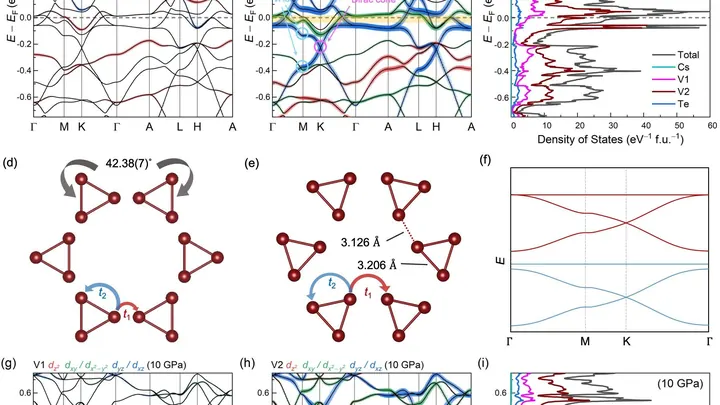
A woven basket made of willow twigs holds its shape thanks to the interweaving. A similar pattern, triangles linked into a flat network, has been found in a new crystal with the formula Cs₃V₉Te₁₃. Here, vanadium atoms form two sets of triangles that pierce each other like threads in fabric.
This pattern is not just pretty: it forces electrons to move along special "flat" energy pathways.
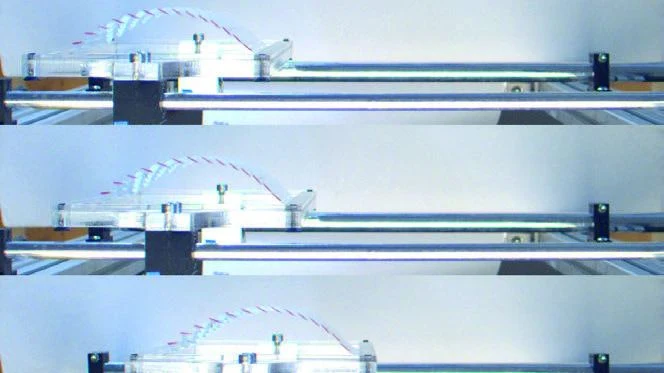
A flat sheet with slits in a flow of water or air behaves like self-adjusting blinds. The pressure opens the gaps, and each strip of material tilts, turning into a miniature wing. Thus, even a sheet placed perpendicular to the flow generates not only drag but also significant lateral lift.
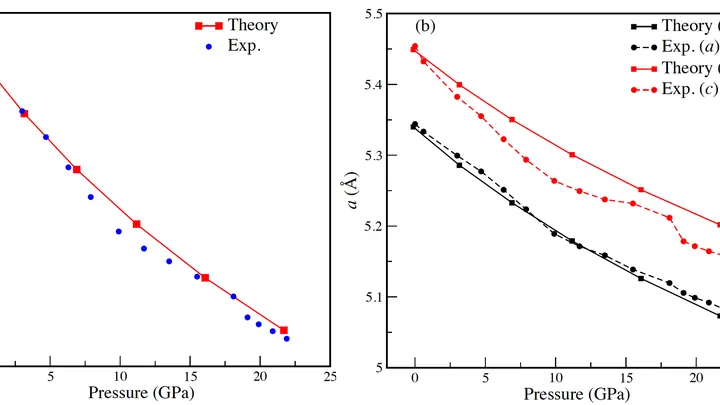
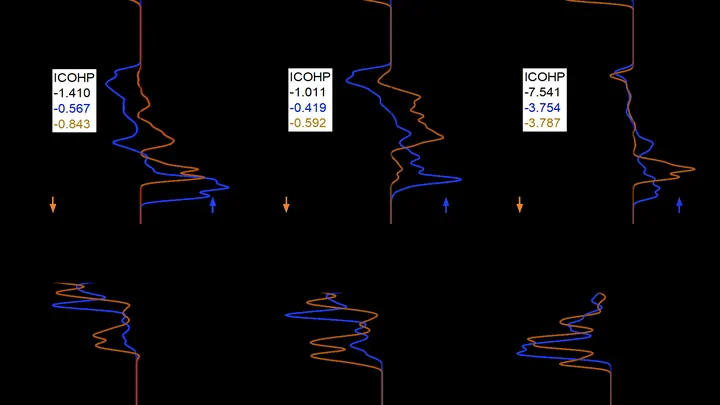
The Fe₃Sn₂ crystal looks like a patterned lattice where iron atoms sit at the corners of hexagons. Under normal conditions, their magnetic arrows are aligned neatly, like soldiers in a row. But squeeze the crystal, and the alignment breaks.
Under a pressure of about 20 gigapascals (imagine twenty elephants standing on your thumbnail), the lattice slightly rearranges.
The copper spins in Cs₂Cu₃SnF₁₂ sit on a triangular lattice that resembles the Japanese woven kagome pattern. When cooled below 20 K, these spins align into a pattern with negative vector chirality, as if all the whirlpools in a river spun in the same direction, but with a specific sign of twist.
In some materials, atomic magnetic moments: their tiny 'arrows'—refuse to freeze even at ultra-low temperatures. Instead of conventional order, they form a spin liquid: a state where spins constantly flicker but do so coherently, like dancers in an intricate routine.
A woven bamboo basket is not just a household item: it's an exact blueprint for how atoms are arranged in the crystal YMn₆Sn₆. Six manganese atoms form hexagons that assemble into a pattern reminiscent of the Japanese kagome. In such a lattice, electrons usually behave uniformly, like passengers in a crowded subway car.
In the woven basket pattern, where the strands interlace into triangles, some electrons get stuck in place, like coins wedged in the gaps of the weave. Other electrons roam freely across the whole basket, like light filling a room. Physicists have long sought the moment when these two types of electrons start to influence each other, and now it has been found in the material CsCr6Sb6.
A flat magnet is like a thin sheet with waves of magnetization running across it. Under normal conditions, these waves quickly die out, but when a strong magnetic field is switched on, an unexpected signal appears in the material — sharp and narrow, like a shadow cast by the main wave.
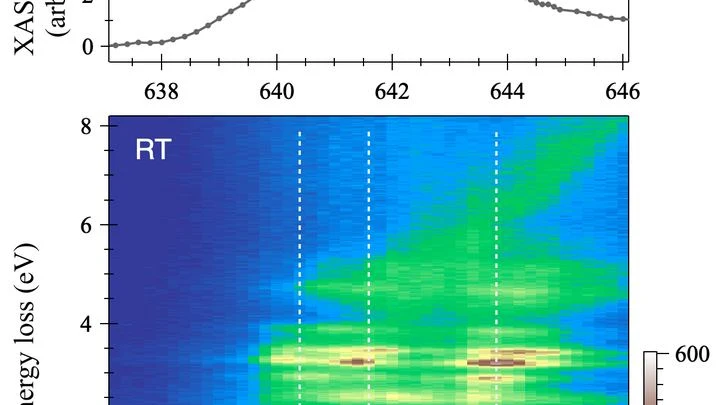
The crystal Co2SeO3Cl2 resembles a layered cake, with each layer being a buckled honeycomb grid of cobalt atoms. When cooled to 25.4 K (−247.75 °C), the magnetic moments of the atoms begin to align like compass needles, but not all at once — rather in four steps, at 25.4, 16.8, 11, and 3 K. Each step brings a new pattern of magnetic order.
The surface of the uranium compound UTe2 crystal looks like a frozen sea: in some places, electrons move freely; in others, they get stuck near atoms. A scanning tunneling microscope, a device that probes the surface with an atomically sharp tip and senses individual electrons, revealed that this landscape is not random.
A flexible thread, coiled into a loop, was locked in a tiny box with liquid. It can either absorb water and swell like a sponge, or expel the moisture and shrink into a tight ball. The choice between these states depends on whether the thread has a knot – and which one.
The reason lies in entropy, a measure of disorder.
An octopus tentacle bends, grabs, and stretches — all without a single bone. The secret is that inside it, sections that contract alternate with sections that remain passive. Scientists have long tried to replicate this trick in artificial materials, but until now they couldn't precisely dictate how a material would change shape.
Now researchers have proposed 3D-printing elastic threads from two materials at once.
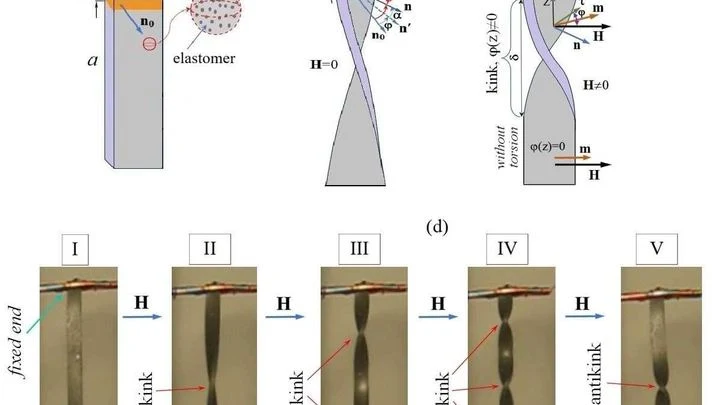
An ordinary rubber strip filled with fine iron filings doesn't just bend in a magnetic field: it ties itself into a stable knot. This effect was predicted and reproduced in experiments by physicists working with magnetoactive elastomers: a silicone base with carbonyl iron particles.
Physicists took 114 rubidium atoms, cooled them to near absolute zero (as in experiments with liquid helium), and neatly arranged them in a honeycomb pattern. They then smoothly adjusted the interaction strength, as if slowly turning up the heat under a pot.
An ordinary magnet makes a compass needle turn, but it doesn't stop the needle from moving forward. But if you twist a magnetic field into a knot, it can trap a particle in place, like a snare. This phenomenon is called an 'Aharonov–Bohm cage': the particle's waves cancel each other out at some points and reinforce at others, leaving only tiny 'islands' where it can exist.
Three charged ytterbium atoms are arranged in a triangle inside an electromagnetic trap. Normally, they all communicate with each other, like three people at a table constantly exchanging remarks. But if one of them steps into the next room, the conversation continues between the remaining two.
The magnets in this crystal behave like guests at a party where everyone wants the same chair. No one can settle down for good, and from this chaos, a special state emerges. In it, spin momentum (what makes an electron a tiny magnet) manages to travel 480 micrometers.
Imagine a stack of pancakes where each pancake is magnetized, but the magnetization directions in adjacent pancakes are opposite. That's exactly how this new magnetic material is arranged: in each atomic layer, all magnetic moments — the atom's 'arrows'—point in one direction, while the next layer is magnetized in the opposite direction.
In 1903, Fritz Heusler discovered an alloy, Cu₂MnAl, that behaved like a magnet even though none of its constituent metals were magnetic. Since then, the Heusler family has grown to three thousand compounds, and among them Co₂FeGe stands out for its high Curie temperature and spintronic promise.