Magnetic resistance in a graphene sandwich express
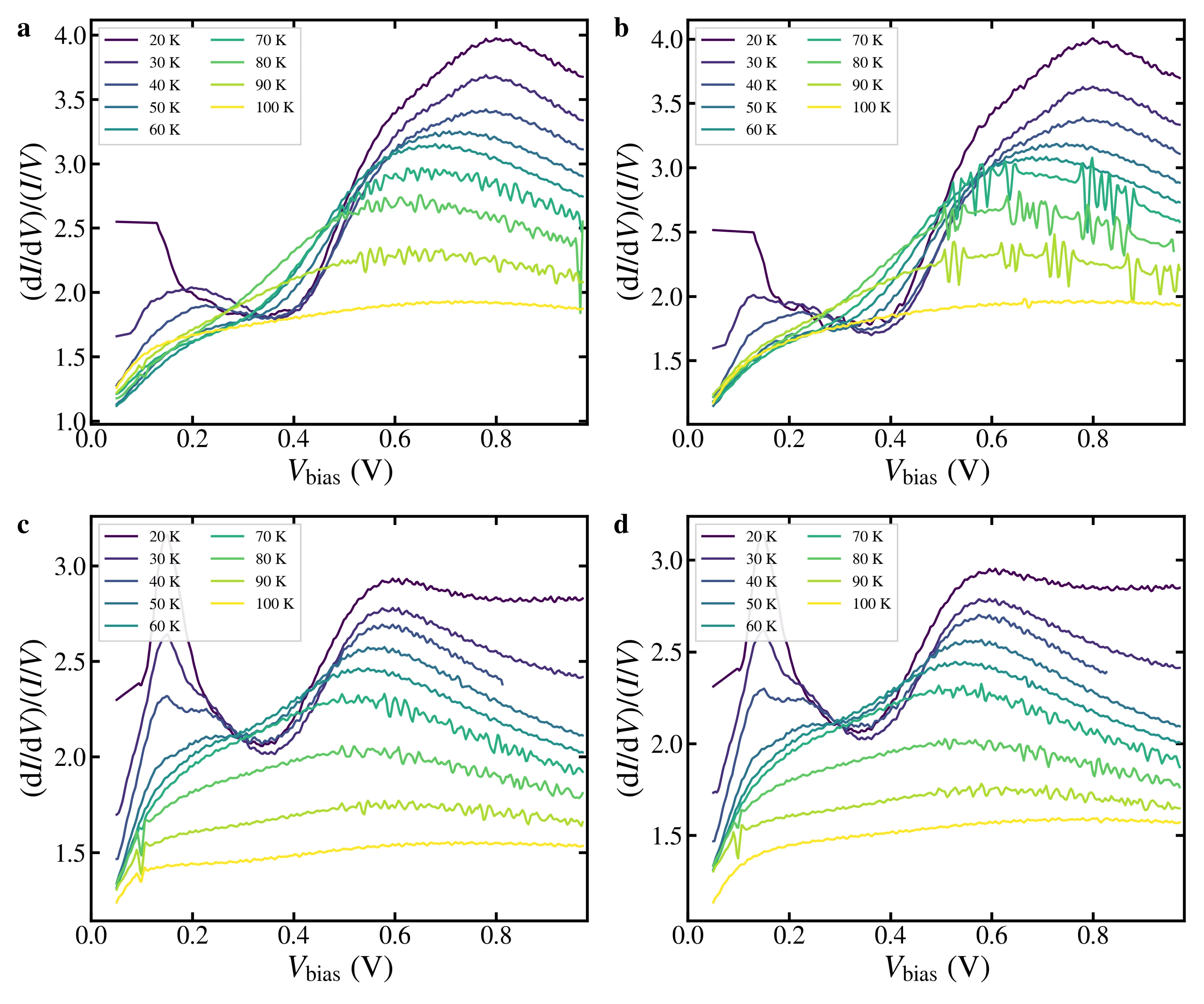
Two sheets of graphene — the thinnest layers of carbon, just one atom thick — are stacked like bread in a sandwich. Between them lies a magnetized layer of CrSBr. When current flows through this sandwich, the resistance depends on which way the magnetic moments in the middle layer point. The scientists found that the resistance can be changed by more than a factor of three simply by varying the voltage across the contacts or cooling the sample to 20 K — that's about -253°C, colder than the surface of Pluto.
If a magnetic field smoothly rotates the magnetization, the resistance changes not randomly but according to a clear mathematical law: it depends linearly on the cosine of half the rotation angle. It's like a volume knob where the sound increases not in jumps but smoothly and predictably. Such a dependence indicates that the graphene and CrSBr layers interact at the quantum level, and this interaction depends on the direction of the electron's spin — its own rotation, like a tiny spinning top.
Such structures could become the basis for magnetic sensors or memory elements where information is written not by charge but by the direction of magnetization. And this could be controlled not only by a magnetic field but also by an electric voltage — like adjusting light not with a switch but by turning a dimmer.
CrSBr is a layered magnetic semiconductor that retains its magnetic properties even when just a few atomic layers thick.