AI hunts for materials like a head chef express
Original: "Synthesizing like a chemist: an iterative, feedback-driven loop for materials discovery"
arXiv:2608.15928v1 · 2026-08-16 · CC BY 4.0 · 1 min
A computer reads papers, prepares samples, and learns from mistakes to find new materials.

📄 Showing the "Simple" version — "Popular" is not ready yet. Add it to favorites to help prioritize it.

Hunting for a new material is like cooking without a recipe: you try, try again, and often throw things out. Previously, scientists manually flipped through papers and tested compositions one by one. Now there's a "robot chef" that reads the literature itself, mixes components, and checks what came out.

The system combines three things: a language model that extracts knowledge from papers; a camera that assesses film quality in a single snapshot; and an algorithm that suggests the next composition based on results.

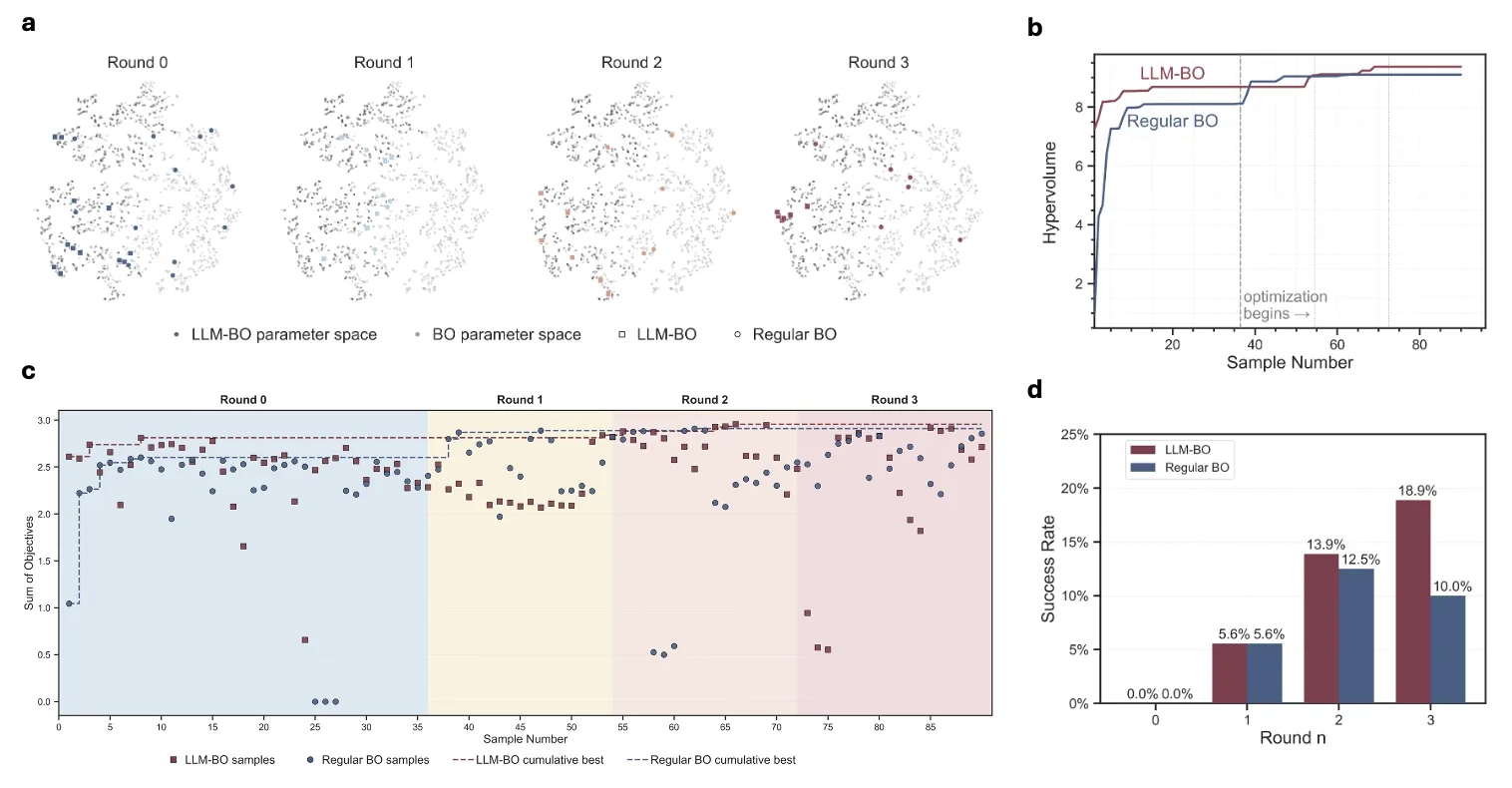
The robot doesn't just repeat others' recipes. After each attempt, it remembers what worked and what didn't, and next time it tries a better variant. In tests, this approach yielded more good samples from the start than random trial and error.

In the end, the compound Rb3BiI6 was synthesized for the first time as thin films. Tests showed the films have the right structure and optical properties.

Now, materials discovery is turning from guessing into learning: the system gets smarter with each attempt. This is a path to fully automated labs, where new materials for electronics and solar cells could be found in days, not years.

The language model reads papers like an experienced chemist: it picks out synthesis recipes from the text that the authors themselves might have only mentioned in passing.

Scientists
Erwin SchrödingerHugh Everett IIIAndrey Markov
Concepts
synthesis machine learning materials ai drug discovery Large Language Models materials discovery predictive learning neural networks drug design artificial intelligence polymer automated analysis optimization Natural Language Processing ai scientific assistant ensemble forecast feedback loop probabilistic forecast genetic algorithm random forest signal processing speech recognition