A probabilisticforecast is a prediction that does not give a single 'yes or no' answer but instead assigns probabilities to a range of possible outcomes. For example, instead of saying 'it will rain tomorrow,' a probabilistic forecast might say 'there is a 70% chance of rain.' This approach acknowledges that the future is inherently uncertain, whether due to incomplete knowledge of initial conditions, chaotic dynamics, or limitations in the forecasting model. In climate and weather science, probabilistic forecasts are essential because they provide users with a measure of confidence, allowing them to make better decisions under uncertainty — a farmer might irrigate if the chance of drought exceeds a threshold, or a city might prepare for flooding if the probability of extreme rainfall is high.
History
The concept of probabilisticforecasting has roots in the mid-20th century, but it became widely adopted in meteorology in the 1970s and 1980s with the advent of ensemble methods, pioneered by Edward Epstein and others. In climate science, it gained prominence in the 1990s with seasonal forecasts.
How it works
Probabilisticforecasts are typically generated by running a model many times with slightly different starting conditions or model parameters — a technique called ensemble forecasting. The spread of the resulting outcomes gives an estimate of the forecast uncertainty. Alternatively, statistical methods can be used to calibrate a single deterministic forecast by comparing past forecast errors. The output is a probability distribution, often summarized as a mean, a median, or a set of percentiles (e.g., the 10th and 90th percentile of expected temperature). The key is that the probabilities are meaningful: over many forecasts, events predicted to have a 70% chance should occur about 70% of the time — a property called reliability.
In practice
Probabilisticforecasts are used in weather prediction (e.g., probability of precipitation), seasonal climate outlooks (e.g., El Niño probabilities), and risk assessment for natural hazards like hurricanes or heatwaves.
Fun fact
A perfectly reliable probabilisticforecast is one where, over the long run, the observed frequency of an event exactly matches the forecast probability — a property that is often tested statistically but is never perfectly achieved in practice.
Every one of us has wondered at least once how many years we'll live. In 1996, nearly two and a half thousand Japanese people over sixty answered that question in a national survey. Their answers became a kind of mirror reflecting hopes, fears, and habits of thought. Twenty-eight years later, researchers compared those forecasts with actual dates of death and found that the mirror was warped, but not useless.
Hunting for a new material is like cooking without a recipe: you try, try again, and often throw things out. Previously, scientists manually flipped through papers and tested compositions one by one. Now there's a "robot chef" that reads the literature itself, mixes components, and checks what came out.
A lone fish sees a shadow overhead. Should it flee? If it's just a leaf, it wastes energy and gives away its position to a predator. If it's a heron, hesitation is fatal. That's the eternal trade-off of the solitary individual: quick reactions mean many false alarms, while caution means risking being eaten.
In a school, it's different.
A web where lions eat zebras and hyenas finish the leftovers is not just a list of dinners. It's a survival map for an entire region. When the climate shifts, animals move, and the map tears. To understand where it will tear and where it will hold, you need to find its unchanging 'skeleton'—the connections that repeat across different places.
A hundred thousand stars in the dense core of a globular cluster move like steel balls in a giant pinball machine. Each 'bump' — a gravitational encounter between a binary system and a single star — triggers a cascade of unpredictable events.
The optical sky background is a cosmic palimpsest, where light from billions of unresolved galaxies is layered, each layer corresponding to a different epoch. Until now we could only distinguish the brightest "letters"—individual stars and nearby galaxies.
In combat, a pilot needs to instantly understand what an object is and what its intentions are. Conventional systems wait for complete radar data — like a goalkeeper who only reacts after the shot. The new algorithm works like an experienced goalkeeper: from the attacker's first moves, it predicts the target's maneuver.
Two gardeners haggle over water from a magical well. One proposes how many buckets to take, the other can agree or refuse. If the deal goes through, the water decreases; if not, the well gradually refills. This haggling repeats hundreds of times, and the gardeners' habits sometimes change randomly, as if they're trying new tactics.
Technological disasters like Chernobyl rarely strike without warning. They gestate for years: organizations ignore warnings, their complexity mirroring the rise of entropy — a measure of relentless chaos that builds up unnoticed until it avalanches.
A driver on a slippery road doesn't know exactly how the car will respond to the steering wheel, and learns on the go, leaving room for error. A smart control algorithm behaves in a similar way.
A sound signal is conveniently represented as a complex number: its modulus (amplitude) reflects loudness, while its argument (phase) indicates the wave's position in time: its instantaneous shift.
An experienced detective doesn't calculate a criminal's path using the laws of physics: he checks a file of similar cases. The new prediction method works the same way: instead of complex equations, it has a vast archive of trajectories that have already happened — planetary motions, currency exchange rates, signals from space.
A runner loses on both a smooth track and sticky sand. Seems hopeless. But if the surface underfoot starts changing every few seconds (track, then sand) the runner suddenly stops falling behind. He doesn't get faster; the environment just doesn't get a chance to 'crush' his weakness.
That's exactly what the authors found when studying a simple predator–prey model.
At a weather station in Brazos County, Texas, rain is recorded on magnetic tape: every day, four years straight. Nine hundred millimeters in a good season, a hundred in a bad one. Then the tape falls silent. Drought creeps in without a sound — the slow fading of the earth's pulse. The standard SPI-3 index only catches on a month or two later, once the moisture is already gone.
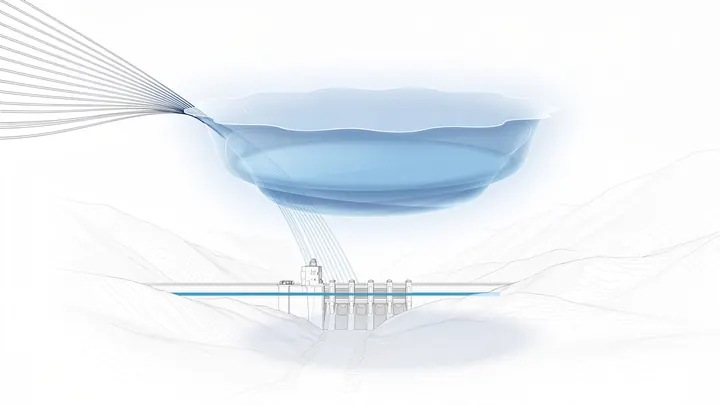
Inside the concrete dam, machines hum, running on empty. Three out of ten turbines are silent. The water level in Southeast Brazil’s largest reservoir has dropped so low that the blades are about to gulp air. The country’s 160 hydropower plants, which supply more than half its electricity, are linked into a single water network where every drop counts.
Two pendulums suspended from a single invisible spring swing in a shared air current. One always lags the other by exactly half a period: when the first swings left, the second is already returning from the right. By watching the first, you can tell where the second will be half a period later.
A person reaches out to a stranger across town. That stranger will never return the favor: they'll never meet. So why help? Biologists call this indirect reciprocity: kindness comes back not from the person you helped, but from someone else, down the line.
In a new study, two variants of this idea were pitted against each other.
A handful of sand falls onto a table: each grain rolls down until it rests in a hollow. That's how a potential works: the table's surface tells the grains where to go. But in a river with whirlpools, there's no single basin everything flows into. Water swirls, returns, and meanders. For such systems, the usual map of 'pits and hills' doesn't apply.
A crowd at a metro station during rush hour. Some hurry toward the escalator, others slow down at the departure board, still others weave around a column. Each step is not merely a reaction to what's right in front of your nose. A person estimates in advance where a neighbor will be a second from now and adjusts their route accordingly. Physicists call this forward-looking behavior anticipatory.
Every morning you pick up the same mug, but the coffee tastes either bitter or just right. It's not about the coffee, and not about your character. Inside us, an invisible panel with dozens of sliders is constantly shifting: fatigue, hunger, anxiety, hormone levels.
The aurora borealis is like a distant theater: the show may be on, but whether the audience sees it depends on the curtain. Here, the curtain is clouds and moonlight. Earlier forecasts tried to predict both the occurrence of auroras and viewing conditions at once, mixing everything together.
The hunt for life on distant planets is like diagnosing a rare disease with a test of unknown accuracy. A single positive result means nothing: maybe it's a glitch? We search the atmospheres of exoplanets (worlds around other stars) for traces of water and other compounds, but any signal could be a false alarm.
After a game of Scrabble, the board looks like a mosaic: tiles are scattered but form a connected pattern — islands of words in a sea of empty cells. Such a pattern can be described mathematically, but usually that requires complex rules.
A forecaster issues a week-long forecast in seconds but cannot explain a single decision. That is roughly how modern AI weather models work: they already match classical numerical methods, yet their internal logic is hidden behind millions of parameters.
An album with hundreds of family photos holds countless stories. If you look at each picture on its own, you might easily decide that Uncle is a real giant: that day he happened to stand a step higher than everyone else. But flip through the whole album, and it becomes clear — his height is perfectly ordinary; it's just that a step showed up in a couple of frames.
A typical recipe explains how to cook a dish: step by step, from the initial ingredients to the finished result. The new approach flips the logic: imagine that the future pie itself dictates how much flour to add now. In the quantum world, researchers suggest, a particle receives signals from the future measurement outcome.
When a neutron or proton enters an atomic nucleus, it behaves like a ball hitting a rough wall: it can bounce off in different ways, depending on where it hits.
The atmosphere is a chaotic system, and a detailed global forecast requires monstrous computing power. StretchCast sidesteps this by working like the human eye: it creates 'sharp vision' over a selected region with an ultra-fine grid, while seeing the rest of the world blurry, but sharp enough to capture global connections.
In a turbulent flow, like a raging river, energy constantly cascades from large whirlpools to small ones. Occasionally, particularly powerful bursts occur, resembling sudden waves crashing against the shore. Scientists asked: can we know in advance when such a "wave" will strike? It turns out the answer depends on which vortices are present in the flow at that moment.
A solar panel on a roof produces little current in the morning, a lot at noon, and stays silent at night. Wind doesn't blow randomly either: it's often stronger in the morning and evening than during the day. Energy providers need to know in advance how much energy will be available in an hour or three, so they can switch on backup plants or store electricity in batteries in time.
Thousands of models simmer in a single cauldron, and the steam rises thick and impenetrable. Each whispers something about the future of El Niño, but in the general din you cannot tell who is right and who is just boiling over.
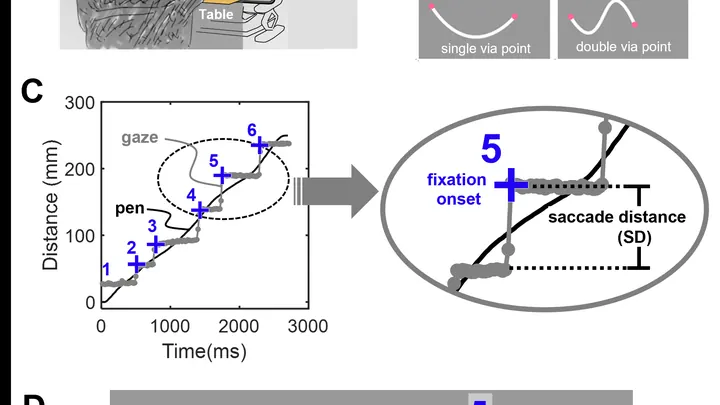
When the hand draws a line, the gaze almost always runs ahead, like a scout peeking around the corner before the column turns. But how far ahead? It turns out that each person has their own distance, and it does not change from attempt to attempt.
In the experiment, professional calligraphers and ordinary people traced a contour on a screen while instruments recorded eye and pen movements.
Earth is like dough mixed to a precise recipe: two parts water to one part land. Too much water, and the planet becomes a vast ocean where intelligence has nothing to grasp onto. Too much land, and water retreats deep, leaving a desert. Scientists put this culinary analogy to the test with statistics.
Old Chinese chronicles are full of weather entries: "no rain in the third month," "the river overflowed its banks." But these are words, not numbers. Until now, turning them into precise precipitation data was nearly impossible.
The new approach works like a translator from the language of chronicles to the language of climatology.
On a table lies a handful of round magnets. As long as no one touches them, they lie in disarray. But send a short current pulse through them, and each disk flips: the north pole swaps with the south. Neighboring disks push each other with their fields, like people in a crowded queue, and the whole handful arranges into a pattern that depends on which way the magnetic wind blew and how warm it is around.
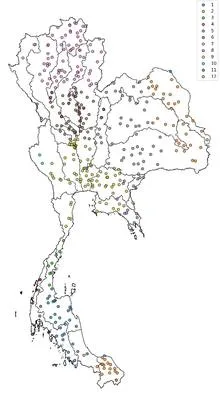
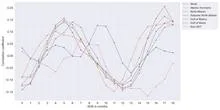
Tuning an old radio receiver requires patience: you slowly turn the dial, catch a crackle, turn it again, until a voice emerges through the static. In much the same way, a reinforcement learning agent searched the ocean for two patches whose temperature difference best predicts rains in Thailand.
In a cloud, billions of droplets swirl around, collide, and merge: that's how rain is born. But exactly how turbulence, those invisible air swirls, helps or hinders droplet growth has been unclear. In the lab, researchers recreated a slice of a cloud and tracked every droplet.
In 1992, Hurricane Andrew tore through Florida, leaving insurers with $$15.5 billion in losses. Many companies went bankrupt, and the market devised a way to shift disaster risk onto investors: catastrophe bonds. These securities pay generous coupons as long as a specified disaster does not occur, such as a hurricane of a certain strength or an earthquake in a particular region.
An orchestra of a hundred musicians plays without a conductor. As long as the score is familiar, each player confidently follows their part, and together they sound harmonious. But when the composer changes the rhythm, discord creeps in: some instruments keep playing the old tune, others try to adapt, and a few fall silent.
In 1935, Einstein, Podolsky, and Rosen proposed a thought experiment that, in their view, exposed the incompleteness of quantum mechanics. Two particles fly apart after interacting, and measuring the momentum of one instantly gives exact knowledge of the other's momentum.