Ensemble forecasting is a method used in weather and climate prediction that acknowledges the inherent limits of knowing the exact state of the atmosphere. Instead of running a single simulation from one set of initial conditions, it runs many simulations, each starting from a slightly different but plausible state. The spread among these simulations gives forecasters a measure of confidence: if all runs agree, the forecast is robust; if they diverge widely, the outcome is uncertain. This approach transforms a single deterministic guess into a probabilistic forecast, answering questions like 'What is the chance of rain tomorrow?' rather than just 'Will it rain?'
History
The concept was pioneered in the 1960s by Edward Lorenz, who discovered chaos in weather systems, but practical ensemble forecasting for operational use began in the 1990s at the European Centre for Medium-Range Weather Forecasts (ECMWF) and the U.S. National Centers for Environmental Prediction (NCEP).
How it works
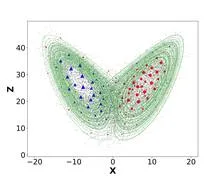
The atmosphere is chaotic, meaning tiny differences in starting conditions can grow into large differences in outcomes. Ensemble forecasting exploits this by deliberately perturbing the initial conditions—for example, by adding small random noise consistent with observationalerror—and then running the numerical weather model for each perturbed state. The collection of model outputs forms an ensemble. Statistical analysis of the ensemble, such as calculating the mean or the percentage of members exceeding a threshold, yieldsprobabilities and uncertainty ranges. More advanced ensembles also vary model parameters or use multiple models to account for structural uncertainties.
In practice
Ensemble forecasts are used daily by meteorological agencies worldwide to produce probabilistic weather predictions, and they are also applied to seasonal climate outlooks and hurricane track forecasting.
Fun fact
The number of ensemble members in operational systems ranges from about 20 to over 50, but research experiments have shown that even a few dozen members capture most of the useful uncertainty information.
Hunting for a new material is like cooking without a recipe: you try, try again, and often throw things out. Previously, scientists manually flipped through papers and tested compositions one by one. Now there's a "robot chef" that reads the literature itself, mixes components, and checks what came out.
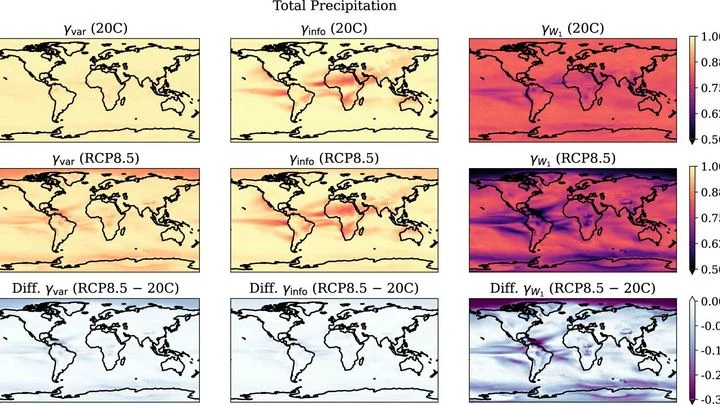
In winter, one part of town gets three times as much snow as the neighborhood next door. One year is a scorcher, the next is a cold snap. That's the whims of weather. But over decades, a different, slow shift emerges: winters, on average, get milder. Telling the two apart is the central challenge for climate scientists.
A group of robot explorers is like a team of cooks tasting the same dish. Each samples their own portion and shares an impression: clear, occupied, or uncertain. But tastes are subjective — one might miss a chair leg, another might only lick the edge.
Power systems with solar panels and wind turbines are like a chess game: cloud cover and load changes are the opponent's moves, impossible to foresee. To maintain balance, operators used to run through dozens of scenarios (uncertainty) — that took too much time and computing power.
The ocean acts as a giant battery for solar energy, converting it into the kinetic energy of waves. Devices that harvest this energy (wave floats, or converters) turn oscillatory motion into electric current. Their performance hinges on three parameters: geometric shape, spatial arrangement, and tuning parameters (e.g., damping).
A student who has spent years solving problems from other people's textbooks suddenly receives three notebooks with real ocean observations. There are few problems, but they have already seen hundreds of similar ones, and now a couple of examples suffice to catch the new teacher's style.
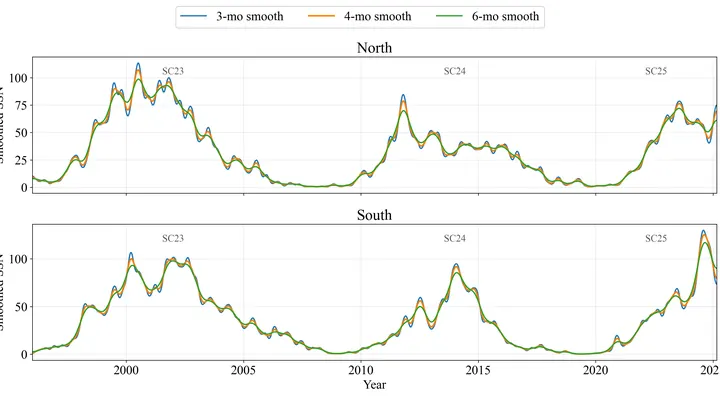
The Sun doesn't burn steadily: it erupts in series. Like a campfire that dies down and then suddenly throws out showers of sparks, these "fiery seasons" last from six months to a year and a half, and during them the star shows an unusually high number of sunspots.
Dip your finger into water once, and from that single sensation, try to guess its temperature. In the quantum world, such one-shot measurements happen all the time, except you have to guess invisible parameters: say, the squeezing strength of a laser beam.
Quantum calculations are a recipe with perfect ingredients, but nature-the-chef cooks in her own way. Machine-learned models of atoms memorize the recipe and predict material properties in seconds instead of weeks.
The heart beats steadily, then slips into arrhythmia. The climate holds its familiar rhythm for decades, then shifts to a new state over a single summer. Such regime shifts are like a flick of a switch, but in real data we see only a noisy one-dimensional signal in which the moment of the break is hidden.
A neural network learning something new is like a traveler in mountainous terrain. Each piece of learned knowledge is a depression in the landscape into which the traveler rolls and gets stuck. To escape and reach a new basin, energy is needed. But as the traveler gains experience, the walls of their pit become steeper, and each subsequent climb requires more effort.
Two observers watch the Pacific Ocean. One studies surface heat maps, the other listens to the rhythm of temperature and heat stored in the water column. On their own, each notices only part of the picture, but together they can sense the approach of El Niño months before the warm current alters weather across the planet.
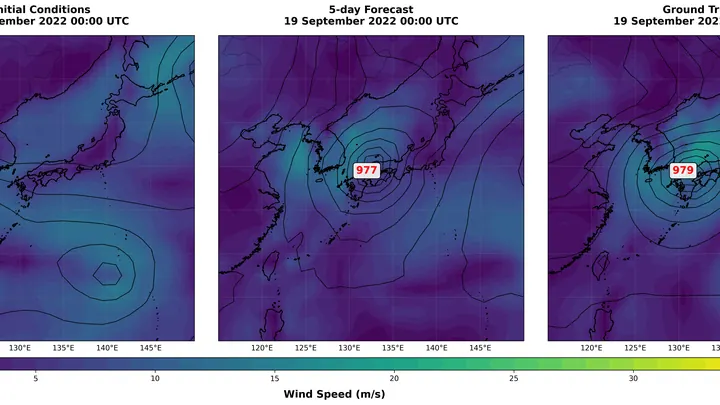
The atmosphere is a chaotic system, and a detailed global forecast requires monstrous computing power. StretchCast sidesteps this by working like the human eye: it creates 'sharp vision' over a selected region with an ultra-fine grid, while seeing the rest of the world blurry, but sharp enough to capture global connections.
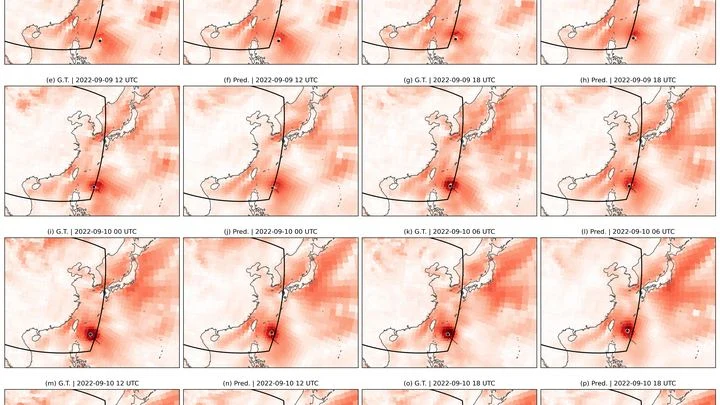
Weather forecasting is like trying to predict where a rock will roll down a slope, knowing the shape of every bump and the force of the wind. Make a mistake at the start, and a week later that error grows into a full-blown storm. In the past, accurate forecasts required massive computers and days of computation.
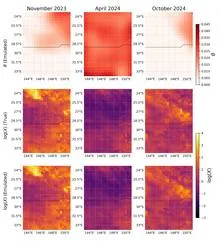
In 2023, the ocean off the coast of Peru warmed so much that fishermen came back empty-handed, while meteorologists argued over the strength of the upcoming El Niño. The sea surface temperature map they were looking at was the only one available, but how much could they trust it?
Solar flares — sudden energy releases on the Sun — can knock out satellites and power grids. Previous models often either cried wolf or missed a real blow. The fix: attach a reliability estimate to every prediction.
A radiation sensor in the city is like a street musician: it has to hit the right notes even when fingers go numb from cold or the instrument is baked by the sun. Usually, such devices are kept in greenhouse conditions, with heating or cooling, otherwise the energy scale (which distinguishes harmless potassium in concrete from dangerous cesium) starts to lie.
During a course of radiation therapy, the tumor and surrounding tissues can shift or change size. Doctors regularly take images and sometimes adjust the plan to keep the radiation on target. But how do you know how much dose has already been delivered and how much is still to come? Usually, this is estimated using simple rules that don't account for uncertainty.
Thousands of models simmer in a single cauldron, and the steam rises thick and impenetrable. Each whispers something about the future of El Niño, but in the general din you cannot tell who is right and who is just boiling over.
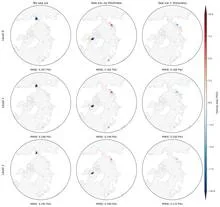
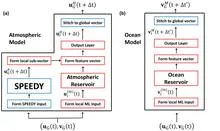
A student learned physics from a textbook and is taking an exam. The first two problems are solved brilliantly, but on the third, they err on something not covered in the book. That is roughly what the hybrid atmospheric model NeuralGCM faced when run through three levels of testing: cyclones, El Niño, and anomalous warming.
A neutron star is a sphere the size of a city, but it weighs as much as one and a half Suns. Inside such a sphere, matter is so compressed that a teaspoon of it would weigh billions of tons. But physicists don't fully know what this matter is made of.
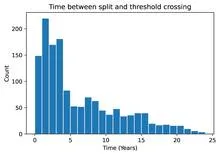
In 1997, the Pacific Ocean warmed so much that corals bleached from Indonesia to the Galápagos, and floods and droughts swept across five continents. Such events, which climate scientists call extreme El Niños, occur every few decades, and to understand how often they will arrive in the future, we need thousands of years of observations.
An orchestra of a hundred musicians plays without a conductor. As long as the score is familiar, each player confidently follows their part, and together they sound harmonious. But when the composer changes the rhythm, discord creeps in: some instruments keep playing the old tune, others try to adapt, and a few fall silent.
An orchestra of a thousand musicians plays in harmony as long as the conductor keeps the tempo. But the moment he changes the score, the violins in one corner start playing louder, while the brass in another come in late.
Imagine an interpreter in a negotiation room who hears the tropics whisper and repeats it too loudly. That is how the neural-network climate model DLESyM behaves when forced with real Pacific sea surface temperatures. The ocean whispers "El Niño," and the atmosphere shouts back as if being shaken by the shoulders.
An orchestra of two musicians plays from the same score, but each hears only their own line. The atmosphere and ocean in a climate model resemble such a duet: they exchange heat and moisture every few hours, yet until recently their neural network counterparts could not keep a common rhythm.
A team of forty forecasters prepares an El Niño forecast two years ahead. Each works with the same model but slightly different initial conditions and settings, so their outputs diverge. Typically, forecasting centers average all forty opinions, assuming each member is equally useful.
For 36 days, tropical cyclone Freddy raged over the Indian Ocean, the longest-lived cyclone on record. Meteorologists tracked it from satellites, aircraft, and ground stations. But one detail eluded all instruments: the precise air density deep within the vortex. And that density determines where the cyclone will turn tomorrow.
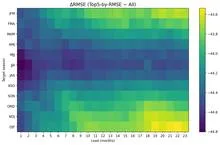
In a room with 80 advisors, each shouts their own opinion, and if you simply listen to everyone and take the average, you get mush. So it is with El Niño forecasts: a model produces 80 possible futures, but not all are equally useful. Some err less often, others more, and still others talk about something else entirely.
A translator at a high-stakes negotiation doesn't just render words quickly; they make sure the meaning doesn't get lost. CAMulator does the same: it takes the complex climate model CAM6 and translates it into the language of a neural network that runs hundreds of times faster, without losing the physical essence.
In the hall, fifty sages confer, each observing the ocean in their own way. One listens to surface temperature, another to the wind, a third to how heat hides in the depths. Their judgments often contradict each other, but there is an elder who knows which of them to trust more.
In 2015, downpours in Chennai turned streets into rivers overnight. The city was caught unprepared: seasonal models offered only a vague warning. Yet the monsoon is not a whim of the sky; it is the pulse of a vast machine linking oceans and continents.
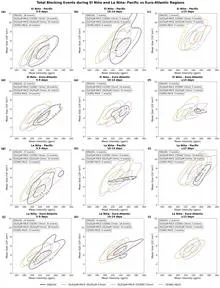
In winter, air over the Northern Hemisphere does not move haphazardly; it spends days at a time in the same pattern before rearranging itself. These patterns are like rooms in a maze: the system enters, lingers, then finds a door to another room. Each room has its own weather: somewhere over Europe it is warm and humid, while over Siberia it is frosty and clear.
Two dancers stand facing each other but cannot see each other's faces. One is the atmosphere, fast and noisy, forgetting its moves after just a couple of weeks. The other is the ocean, slow and heavy, remembering every touch for months. For the dance to work, they need to learn to lead each other while only looking at their partner's hands.
A translator at negotiations picks up not only the words but also the tone in which they are spoken. If they focus only on vocabulary, they might miss sarcasm or fatigue in the voice. If only on intonation, they could mistranslate the details of the contract.
A translator at an important negotiation starts by simply repeating words, but gradually begins to anticipate what the counterpart will say. The new weather model works similarly: physics provides the framework, and machine learning learns from errors and fills in the gaps.
Climate is like an orchestra without a conductor: each musician hears the others with a delay, and the score changes mid-concert. The ocean, atmosphere, ice, and land continuously exchange energy, and the slightest hiccup in one instrument can escalate into a shift of the entire melody.
In February 2022, the eastern coast of Australia was hit by rains that lasted several days in a row. Water inundated towns in Queensland and New South Wales, insurers paid out 3.35 billion dollars, and the flood became the costliest in the country's history.
Every year, the same drama unfolds over West Africa: from June to September, the sky fills with moisture and releases rains that determine the harvests of millet, sorghum, and maize. This rainy season is driven by the West African monsoon, a giant atmospheric pump that pulls moist air from the ocean deep into the continent.
A blindfolded sapper searches for a mine by tossing pebbles at random. He cannot see the map or calculate where the charge is buried. But if he throws enough pebbles and listens for which one lands with a duller thud, he can pinpoint the danger. That is roughly how a new method for predicting El Niño works: the warm current that every few years alters weather across the entire planet.