Scales for Thoughts: How to Measure Whether a Neural Interface Really Speaks
In the 1980s, the DARPA speech recognition challenge settled the debate between statistical methods and hand-written rules, setting a common standard for the entire field.
The process by which a machine identifies and understands spoken words from audio signals.Speech recognition is the technology that enables machines to convert spoken language into text or commands. It involves analyzing audio signals, extracting acoustic features, and mapping them to linguistic units like phonemes and words. Modern systems use deep neural networks trained on vast amounts of speech data to achieve near-human accuracy, even in noisy environments or with diverse accents.
Early attempts in the 1950s used simple pattern matching for digits. The field advanced with hidden Markov models in the 1980s, but the breakthrough came in the 2010s when deep learning replaced traditional acoustic models, dramatically improving accuracy.
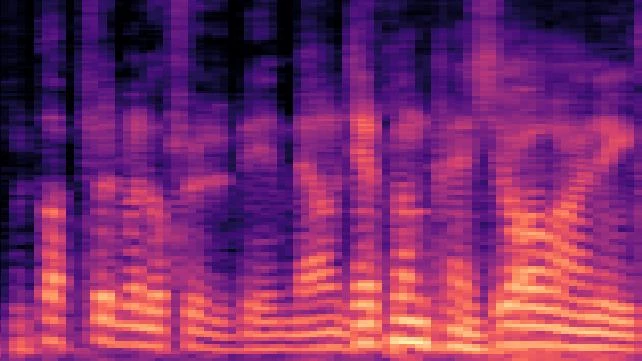
The process begins with digitizing the audio waveform and dividing it into short frames (e.g., 25 ms). For each frame, features like Mel-frequency cepstral coefficients (MFCCs) are extracted, capturing the spectral shape of the sound. These feature vectors are fed into a neural network — often a recurrent or transformer architecture — that outputs probabilities over possible phonemes or characters. A language model then combines these probabilities with linguistic constraints to produce the most likely text sequence. Recent end-to-end models (e.g., Whisper, DeepSpeech) learn the entire mapping from audio to text directly, bypassing explicit phoneme alignment.
Speech recognition powers virtual assistants (Siri, Alexa), automated transcription services, voice-controlled devices, and real-time captioning for the hearing impaired.
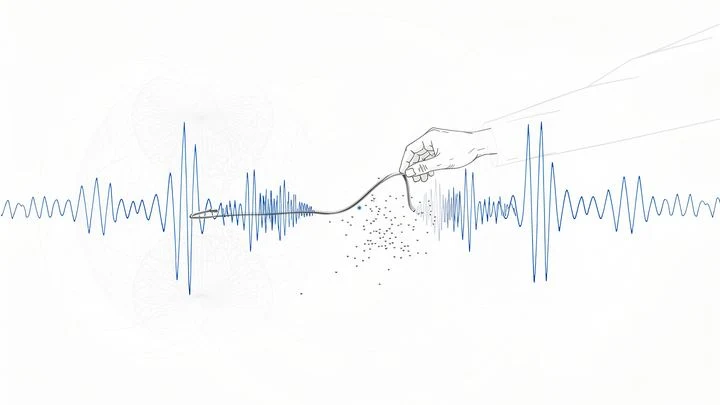
Modern speech recognition systems are so sensitive that they can be tricked by inaudible ultrasonic commands hidden in audio recordings, a security vulnerability discovered in 2017.