A Light Lantern for Many Streams express
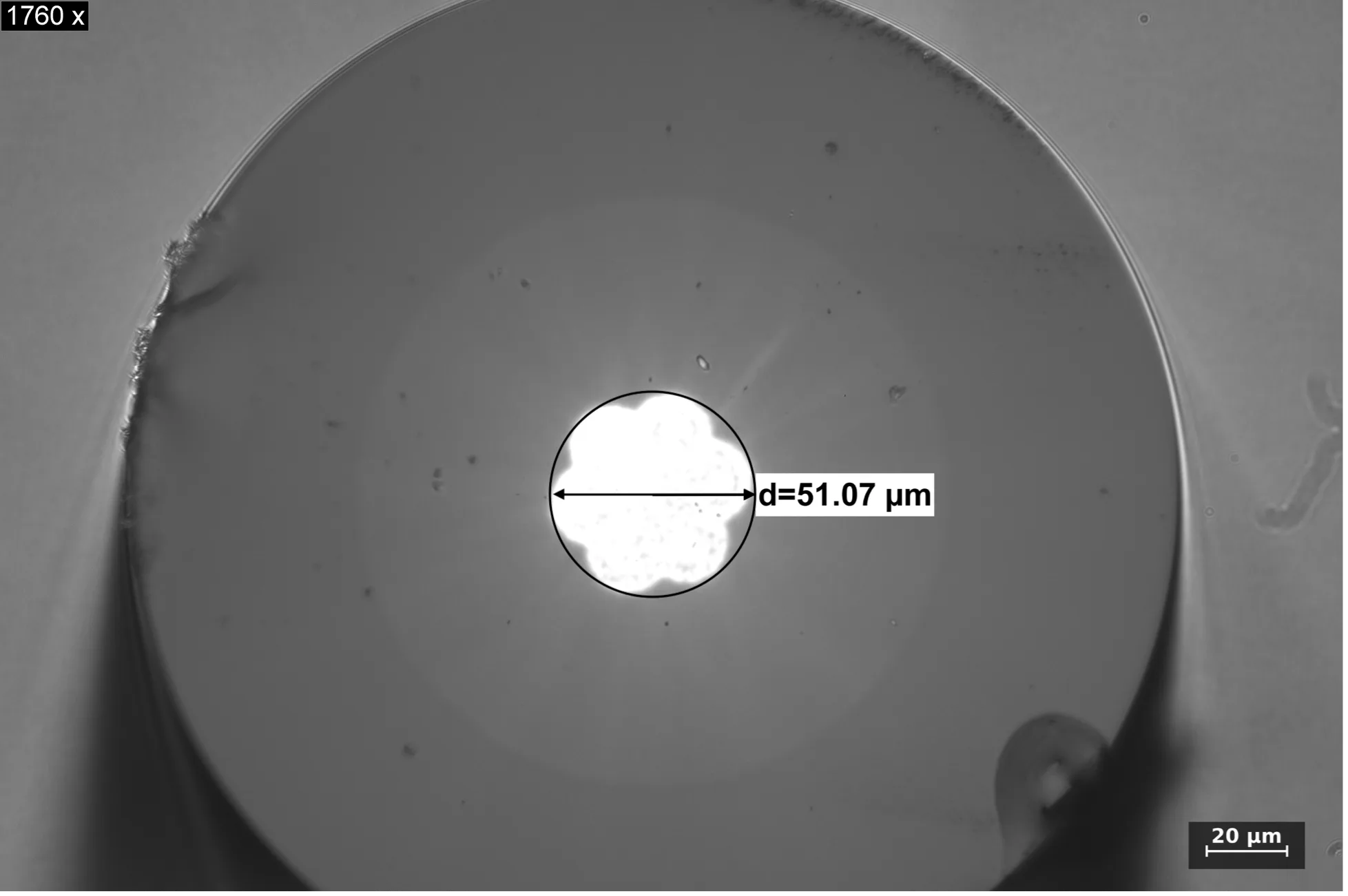
Light in an optical fiber is like a stream: it flows inside a glass thread and doesn't spill out. A thick thread carries many streams at once, a thin one only one. Astronomers often need to pour light from a thick fiber into several thin ones to split it into colors. For this, they have long used a device called a photonic lantern: it gently, without splashing, guides light from a single thick fiber into a bundle of thin ones.
Now engineers have made the lantern work in reverse. They took several thick fibers and joined them into one thick fiber. The light from all the fibers merges into a single flow, like several streams joining a river. Losses are less than ten percent — almost all the light reaches the end. They built such a device and tested it at different wavelengths, and it works equally well.
Why is this needed? Large telescopes collect light over a big area, but getting it into instruments is tricky. The new lantern allows combining light from several mirror segments without loss and without complex alignment. This is a step toward telescopes that don't require perfectly uniform light at the input — making them easier to build and maintain.
Original abstract
as written by the authors arXiv:2608.18912v1
Photonic lanterns have been widely used in astronomy as low-loss multiplexing devices, typically coupling light from a multimode input into several single-mode outputs. In this work, we present the first multimode-to-multimode photonic lantern specifically designed to combine light from several multimode fibers into a single multimode waveguide. We fabricated and characterized the devices at multiple wavelengths to evaluate the performance of the adiabatic multimode transition. The measured efficiencies exceed $$90\ \%$$, demonstrating low-loss multimode propagation and efficient modal transfer through the lantern structure. This architecture enables efficient multimode beam combination and represents a significant step toward scalable modular telescope concepts without requiring diffraction-limited injection.
Light in an optical fiber can travel hundreds of kilometers and lose less than one percent of its energy, like a flashlight shining through a window as thick as a mountain.
Photonic lanterns inspire science fiction writers: in the novel "Light of Distant Stars," such devices link ships into a single network.