Photon efficiency is the principle of extracting the maximum possible information or energy from each individual photon in an imaging or communication system. In astronomy, where detectors are often starved for light, and in quantum optics, where single photons carry quantum information, the ability to count and use every photon matters enormously. High photon efficiency means lower noise, faster measurements, and the ability to observe fainter objects or transmit data over longer distances with less power.
History
The concept gained prominence with the development of photomultiplier tubes in the mid-20th century and the rise of quantum optics in the 1970s–80s, where the photon became a countable entity. The push for photon-efficient deep-space communication intensified with NASA's interest in optical links, where every photon is precious over interplanetary distances.
How it works
Photon efficiency is achieved through a combination of high-quantum-efficiency detectors (which convert a large fraction of incoming photons into measurable signals), low-loss optical components, and clever measurement strategies. Techniques like single-photon counting, avalanche photodiodes, and superconducting nanowire detectors push the limits of what can be detected. In communication, photon-efficient schemes often use advanced modulation formats or error-correction codes to encode more bits per photon.
In practice
Used in single-photon detectors for quantum key distribution, low-light-level imaging in biology and astronomy, and in deep-space optical communication systems that must transmit data across millions of kilometers with limitedlaser power.
Fun fact
The human eye can detect a single photon, but the brain's noise filtering means we don't consciously perceive it — a fact that highlights the gap between physical sensitivity and practical information extraction.
Gamma rays are the most energetic light in the Universe. But one part of them, the medium-energy range, long remained invisible: instruments couldn't catch them, leaving a gaping hole in the sky. Scientists call it the "MeV gap," named after the unit of energy these rays carry.
The new camera works like a three-layer detective.
Light in an optical fiber is like a stream: it flows inside a glass thread and doesn't spill out. A thick thread carries many streams at once, a thin one only one. Astronomers often need to pour light from a thick fiber into several thin ones to split it into colors.
You're looking for fireflies in a dark forest. Instead of photographing the whole forest every second and then poring over the images, you carry a small device that spots the flashes on its own and cuts out only a circle around each one. The rest, the blackness, isn't saved. That's exactly how the new sensor for scientific cameras works.
Tomographs don't produce ready-made pictures. They collect numerous 'shadows' — projections of innards from different angles or using various signals — and mathematically reconstruct a 3D picture from them.
Gravitational-wave observatories are like a keen ear listening for distant rumbles of cosmic catastrophes. To catch the faint whisper of merging black holes, detectors of gravitational waves use specially prepared light — known as squeezed vacuum.
A smartphone camera captures everything indiscriminately, but the eye immediately picks out what matters. The retina doesn't just pass the image to the brain: it highlights contours on the spot, suppresses noise, and adjusts to brightness.
A flashlight beam aimed through frosted glass turns into a blurry spot with every extra millimeter of thickness. Scintillators, materials that convert X-rays into visible light, behave much the same way. They underpin medical imaging, baggage screening, and detectors at particle accelerators.
Any light measurement runs into a fundamental limit: photons hit the camera sensor unevenly. This natural ripple (shot noise) blurs fine details, like trying to pick out a quiet instrument in an orchestra through the noise of the hall.
A typical atom trap works like a funnel: laser light and a magnetic field slow atoms down and gather them at the center. But the funnel has a limit: it only catches atoms moving within a certain speed range.
A quantum memory node is a tiny diamond with a defect that can store and emit single photons. But its light has a wavelength of 637 nanometers, the same red as a ruby, and is almost completely absorbed after just a few meters of standard optical fiber.
A typical computer shuttles electricity along copper traces, and every operation is a queue: first one thing, then another. Light works differently. In a single beam, you can mix dozens of signals without them interfering, like different voices in a choir, singing at once but each heard distinctly.
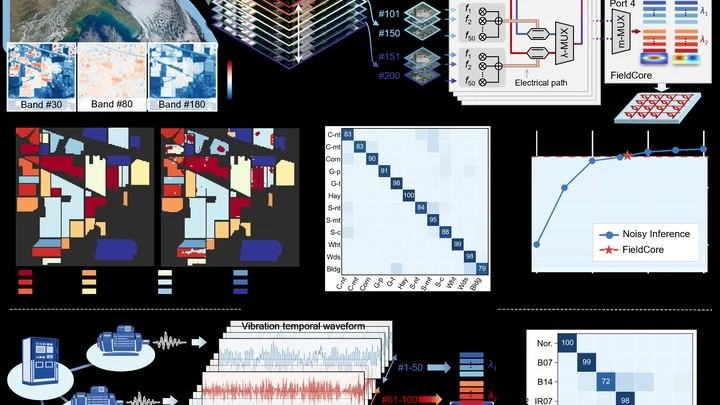
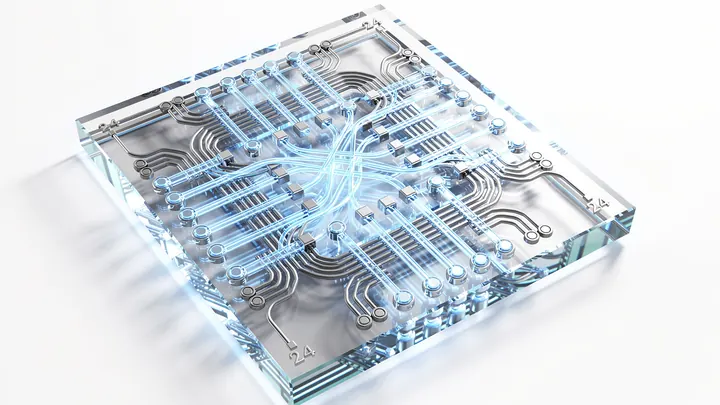
The new FieldCore chip uses five such "voices" at once.
A neutral-atom quantum computer is like a library where books not only need to be read but also quickly returned to the shelf. Slow readout of results is like a sluggish librarian holding up the entire queue. Scientists have found a way to speed up this process by adding helpers.
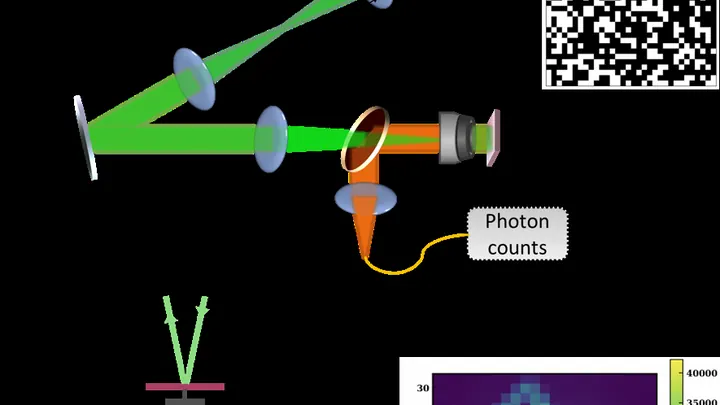
Hunting for a single glowing spot in a dark sample is like trying to find a needle in a haystack: the microscope beam crawls line by line, wasting time and light. Physicists replaced this slow sweep with random light patterns. The sample is illuminated with a broad field, but each time with a new pattern of bright and dark patches, as if random shadows from a grid were projected onto it.
The receiver doesn't catch radio waves but submillimeter light — the radiation emitted by cold clouds of gas and dust in distant galaxies. Inside, there's an array of tiny resonators, each tuned to its own frequency, like the strings of a grand piano tuned to notes.
Light hits a thin film, and an electric current instantly appears in it. This is how a pair of two materials works: molybdenum disulfide and cobalt. The first is a semiconductor, the second is a magnet. Between them, as it turns out, an invisible intermediary layer is born.
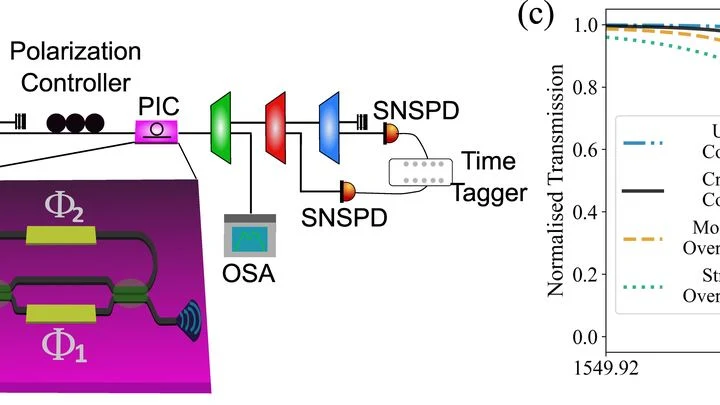
Two clocks in different rooms need to tick in unison. Usually, this is done by sending bright pulses or pairs of photons that arrive one right after the other. But the signal can be so weak that photons barely make it through. In this work, clocks were synchronized with light a billion times dimmer than usual.
If light could be bottled, scientists would have the perfect assembly line: one bottle — exactly one photon, no stray drops. Such single particles of light are needed for quantum computers and secure communication: they carry information that cannot be eavesdropped on unnoticed.
Light from an ordinary bulb is a stream of individual photons, like drops from a faucet. But there is also light where photons come in pairs, like twins walking together. Such grouped light has long been desired for measuring distances and imaging objects hidden around corners. But sources of this light were either too dim, or their flashes too short for ordinary detectors to catch.
The proton is not a smooth ball but a tangle of smaller particles in constant motion. To peek inside, physicists fire electrons at protons and watch how they bounce off. The new machine, the Electron-Ion Collider, will do this with unprecedented accuracy.
Scientists have run simulations to see what would happen if data were collected at different energies.
Light in a microscope doesn't arrive as a steady stream but like buckshot from a bag: sometimes more photons, sometimes fewer. This random scatter is the shot noise. It sets a limit: faint signals from tiny objects get lost in the ripple.
Scientists have found a way to calm this buckshot.
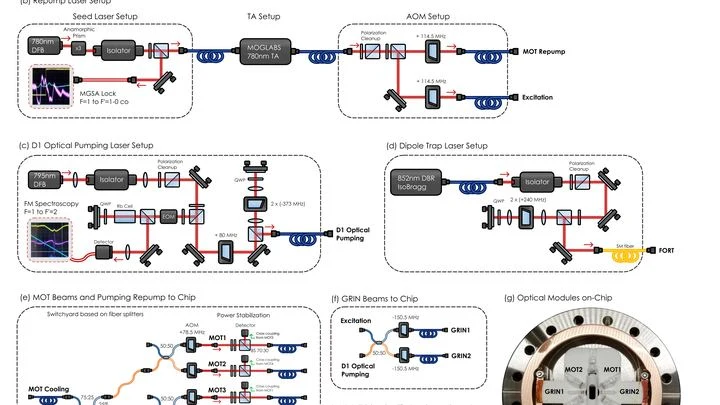
A grain-of-sand-sized device: a tiny mirror-dish holds a single rubidium atom and collects the glow it emits under a laser beam. The trapped light particles are sent into an optical fiber — the whole setup is precise and stays aligned even when shaken.
When making popcorn, a microwave uses electricity only to heat the kernels. A gas stove heats the entire burner and the air around it. The same difference applies between a photonic quantum chip and a classical supercomputer when solving a problem devised by Scott Aaronson.
A fluorescence microscope is like a photographer shooting in the dark: the more frames, the better the view, but each frame costs photons. In a living cell, the supply is limited, otherwise the light would simply kill the sample. So scientists proposed not to increase the number of photons, but to choose more wisely when to catch them.
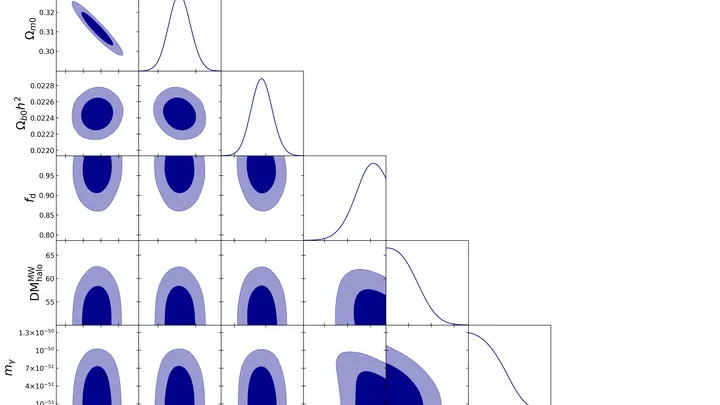
Fast radio bursts are brilliant cosmic flashes that, like a starting signal, set off a race of radio waves across the universe. Astronomers used them as a natural laboratory to test whether the photon, the quantum of light and the carrier particle of the electromagnetic interaction, has mass.
Plants employ an army of perfect couriers to deliver energy. Each photon of sunlight is absorbed, and its energy is instantly, with almost no loss, transferred to reaction centers where nutrient synthesis occurs.
For the quantum internet, we need to learn how to hold light — much like mail is sorted at intermediate nodes. The technology is based on a thin crystal plate doped with europium ions, a rare-earth element that, incidentally, is responsible for the red glow of smartphone screens.
A laser pulse lasting one and a half nanoseconds hits a nonlinear crystal, and a stream of squeezed light is born. That is how an experiment on the Jiuzhang 4.0 quantum processor in China begins.
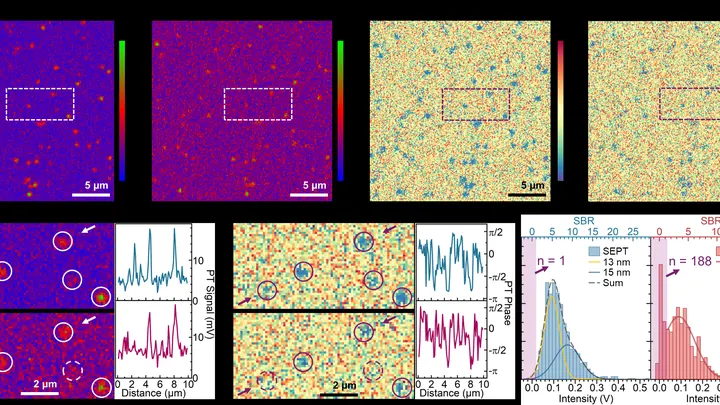
Detecting a single quantum emitter is like tuning a piano on a factory floor full of screaming machines: the pure tone drowns in noise. But the tuner doesn’t try to outshout the racket — he picks up a tuning fork and listens for beatings. That’s how even a barely audible echo becomes clear.