Why a swimmer feels cold in warm water express
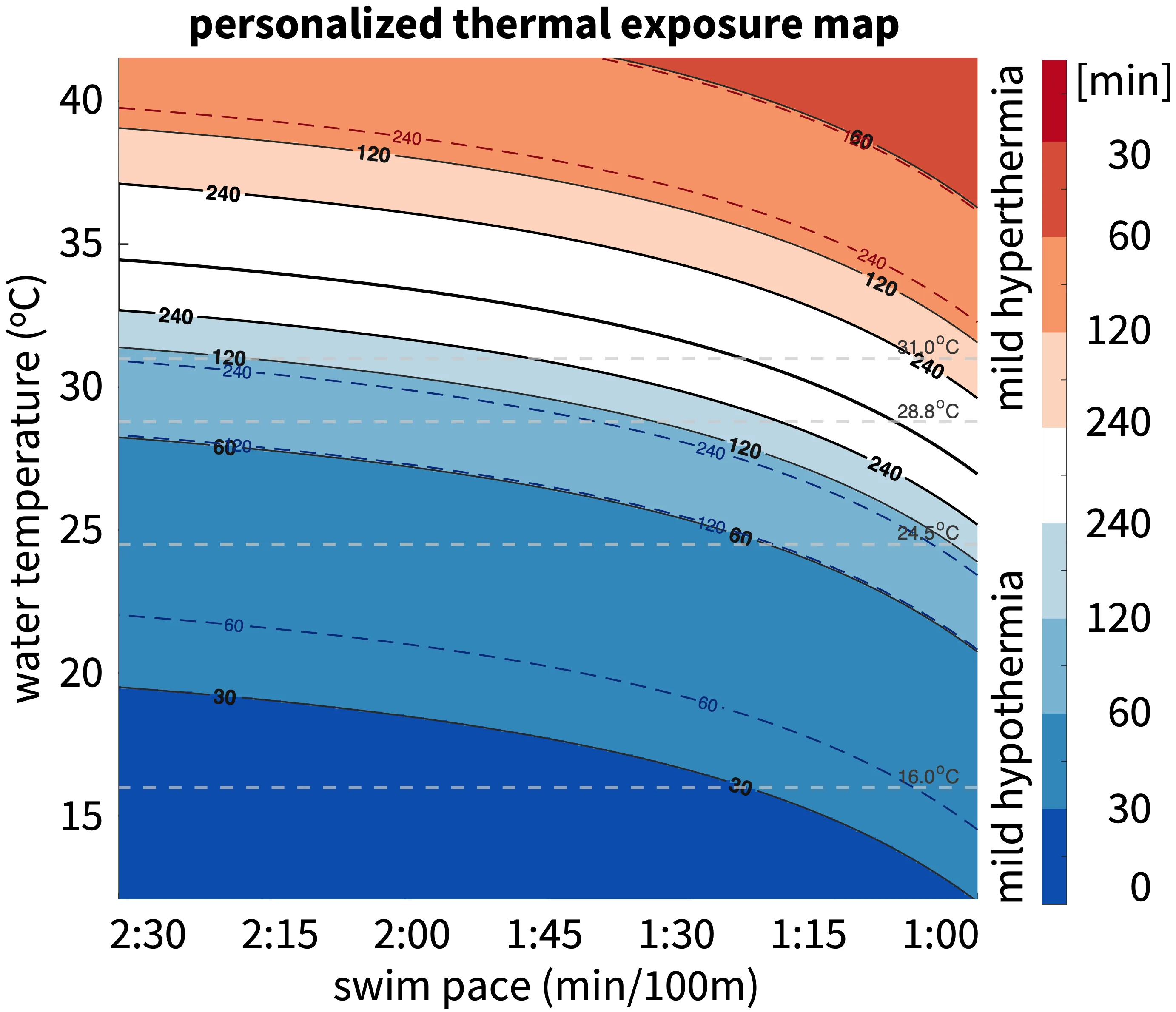
Swimming season opens when the water feels tolerable. But everyone has their own threshold: one person shivers at twenty degrees, another swims comfortably at fifteen. Scientists decided to figure out where this difference comes from.
They compared a swimmer's body to a house trying to keep heat in while a cold wind blows outside. Inside, a stove burns: these are the muscles generating heat during movement. The house walls are the skin and fat layer: the thicker they are, the less heat escapes. And the wind is the water, which constantly cools the body's surface. When the stove can't keep up with the losses, the house cools down.
From this picture, they derived a simple rule: the critical water temperature depends on body size, swimming speed, and fat layer thickness. A large swimmer who strokes quickly can safely stay in water where a thin, slow swimmer would freeze within minutes.
Observations of swimmers showed that the body cools unevenly, like a simple object, but in waves — first the arms and legs cool, then the torso. This explains why the feeling of cold increases in jumps rather than smoothly.
Now safety in open water can be assessed more accurately: not by thermometer, but by who exactly is swimming and how fast.
A thick layer of subcutaneous fat works like a wetsuit: in walruses and seals it reaches dozens of centimeters and allows them to swim in icy water for hours.
In the novel 'The Martian', the hero survives in a heated spacesuit, but without it, any person in a cold environment quickly loses heat, like a swimmer in open water.