Thermal property measurement encompasses the techniques used to determine how materials store and transfer heat, particularly their heat capacity — the amount of energy needed to raise their temperature by a given amount. While classical methods like calorimetry have been used for centuries, recent advances have pushed the boundaries of what can be measured, including the thermal properties of single molecules, two-dimensional materials, and even quantum systems where heat capacity becomes a probe of exotic phenomena like entanglement. These measurements are fundamental to understanding phase transitions, developing new materials for energy storage, and designingefficient cooling systems.
History
The concept of heat capacity dates back to the 18th century, with Joseph Black's work on latent heat. Modern nanocalorimetry emerged in the 1990s, and the use of quantum effects to probe thermal properties is a very recent development, with key advances in the last decade.
How it works
Traditional calorimetry measures the temperature change of a sample when a known amount of heat is added. Modern techniques, however, often use nanoscale sensors or optical methods. For example, a tiny suspended platform with a heater and thermometer can measure the heat capacity of a single nanoparticle. In quantum systems, heat capacity can be inferred from how the system responds to temperature fluctuations, or from the noise spectrum of its thermal radiation. Some cutting-edge approaches use the temperature dependence of quantum entanglement to detect heat capacity changes, as the two are intimately linked in many-body quantum systems.
In practice
Accurate thermal property measurements are essential for designing electronic devices that dissipate heatefficiently, developing thermal barrier coatings for engines, and understanding the thermal behavior of materials used in cryogenics and space applications.
Fun fact
The heat capacity of a single molecule can now be measured using a tiny suspended platform that is only a few hundred nanometers across, sensitive enough to detect the heat from a single molecule's vibrations.
Instead of an ice bath, a warm gas blanket. That is how the cryogenic current comparator at Japan's National Metrology Institute is now cooled. Previously, this instrument, which compares electric currents to within billionths of a percent, required immersion in liquid helium.
One universal interpreter for all dialects of sodium. Liquid sodium in a reactor behaves differently: near the pipe wall it is dense and fast, near the boiling surface it is rarefied and slow. Previously, each state required its own set of calculations, as if hiring a new translator for every phrase.
A star blinks every 38 seconds. This is no random twinkle: inside the white dwarf WD 0158−160, steady oscillations run like the beats of an invisible metronome. From the rhythm of those beats and the star's precise distance, astronomers have computed its mass and temperature — without ever looking at its spectrum.
Swimming season opens when the water feels tolerable. But everyone has their own threshold: one person shivers at twenty degrees, another swims comfortably at fifteen. Scientists decided to figure out where this difference comes from.
They compared a swimmer's body to a house trying to keep heat in while a cold wind blows outside.
A regular battery releases heat smoothly: what you store is what you get. The power is fixed once and for all, like a faucet that pours water in a single stream. But sometimes you don't need a steady flow; you need a short, powerful burst: to instantly heat a part, trigger a reaction, or dump excess heat.
A superconductor is a material in which electricity flows without loss, like water through a perfectly smooth pipe. But if you squeeze it slightly, like a spring, its properties change. Scientists have long wanted to measure how much heat such a compressed material absorbs, but instruments couldn't fit into the cramped setup. Now they've devised a way around this obstacle.
In the kitchen, when a pan heats up, your hand feels the heat before you even touch it. A solar telescope picks up similar invisible heat — only from a star, not a stove. The instrument, called HATS, captures radiation in the terahertz range, which was previously little studied due to technical difficulties.
In a room, air touches the skin, and we feel its temperature. But if your body suddenly accelerated at a colossal rate, heat would come even from absolute emptiness. This is not fiction but a strict consequence of quantum field theory: for an accelerating observer, the vacuum becomes a warm bath.
The Mpemba effect is a mystery where hot вода sometimes freezes faster than warm water. Usually this is attributed to how вода loses heat and энтропию (a measure of disorder). But in a glass of water, chaos prevents a precise model.
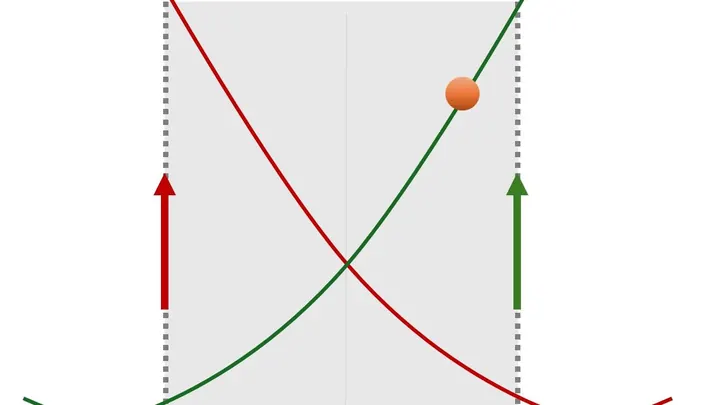
Physicists built a quantum model: a particle in a well with two depressions separated by a barrier.
Heat is all around us: from a car's exhaust pipe to the casing of a running laptop. Thermoelectric materials could turn that waste heat into electricity.
A heat engine doesn't have to be made of iron. In the microworld, a single electron can play the role of a piston, and the measurement process itself can serve as fuel. Two neighboring 'pockets' for electrons are connected by a narrow bridge.
Steam rising from hot metal is a familiar sight in the kitchen. But if you use rubidium instead of water, that cloud becomes a battery. It doesn't run on chemical reactions but on the quantum coordination of atoms.
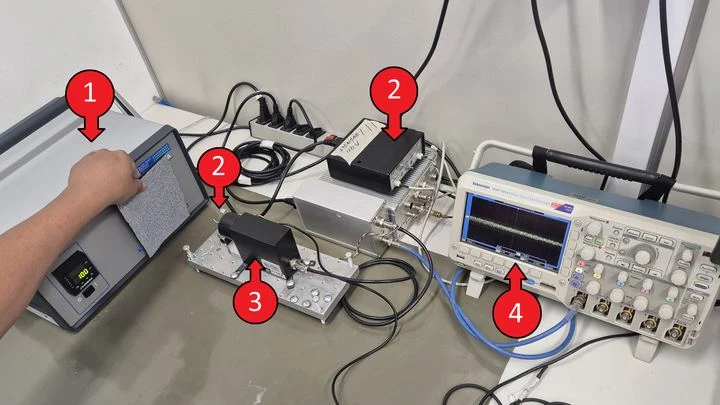
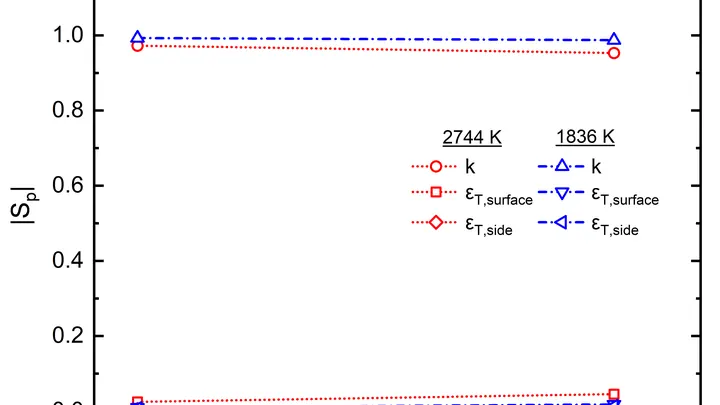
A red-hot piece of metal in a furnace is like a frying pan on the stove: the hotter it gets, the faster heat travels to your hand if you touch it. But at temperatures where the metal is close to melting, measuring that speed is very tricky: sensors don't make good contact, heat escapes into the air, and the glowing sample confuses the instruments.
This new method sidesteps those obstacles.
A quantum system can possess a property called magic. It's not about tricks: it's a measure of how hard it is to reproduce its behavior on a classical computer. Ordinary states, known as stabilizer states, are easy for a computer to handle. But states with magic leave it stumped.
Water is the only common liquid that doesn't immediately contract when cooled. Ice melts, and water becomes denser, but only up to 4 degrees Celsius. Beyond that, with further cooling, it expands again. This quirk explains why fish survive in freezing ponds: the densest water sinks to the bottom, while a lighter cold layer stays on top and turns into ice.
The magnetic refrigerator of the future won't hum with a compressor. Instead, it will cool your groceries by exploiting a special material that heats up in a magnetic field and cools down when the field is removed. This cycle resembles the compression and expansion of gas in a conventional fridge, but here a magnet does the work of a piston.
When servers in a data center run at full tilt, they get as hot as a forgotten iron. That heat goes to waste, and cooling them eats up even more energy. Engineers in Germany have proposed putting that heat to work: let it drive liquid through thin tubes all by itself, with no motors or pumps.
Their device looks like a flat box with an asymmetric bottom.
A piece of aluminum alloy is heated, and it quietly tells you about its strength. You just need to listen to that story in how the metal absorbs heat.
The usual way to find out how strong an alloy is — pull it until it breaks. That takes time and destroys the sample.
Hydrogen is a champion in energy per kilogram, but storing it is a hassle. As a gas, it takes up a huge volume, and if you compress it or cool it to a liquid, you need heavy tanks and lots of energy. There's a third way: some solid materials absorb hydrogen like a sponge soaks up water and hold it within. Heat it up, hydrogen comes out; cool it down, it gets absorbed back.
A seismometer is the planet's ear. It picks up the faintest tremors in the ground and turns them into an electrical signal. But this ear isn't perfect: its sensitivity depends on temperature. In the cold and in the heat, the instrument hears slightly differently, and that introduces error into measurements.
A metal alloy is like a cocktail: mix a few elements and you get a material with new properties. But while a bartender tastes the drink, engineers need to know in advance how an alloy will behave in service.
A cell is a city where tiny motors work nonstop. They carry cargo, move cilia, and make muscles contract. All this work generates heat, just like a car engine warms up. But measuring the heat from a single motor a few nanometers in size is no easy task.
Stochastic modeling helps us peek into this world.
Tiny particles that look like flowers can do two things at once: heat up and tell you how hot they are. This isn't science fiction: it's the result of working with nanoparticles made of cobalt ferrite, a magnetic material that responds to magnetic fields.
A tiny crystal flake rests on a substrate like an autumn leaf on a palm. It's thinner than a human hair, yet inside it quantum effects are simmering: superconductivity, magnetic order, quantum spin liquid.
In a freezer, ordinary water turns to ice, but in living cells, such ice is a disaster: sharp crystals tear membranes apart like needles popping a balloon. Scientists who preserve cells for medicine have learned to avoid this calamity, but each method speaks its own language. A new study offers a common vocabulary — thermodynamics.
Picture a chef flicking water onto a sizzling skillet. The droplets instantly hiss and evaporate, giving immediate feedback on the temperature — far quicker than any thermometer. This intuitive idea underpins a new approach in quantum thermometry.
In the quantum world, particles can walk through walls: this is quantum tunneling. If you place a detector right in the path of such a 'ghostly' passage, the moment of detection acts like a starting pistol: the particle gets a sharp kick and flies out of the barrier with excess energy, turning into a tiny engine.
A thermometer dipped into a sample usually tells you only the temperature. But if the temperature oscillates slightly and the sample responds with a delay, that response hides more: the imaginary part of the heat capacity, which turns out to be able to hear the quantum echo of time.
A heat engine is like a sailboat: to move forward, it needs a difference. Usually that means a temperature difference between hot and cold reservoirs. But what if the reservoir itself starts moving? The wind that fills the sails is created not only by a pressure difference but also by the motion of air masses.
Two qubits, quantum bits, two-level systems, glide through hot and cold thermal baths. One moves at 0.8 times the speed of light. At that moment, familiar thermodynamics cracks: a moving qubit senses temperature differently than a stationary one. For it, the cold bath can feel hotter, and the hot bath colder.
A quantum battery is not a box of electrolyte but a handful of atoms or superconducting loops, with energy stored in excited states. It can be charged in fractions of a second using collective quantum effects.