The Enzyme Courier: Why the Gel Melts Slower Than He Moves ✛
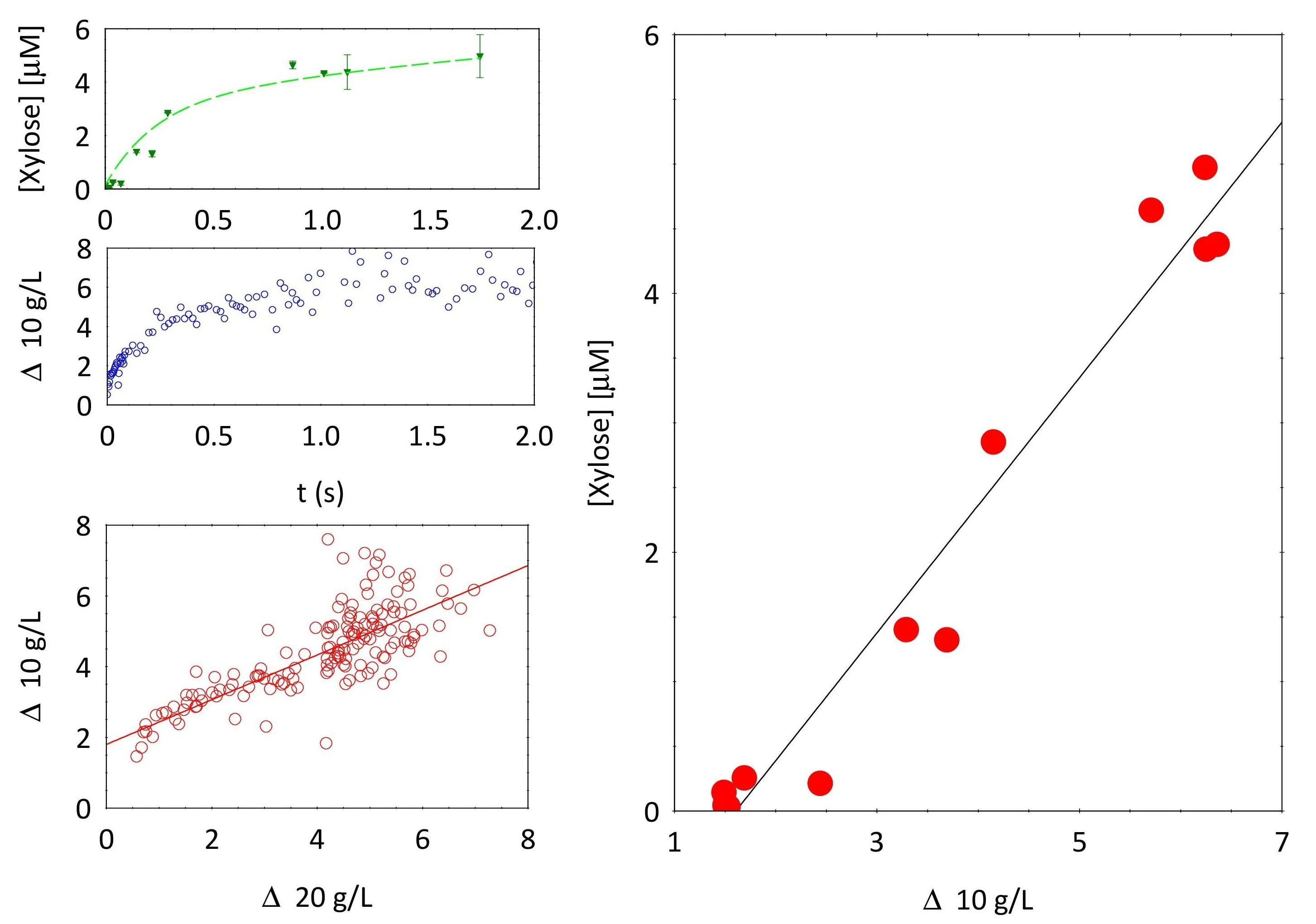
A courier with scissors steps into a dense forest of tangled ropes. His job is to cut as many ropes as possible to clear a path deeper in. Until now, no one could watch the courier's progress and the forest thinning at the same time.
It turns out the courier walks at the same speed no matter how strong he is or how dense the forest. His motion is set only by the thermal jiggling of molecules. But the forest melts slower than you'd expect, because the courier gradually runs out of steam. His cutting ability drops quickly at first, then slowly, and it's this slow decline that determines how fast the ropes disappear.
Now that both processes are measured together, we can more accurately calculate how many couriers of what strength are needed to clear the forest in a given time. This will help in turning plant waste into fuel and in designing drugs that release at the right spot in the body.
The exponent of 0.5 in the front motion law for the wild-type enzyme initially suggested purely diffusion-controlled behavior, but data for the mutant with an exponent of 0.7 and modeling showed this to be a coincidence: the front actually slows down due to gradual loss of enzyme activity.