Cómo el desenfoque de las estrellas delata la energía oscura exprés
La luz de una estrella lejana, tras atravesar el aire y las lentes del telescopio, pierde nitidez, como si miraras un farol a través de un vidrio mojado. Los astrónomos llaman a este desenfoque la «huella dactilar» del telescopio: cada instrumento tiene la suya propia y hay que conocerla al detalle.
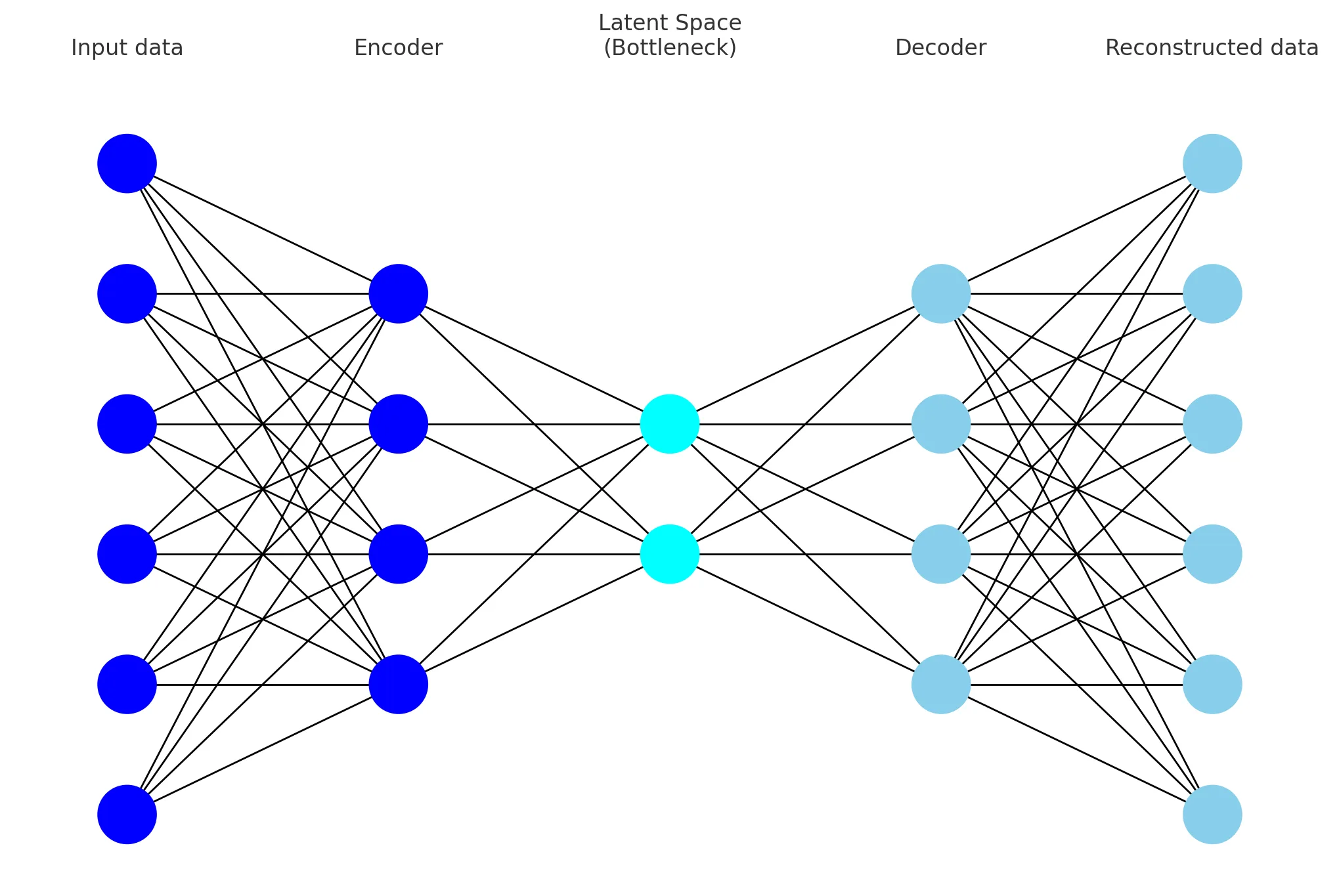
Antes, esa «huella» se tomaba por partes: cada chip fotosensible de la cámara se procesaba por separado y la imagen general perdía coherencia. Ahora, la red neuronal aprende con miles de imágenes de estrellas del telescopio «Subaru» y reconstruye el desenfoque por sí misma en todo el campo de visión, como un restaurador que recupera un fresco a partir de fragmentos conservados.
Esto es clave para lo principal: a partir de las distorsiones apenas perceptibles en las formas de las galaxias lejanas, los científicos calculan a qué velocidad se expande el universo. Cuanto más preciso sea el desenfoque, menos errores habrá en esos cálculos. El nuevo método se prepara para usarse en un futuro estudio del cielo en el que cada noche se fotografiarán millones de estrellas.
Resumen original
tal como lo escribieron los autores, en inglés arXiv:2602.15780
We present the development of a data-driven, AI-based model of the Point Spread Function (PSF) that achieves higher accuracy than the current state-of-the-art approach, "PSF in the Full Field-of-View'' (PIFF). PIFF is widely used in leading weak-lensing surveys, including the Dark Energy Survey (DES), the Hyper Suprime-Cam (HSC) Survey, and the Vera C. Rubin Observatory Legacy Survey of Space and Time (LSST). The PSF characterizes how a point source, such as a star, is imaged after its light traverses the atmosphere and telescope optics, effectively representing the "blurred fingerprint'' of the entire imaging system. Accurate PSF modeling is essential for weak gravitational lensing analyses, as biases in its estimation propagate directly into cosmic shear measurements -- one of the primary cosmological probes of the expansion history of the Universe and the growth of large-scale structure for dark energy studies. To address the limitations of PIFF, which constructs PSF models independently for each CCD and therefore loses spatial coherence across the focal plane, we introduce a deep-learning-based framework for PSF reconstruction. In this approach, an autoencoder is trained on stellar images obtained with the Hyper Suprime-Cam (HSC) of the Subaru Telescope and combined with a Gaussian process to interpolate the PSF across the telescope's full field of view. This hybrid model captures systematic variations across the focal plane and achieves a reconstruction error of $$3.4 \times 10^{-6}$$ compared to PIFF's $$3.7 \times 10^{-6}$$, laying the foundation for integration into the LSST Science Pipelines.
La atmósfera terrestre desenfoca la luz de las estrellas igual que el agua desenfoca las piedras del fondo de un arroyo: cuanto más profundo miras, más tiembla la imagen.
En la serie «The Expanse», los astronautas corrigen las imágenes de los telescopios sobre la marcha; sin un modelo preciso del desenfoque, sus mapas de mundos lejanos serían inútiles.