Cómo el sesgo de confirmación ayuda a pensar más rápido exprés
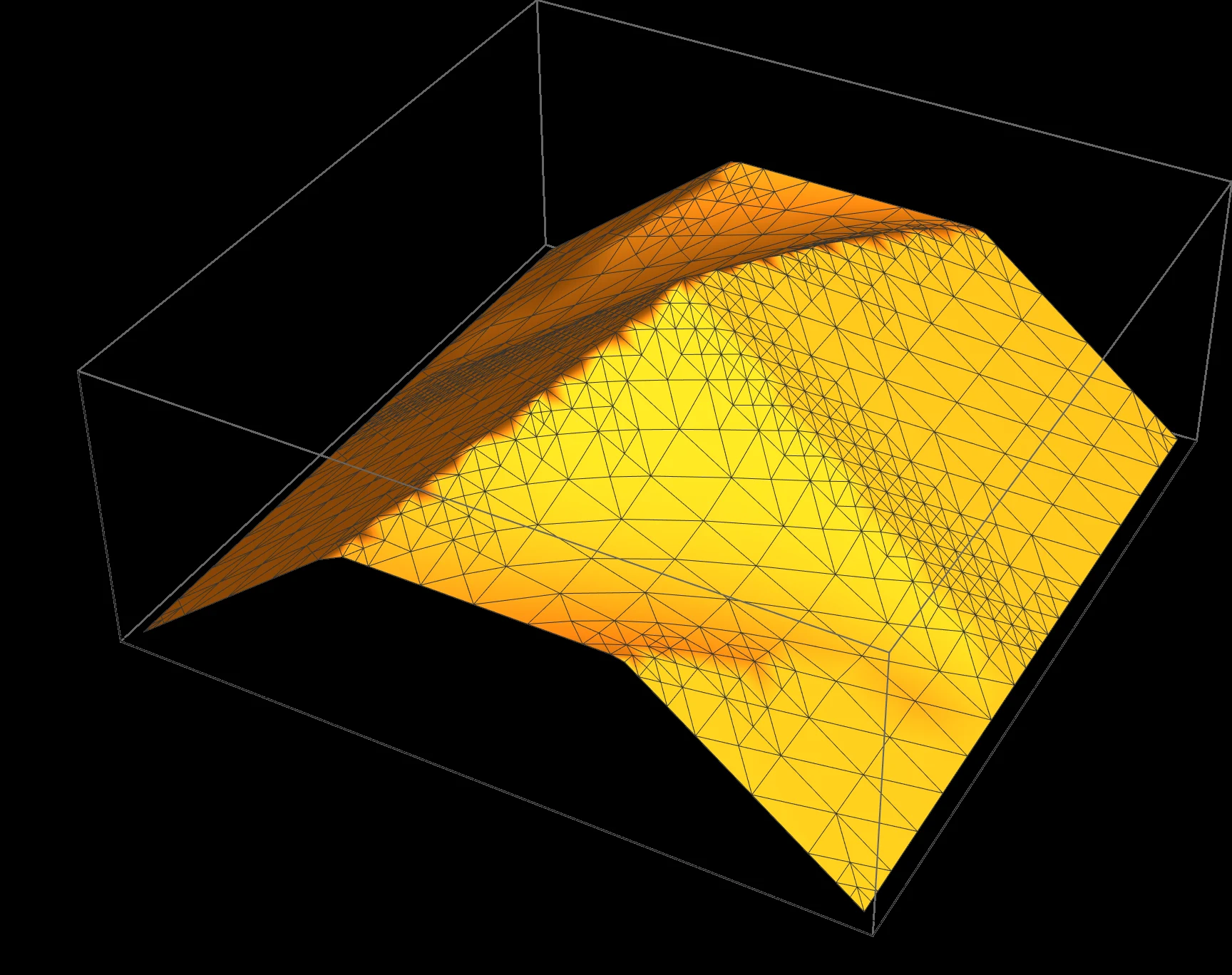
Estamos acostumbrados a pensar que notar solo las confirmaciones de nuestras suposiciones es un error. Pero cálculos recientes, inspirados en el comportamiento de las ondas, le dan la vuelta a esta visión. Resulta que el hábito de buscar lo familiar es la mejor manera de reducir el ruido informativo (los científicos lo llaman entropía). Ya John von Neumann mostró que las probabilidades pueden comportarse no como porcentajes, sino como ondas que se superponen.
Nuestra mente se asemeja a un río que, cada vez, profundiza el cauce ya abierto. El agua fluye por el camino de menor resistencia y el sol ilumina solo las orillas conocidas. Sin esta estrategia, tendríamos que procesar cientos de veces más datos para no ahogarnos en el ruido informativo. No es una debilidad, sino un ahorro natural de energía. Así nos ayuda la naturaleza a encontrar el camino hacia el sentido en medio del caos.
Resumen original
tal como lo escribieron los autores, en inglés arXiv:2606.23325
In this paper, the phenomenon generally classified as confirmation bias is formulated on the space of square-root probabilities (or equivalently, using the structures of quantum probability). In this framework, observations are modelled by matrices, rather than random variables on a probability space. In the problem of binary hypothesis testing, an optimal evidence choice minimises the expected error probability. We show that the resulting optimal choice of evidence leads to a confirmation bias, thus revealing a surprising aspect of rationality that encompasses confirmation bias. Specifically, in sequential evidence sampling, the implicit optimality leads to two remarkable evolutionary advantages, namely, (a) the decision maker requires only the smallest memory capacity, and (b) the error probability can be reduced exponentially in sample size. A complementary approach based on the framework of active inference -- where the decision maker seeks evidence that provides maximum information -- is then considered. The resulting optimal evidence is shown to agree with the one obtained by minimising error probability. Our framework provides an easy-to-implement protocol for an active quantum inference, whereby the optimal evidence choice for making an inference is sought over the space of matrices.
En la probabilidad cuántica, las posibilidades no se suman como porcentajes, sino como ondas: pueden amplificarse o anularse mutuamente.