Ядерная реакция очерчивает пропасть для чёрных дыр экспресс
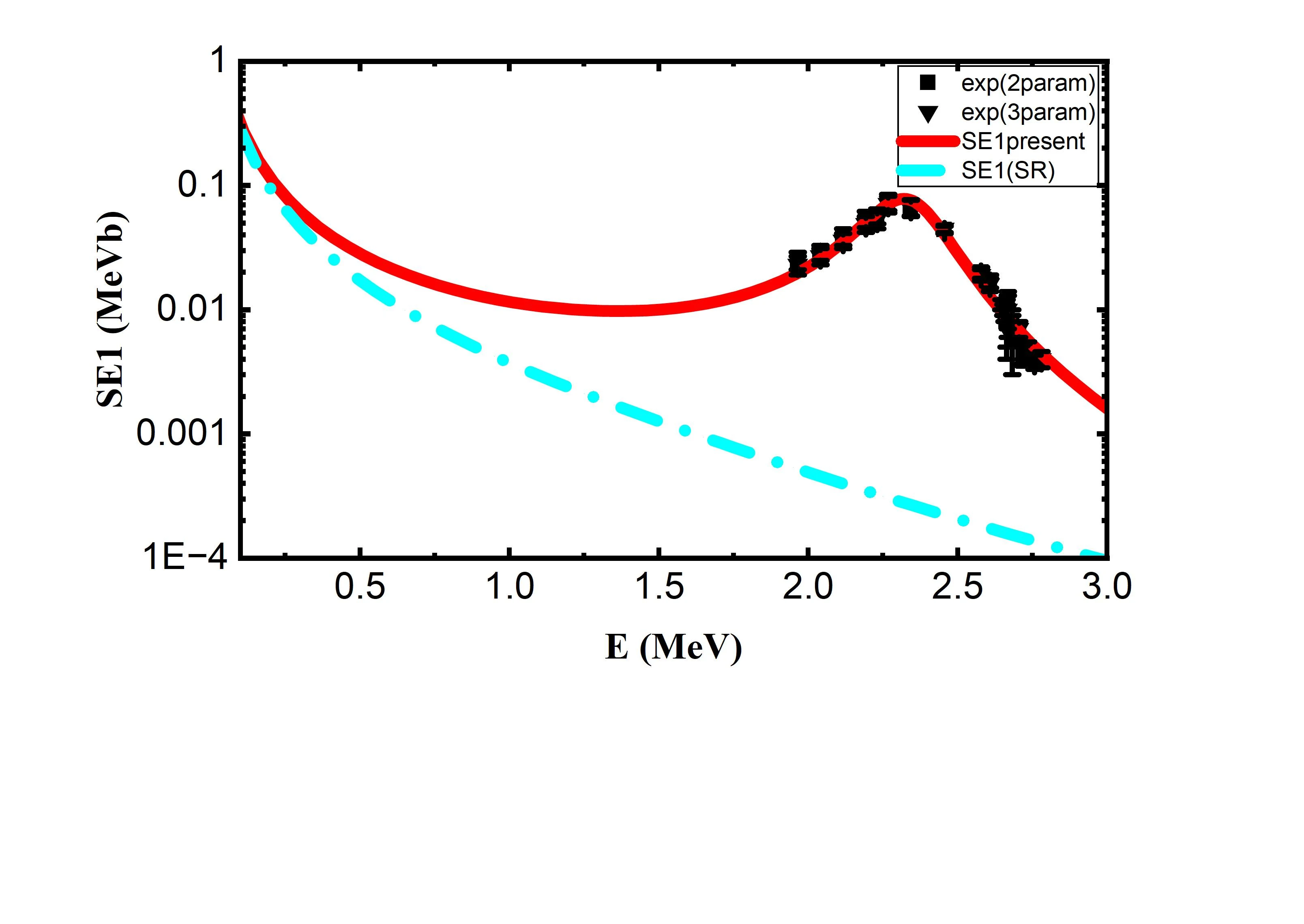
Гравитационные волны обнажили бездну: чёрные дыры с массами между 60 и 120 Солнц почти не рождаются. Такую пропасть выбивают сверхновые парной нестабильности — взрывы, которые не оставляют от звезды даже пылинки. Окажется ли звезда в пропасти или уцелеет на краю, решает реакция углерода с гелием, управляющая составом ядра.
Этот процесс идёт неторопливо: даже крошечное ускорение — и весь углерод превратился бы в кислород, лишив Вселенную жизни. Фред Хойл первым понял, что реакция настроена предельно точно, иначе углерода было бы в сотни раз меньше. Новые данные сузили возможные скорости почти вдвое. Оказалось, что край пропасти лежит дальше, чем думали: самые лёгкие обычные чёрные дыры начинаются с 61–75 солнечных масс. Сдвиг всего на пару процентов — и граница улетает на десятки масс.
Оригинальная аннотация
как её написали авторы, на английском arXiv:2605.07027v1
Gravitational-wave observations have renewed interest in the black-hole mass gap and in the maximum mass of first-generation black holes below its lower edge. The \(^{12}{\rm C}(\alpha,\gamma)^{16}{\rm O}\) reaction plays a central role in this problem because it determines the carbon-to-oxygen ratio after core-helium burning and thereby affects the later evolution of massive stars toward pulsational pair instability and pair-instability supernovae. Recent attempts to constrain \(S(300~{\rm keV})\) from gravitational-wave population inferences face important limitations, because the lower edge of the black-hole mass gap is not directly measured. It is inferred model dependently from assumptions about stellar evolution, metallicity, mass loss, rotation, binary evolution, hierarchical mergers, selection effects, priors, and the adopted population model. Therefore, values of \(S(300~{\rm keV})\) inferred from black-hole populations must remain consistent with independent nuclear-physics constraints. In this work we reanalyze the low-energy \(^{12}{\rm C}(\alpha,\gamma)^{16}{\rm O}\) \(S\) factor using updated information on the subthreshold \(1^{-}\) and \(2^{+}\) ANCs and on the ground-state ANC of \(^{16}{\rm O}\), together with direct capture data. These constraints favor a lower \(S(300~{\rm keV})\) than the older central evaluation and disfavor very large values required by some black-hole-population interpretations. Using the resulting ANC-constrained \(S(300~{\rm keV})\) range and the transformed relation between this quantity and the lower edge of the pair-instability mass gap, we estimate \[ \frac{M_{\rm BH}}{M_\odot}\simeq 61\text{--}75 . \] Thus, the present nuclear-physics constraints favor a relatively high lower edge of the first-generation black-hole mass gap.
Реакция углерода с гелием настолько медленна, что малейшее ускорение лишило бы Вселенную углеродной жизни.