The Ocean Whispers a Warning
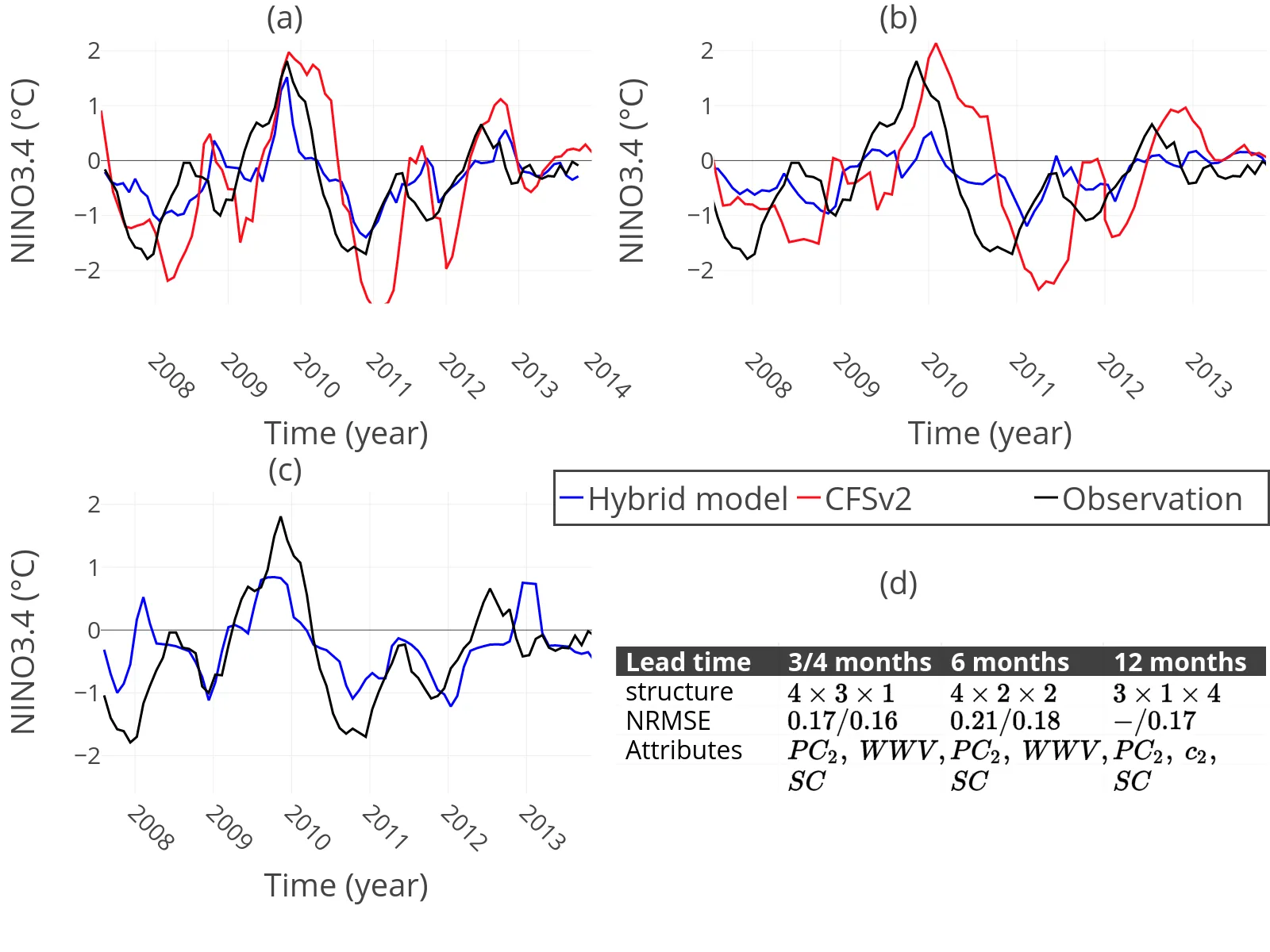
The ocean knows how to warn us. Before El Niño—the warm current that every few years brings droughts and floods—erupts in full force, it begins to 'whisper': distant points in the ocean become linked in pairs. In the past, no one knew how to listen to this whisper, and forecasts stopped at six months. In spring, models went blind, as if the ocean had fallen silent.
Scientists built a network of points across the ocean map. If oscillations at two points match, a connection forms between them. It turned out that a year before El Niño, the number of pairs—points with exactly one partner—increases. This metric is called c2.
The new model works in two steps. First, simple statistics catch seasonal oscillations; then, a neural network learns what the statistics missed. Instead of relying solely on temperature readings, the model now includes c2. And a 12-month forecast has become as accurate as the old 6-month one. Now the ocean warns us long before it cries out.
The network metric c2 is simply the fraction of nodes that form pairs. In the climate network, it increases when local correlations strengthen before El Niño and decreases afterward. In essence, the ocean starts 'whispering' in pairs before it screams.