Climate in the Price of a Bond: How Machine Learning Predicts Catastrophe Bond Coupons ✛
In 1992, Hurricane Andrew tore through Florida, leaving insurers with $15.5 billion in losses. Many companies went bankrupt, and the market devised a way to shift disaster risk onto investors: catastrophe bonds. These securities pay generous coupons as long as a specified disaster does not occur, such as a hurricane of a certain strength or an earthquake in a particular region. If the disaster strikes, the investor loses part or all of their principal, and the insurer receives funds to pay claimants.
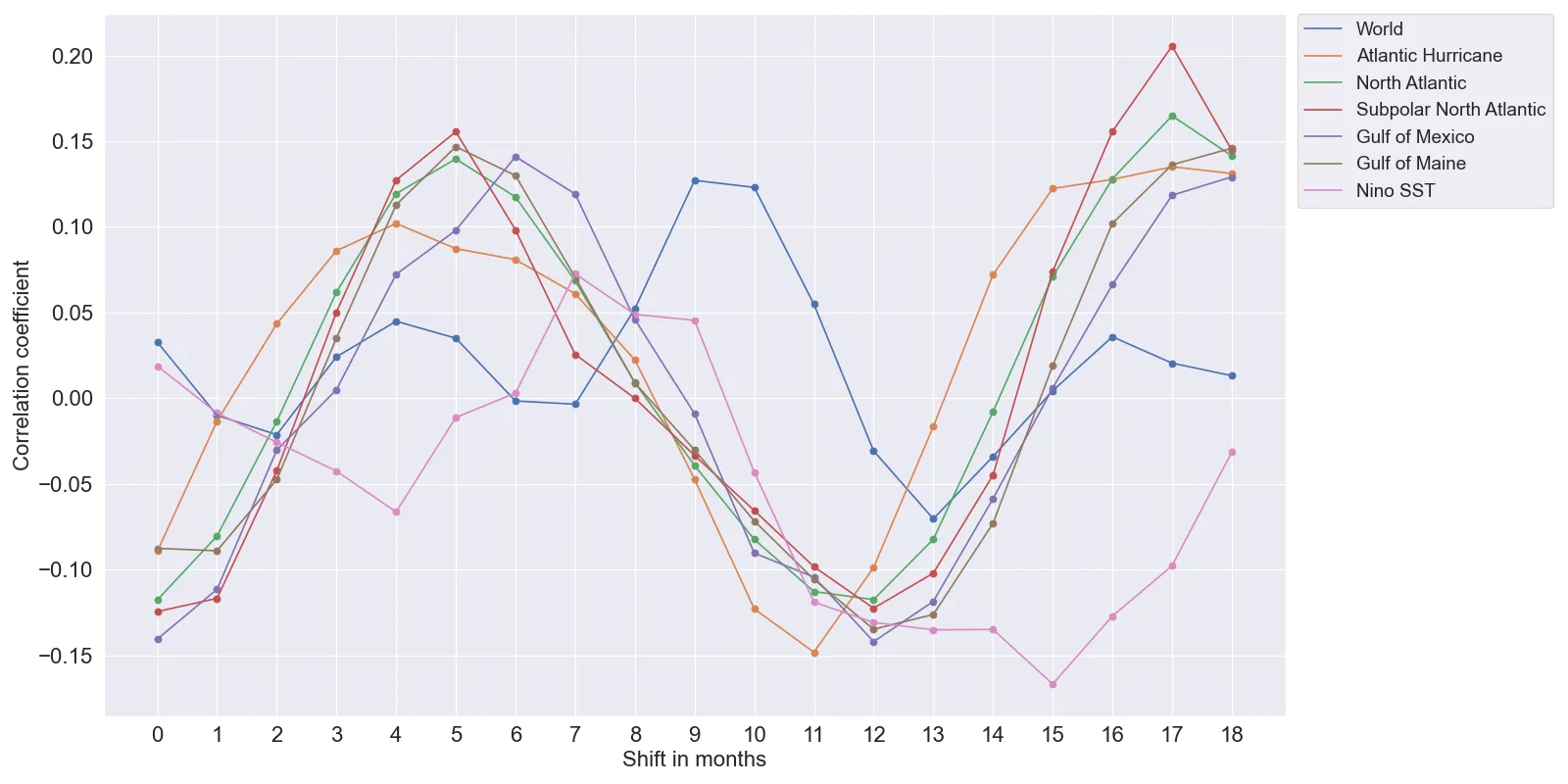
For a long time, pricing such instruments focused only on financial metrics: expected losses, trigger type (the condition under which the bond loses money), maturity, and region. But the climate is changing, and hurricane frequency is rising. The authors of the new study decided to test whether adding climate indices to the model could improve coupon forecasts. They used data on 734 catastrophe bond tranches issued between 1997 and 2020, along with eight climate indicators, ranging from the El Niño index to sea surface temperature anomalies in seven regions.
Seven machine learning models, from linear regression to gradient boosting, were compared on the same data. Including climate features improved all models. The best performance came from extremely randomized trees: their forecast error dropped by 13.2% compared to the version without climate. This is not just a statistical gain. In monetary terms, it means an investor can more accurately estimate what they should receive for bearing hurricane risk in the upcoming season.
The practical benefits are already visible. Underwriters (specialists who assess risk and set prices) can incorporate climate lags into their models to avoid overpricing or underpricing premiums. Investors gain a tool for a fairer assessment of their portfolios. And the market as a whole becomes slightly more predictable, even while nature itself remains unpredictable. The conductor still sets the tempo, but now the orchestra at least hears it in advance.
Climate indices were shifted back by up to 18 months to capture the delayed influence of the ocean and atmosphere on bond prices. The strongest link was found for outgoing longwave radiation at a lag of 12 months, meaning tropical convection affects coupons a year later.