Rain on the Sun: Why It Falls Both Ways
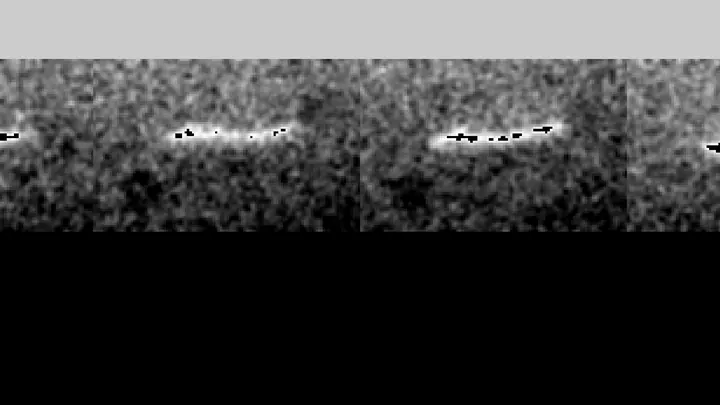
In the solar corona, it rains from time to time — only not water, but plasma. The hot gas cools, clumps into blobs, and rushes downward along magnetic loops, like drops running down invisible gutters.
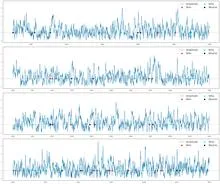
The variation of a climate quantity from one year to the next, often used to describe monsoon strength.Interannual variability describes how a climate quantity — such as rainfall, temperature, or monsoon strength — changes from one year to the next. Unlike seasonal cycles, which are predictable, interannual variations are irregular and often linked to large-scale ocean–atmosphere phenomena like El Niño. For example, the Indian monsoon's year-to-year swings can be strong enough to cause droughts or floods, directly affecting the livelihoods of hundreds of millions of farmers.
The systematic study of interannual variability began in the early 20th century with Gilbert Walker's work on the Indian monsoon, but it accelerated after the 1982–83 El Niño, which was the first to be observed in real time by satellites and spurred modern prediction efforts.
The primary driver of interannual variability is the exchange of heat and moisture between the ocean and atmosphere, especially in the tropics. The El Niño–Southern Oscillation is the most prominent example: a shift in Pacific sea-surface temperatures alters atmospheric circulation patterns, which in turn changes where rain falls and how strong monsoons are. Other contributors include volcanic eruptions, which inject aerosols that cool the planet for a year or two, and random atmospheric chaos that can amplify small initial differences.
Seasonal forecasting systems, such as those run by the World Meteorological Organization, use interannual variability models to predict monsoon onset and rainfall months in advance, guiding crop planting and water allocation.
The strongest El Niño on record, in 1997–98, caused an estimated $33 billion in global damages and was linked to severe droughts in Indonesia and floods in Peru.