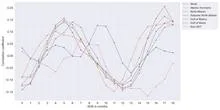
The International Research Institute for Climate and Society at Columbia University. Every month it collects the ENSO forecasts of two dozen modelling centres into one figure - the plume.
The IRI also goes beyond just presenting forecasts. It works with partners in Africa, Asia, and Latin America to translate climate predictions into actionable information for agriculture, water management, and health. For example, a forecast of a dry season can help farmers choose drought-resistant crops or adjust planting dates. The institute's mission is to bridge the gap between climate science and real-world decision-making, making the vast amount of climate data generated by research institutions useful to those who need it most.
History
The IRI was established in 1996 as a cooperative agreement between Columbia University, the U.S. National Oceanic and Atmospheric Administration, and other partners, building on earlier efforts to apply climateforecasts to societal needs. The plume has been published monthly since the early 2000s and has become a standard reference in the climate community.
How it works
The plume is then plotted as a graph showing the observed temperature history up to the present and the forecasted range for the next several months. Each model's forecast is a single line, and the spread of lines gives a visual measure of uncertainty. The IRI also provides a probabilistic interpretation, indicating the likelihood of El Niño, La Niña, or neutral conditions based on how many models agree and their historical skill.
In practice
The IRI's forecasts are used by humanitarian organizations like the Red Cross to preposition aid before predicted disasters, by agricultural ministries to issue planting advisories, and by water managers to plan reservoir operations.
Fun fact
The plume is so widely watched that when it shows a strong El Niño developing, it can influence commodity markets—coffee, cocoa, and sugar prices often move in response to IRI's monthly updates.
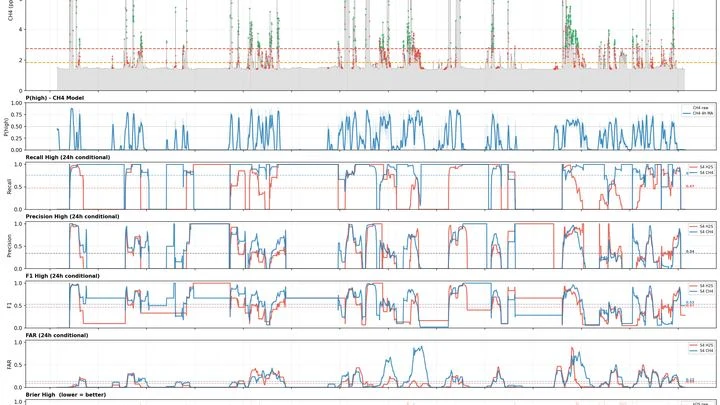
At a landfill on the outskirts of town, the wind shifts direction, and a couple of hours later the nearest village smells of rotten eggs. That's hydrogen sulfide — a gas produced when waste decomposes, and in large doses it's hazardous to health. Usually, authorities only learn about the problem after residents have already breathed it in and called to complain.
The instrument shines an infrared beam at a sample, and molecules respond with their own absorption pattern, like bells of different tones. This pattern, the spectrum, holds information about the chemical composition. But to read it, a specialist usually consults a library of reference records, which is slow and not always possible.
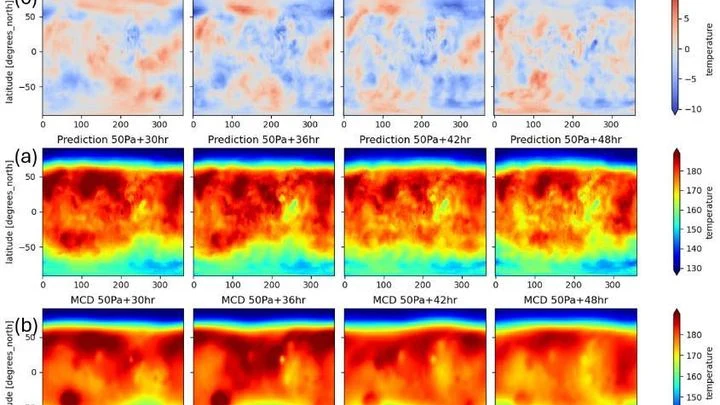
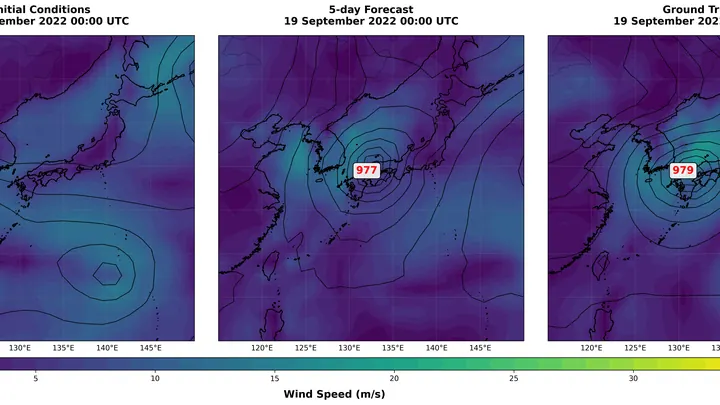
Meteorologists have grown used to trusting neural networks: the GraphCast model predicts Earth's weather days ahead by drawing on global snapshots of the atmosphere. But this 'brain' can be transplanted to another planet — where the air is thin and the Sun warms differently.
A web where lions eat zebras and hyenas finish the leftovers is not just a list of dinners. It's a survival map for an entire region. When the climate shifts, animals move, and the map tears. To understand where it will tear and where it will hold, you need to find its unchanging 'skeleton'—the connections that repeat across different places.
The Sun continuously scribbles magnetic fields across its surface. These patterns are not mere ripples but a handwriting in which nature has encoded warnings of flares. A flare is an explosion that releases the energy of billions of nuclear bombs in minutes, ejecting streams of plasma and radiation into space.
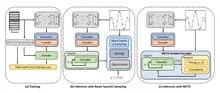
A search party combs a foggy field. At first, people spread out wide: a high 'temperature' of search means a great variety of attempts. Upon finding a trace, they close in. But the speed of convergence is critical — narrow the circle too early, and the best find stays aside. The coordinator assesses the spread of searchers and commands when to speed up or slow down.
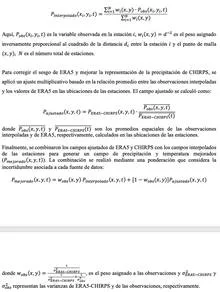
At a weather station in Brazos County, Texas, rain is recorded on magnetic tape: every day, four years straight. Nine hundred millimeters in a good season, a hundred in a bad one. Then the tape falls silent. Drought creeps in without a sound — the slow fading of the earth's pulse. The standard SPI-3 index only catches on a month or two later, once the moisture is already gone.
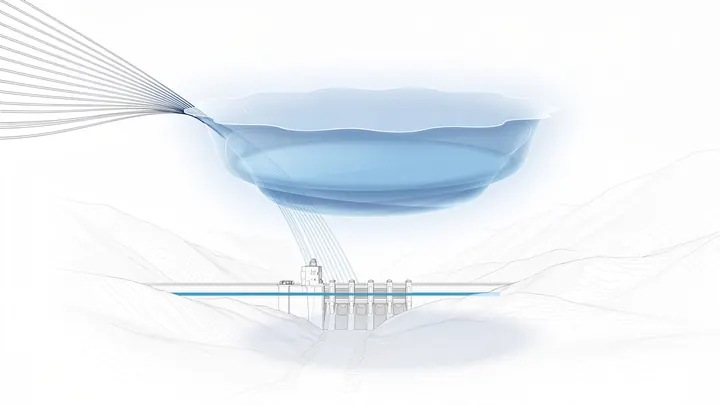
Inside the concrete dam, machines hum, running on empty. Three out of ten turbines are silent. The water level in Southeast Brazil’s largest reservoir has dropped so low that the blades are about to gulp air. The country’s 160 hydropower plants, which supply more than half its electricity, are linked into a single water network where every drop counts.
Two pendulums suspended from a single invisible spring swing in a shared air current. One always lags the other by exactly half a period: when the first swings left, the second is already returning from the right. By watching the first, you can tell where the second will be half a period later.
Every year, the food we eat costs humanity tens of millions of years of life due to unhealthy diets. At the same time, a third of all greenhouse gases warming the planet are produced along the journey from farm to plate. It seems obvious: switch to healthier eating, and we'll save the climate and improve our health. But new research shows these two goals don't always go hand in hand.
A person looks at a door lock and sees a keyhole. They know that a key is inserted and turned. But if instead of a keyhole there's a touch panel, the familiar frame breaks. The person doesn't just make a mistake: they realize that the usual approach won't work and can say, "There's no place for a key here; a different approach is needed."
Such an honest stop with an explanation is rare for machines.
A mosaic of large colored tiles. Each tile is the average precipitation over an entire month for an area the size of a small country. For a general understanding, the picture is fine, but if you need to know whether a downpour hit a specific city yesterday, it's useless.
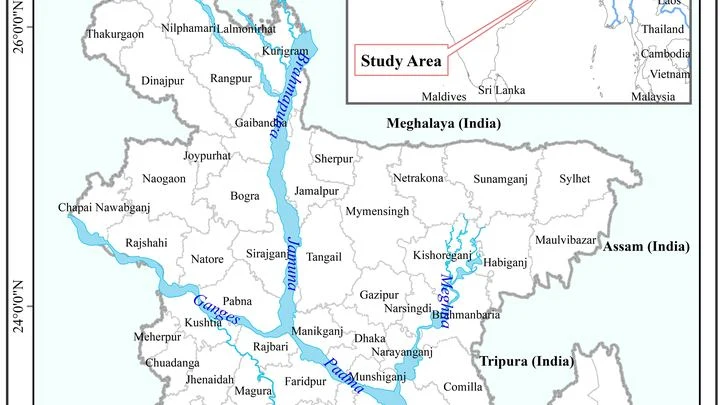
A rice field by the sea may look green, but the stalks are stunted and the grains are shriveled. Salt has silently poisoned the soil. In Satkhira district in southern Bangladesh, every farmer knows this scene. Salty water comes in with the tides, seeps into the ground, and the land stops yielding. To fight the problem, you first need to know where the salt is hiding beneath the roots.
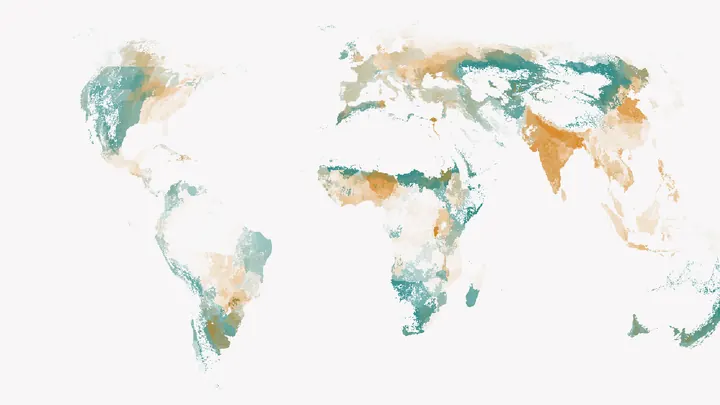
Drylands are like skin cracking from dehydration. When rainfall decreases, plants don't vanish overnight: they rearrange, leaving bare patches of soil between them. These patterns are visible even from space.
Scientists compared satellite images of eight arid regions, from the Sahel in Africa to Australian deserts.
A forecaster issues a week-long forecast in seconds but cannot explain a single decision. That is roughly how modern AI weather models work: they already match classical numerical methods, yet their internal logic is hidden behind millions of parameters.
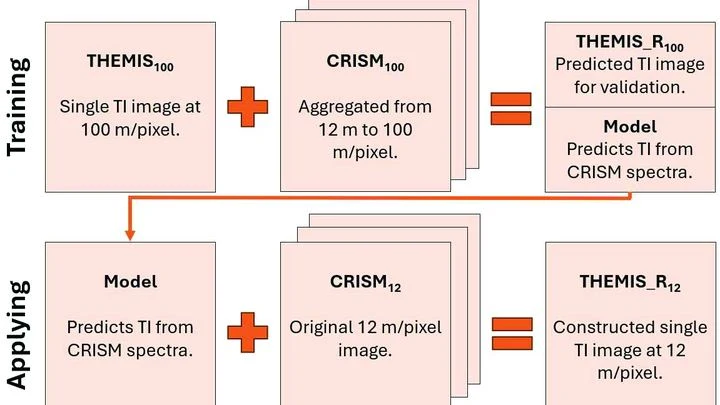
Warm rock and cold sand cool at different rates at night. An instrument orbiting Mars measures this heat, revealing whether the surface is loose dust, a dense crust, or solid rock. But thermal images have a resolution of 100 meters per point: an entire football stadium fits into a single pixel. Fine details (the beds of ancient streams, the edges of lava flows) are simply invisible.
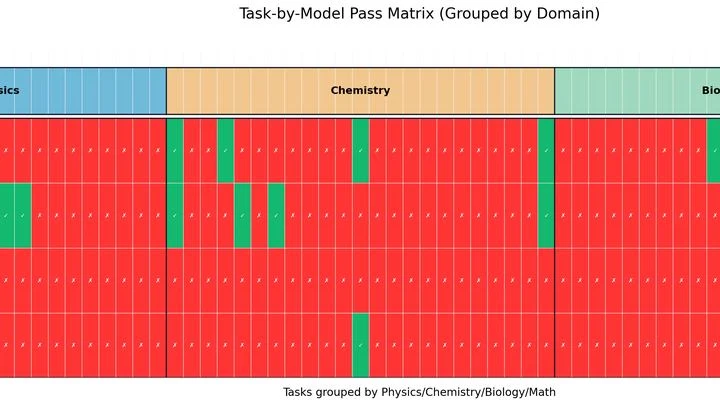
The best AI assistant for scientists scored worse on this exam than a C student on a pop quiz. Just 21% correct answers, and that's the ceiling for the four strongest models. The problems for the new test were written not by programmers but by graduate students: people who deal with real science every day.
The test is called COMPOSITE-STEM.
The Sun pulses in a slow rhythm, and that rhythm can be heard in the rains over Brazil. Sunspots on the solar disk thicken and thin roughly every eleven years, and along with them, pressure in the Pacific Ocean shifts, sea surface temperatures change, and then rainfall amounts in the northeast of the country follow suit.
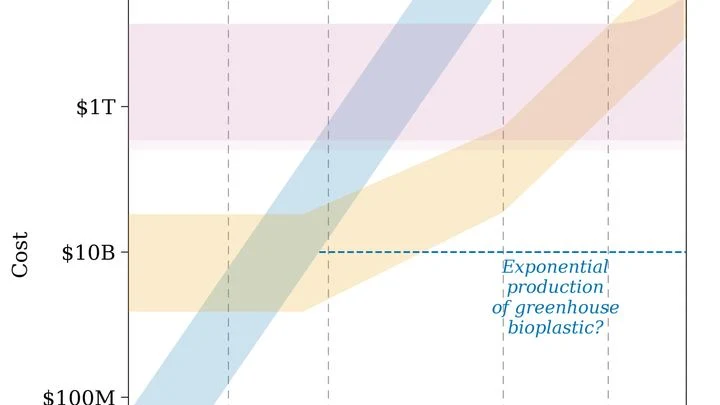
Mars is an icy desert with an average temperature of minus 60. To warm it without biology, scientists propose three approaches with a single idea: create a thick heat-trapping blanket.
First, deploy transparent film-blankets over bases. They let sunlight in but keep heat from escaping, allowing us to harvest water from the soil and grow plants.
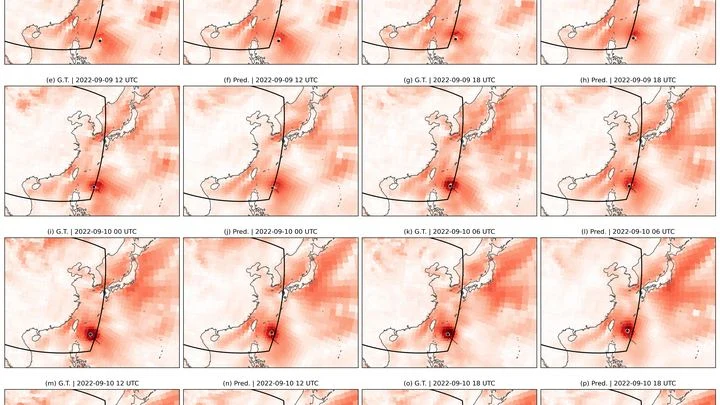
The atmosphere is a chaotic system, and a detailed global forecast requires monstrous computing power. StretchCast sidesteps this by working like the human eye: it creates 'sharp vision' over a selected region with an ultra-fine grid, while seeing the rest of the world blurry, but sharp enough to capture global connections.
Weather forecasting is like trying to predict where a rock will roll down a slope, knowing the shape of every bump and the force of the wind. Make a mistake at the start, and a week later that error grows into a full-blown storm. In the past, accurate forecasts required massive computers and days of computation.
Solar flares — sudden energy releases on the Sun — can knock out satellites and power grids. Previous models often either cried wolf or missed a real blow. The fix: attach a reliability estimate to every prediction.
Thousands of models simmer in a single cauldron, and the steam rises thick and impenetrable. Each whispers something about the future of El Niño, but in the general din you cannot tell who is right and who is just boiling over.
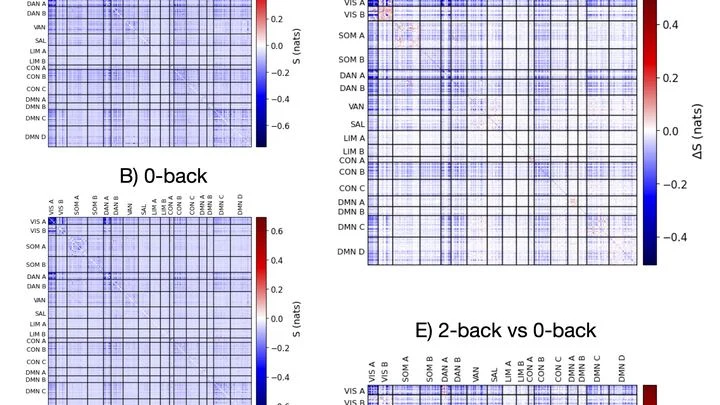
Imagine an office where employees exchange notes. When there are few tasks, everyone works independently. But when an urgent order arrives, some departments start actively messaging others, and the overall work becomes more coordinated. That's roughly how the brain behaves when we try to hold several things in mind at once.
Old Chinese chronicles are full of weather entries: "no rain in the third month," "the river overflowed its banks." But these are words, not numbers. Until now, turning them into precise precipitation data was nearly impossible.
The new approach works like a translator from the language of chronicles to the language of climatology.
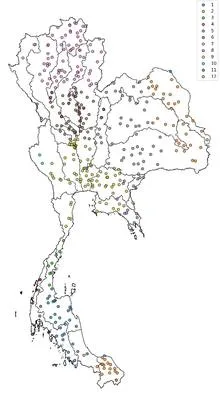
Tuning an old radio receiver requires patience: you slowly turn the dial, catch a crackle, turn it again, until a voice emerges through the static. In much the same way, a reinforcement learning agent searched the ocean for two patches whose temperature difference best predicts rains in Thailand.
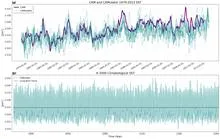
An ice core from Antarctica is a time machine that recorded the climate for 130,000 years straight, year after year, with no gaps. Air bubbles trapped in the ice preserve the carbon dioxide of those ancient eras.
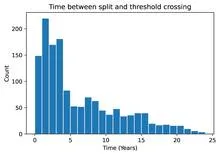
In 1997, the Pacific Ocean warmed so much that corals bleached from Indonesia to the Galápagos, and floods and droughts swept across five continents. Such events, which climate scientists call extreme El Niños, occur every few decades, and to understand how often they will arrive in the future, we need thousands of years of observations.
In 1992, Hurricane Andrew tore through Florida, leaving insurers with $$15.5 billion in losses. Many companies went bankrupt, and the market devised a way to shift disaster risk onto investors: catastrophe bonds. These securities pay generous coupons as long as a specified disaster does not occur, such as a hurricane of a certain strength or an earthquake in a particular region.
Science is a vast kitchen where scientist-cooks seek new recipes. Once, they sifted ingredients by hand; now artificial intelligence, a seasoned chef, lends a hand. AI memorizes millions of flavors and suggests surprising pairings: through information search, the algorithm uncovers hidden patterns.
A translator that learned the grammar of the wind, not just the vocabulary. The wind blows over the Pacific, and the water responds with waves, currents, and upwellings of cold depths. The KIST-Ocean neural network was taught not just to memorize how the ocean looked yesterday, but to understand why it will become what it is tomorrow.
In May 2024, thermometers in Jalisco seemed to go haywire: on May 10, one station recorded 38.4°C, nearly matching the historical maximum from 1994. The heat was so intense that even agave plants, accustomed to scorching conditions, slowed their growth. And the rains, which usually arrive in June, were delayed, leaving farmers nervously glancing at the sky.
A translator at a high-stakes negotiation doesn't just render words quickly; they make sure the meaning doesn't get lost. CAMulator does the same: it takes the complex climate model CAM6 and translates it into the language of a neural network that runs hundreds of times faster, without losing the physical essence.
A warm patch off the coast of Peru does not appear every year, but when it does, deserts are drenched with rain and Australia is plagued by wildfires. This is El Niño, a phenomenon that climate models struggle to reproduce. Simple models do well at estimating how often it occurs but lose spatial details.
In the hall, fifty sages confer, each observing the ocean in their own way. One listens to surface temperature, another to the wind, a third to how heat hides in the depths. Their judgments often contradict each other, but there is an elder who knows which of them to trust more.
In 2015, downpours in Chennai turned streets into rivers overnight. The city was caught unprepared: seasonal models offered only a vague warning. Yet the monsoon is not a whim of the sky; it is the pulse of a vast machine linking oceans and continents.
An interpreter at negotiations hears only the words already spoken, yet still guesses the next phrase. This is how the new El Niño forecasting method works: it doesn't peek into the future but relies solely on the past, like an honest listener.
In a meeting room, an interpreter listens not only to the speaker but to the entire buzz of voices, catching who is looking at whom and who falls silent before an important remark. That's how SEA-ViT reads the ocean: it sees not isolated points from buoys but the whole current field at once, like a single conversation of water.
Imagine an orchestra playing without a conductor. Each section takes its turn: first the winds introduce the theme, then the strings join in, and sometimes an unexpected percussionist solos.
Imagine an interpreter in a huge hall who hears not only the person next to them but also a whisper in the far corner, and from those fragments reconstructs the entire conversation. That's how the CAS-Canglong neural network works: it picks up connections between pressure, wind, and heat across the whole planet and uses them to predict what the ocean will look like three months from now.