Why Climate Affects the Price of Hurricane Insurance ✛
When a hurricane devastates a city, insurance companies must pay out enormous sums. To avoid bankruptcy, they issue special securities called catastrophe bonds. Investors buy them and receive regular payments (coupons), but if a hurricane or earthquake occurs, they lose part of their money. So the price of such a bond depends on how likely a disaster is.
Previously, pricing models looked only at financial data: how much money an investor might lose, which region the insurance covers, and for how long. But the climate is changing, and scientists decided to test whether climate indicators could help predict coupons more accurately. They took data on 734 bonds from 1997 to 2020 and added eight indicators, such as ocean temperature and the El Niño index.
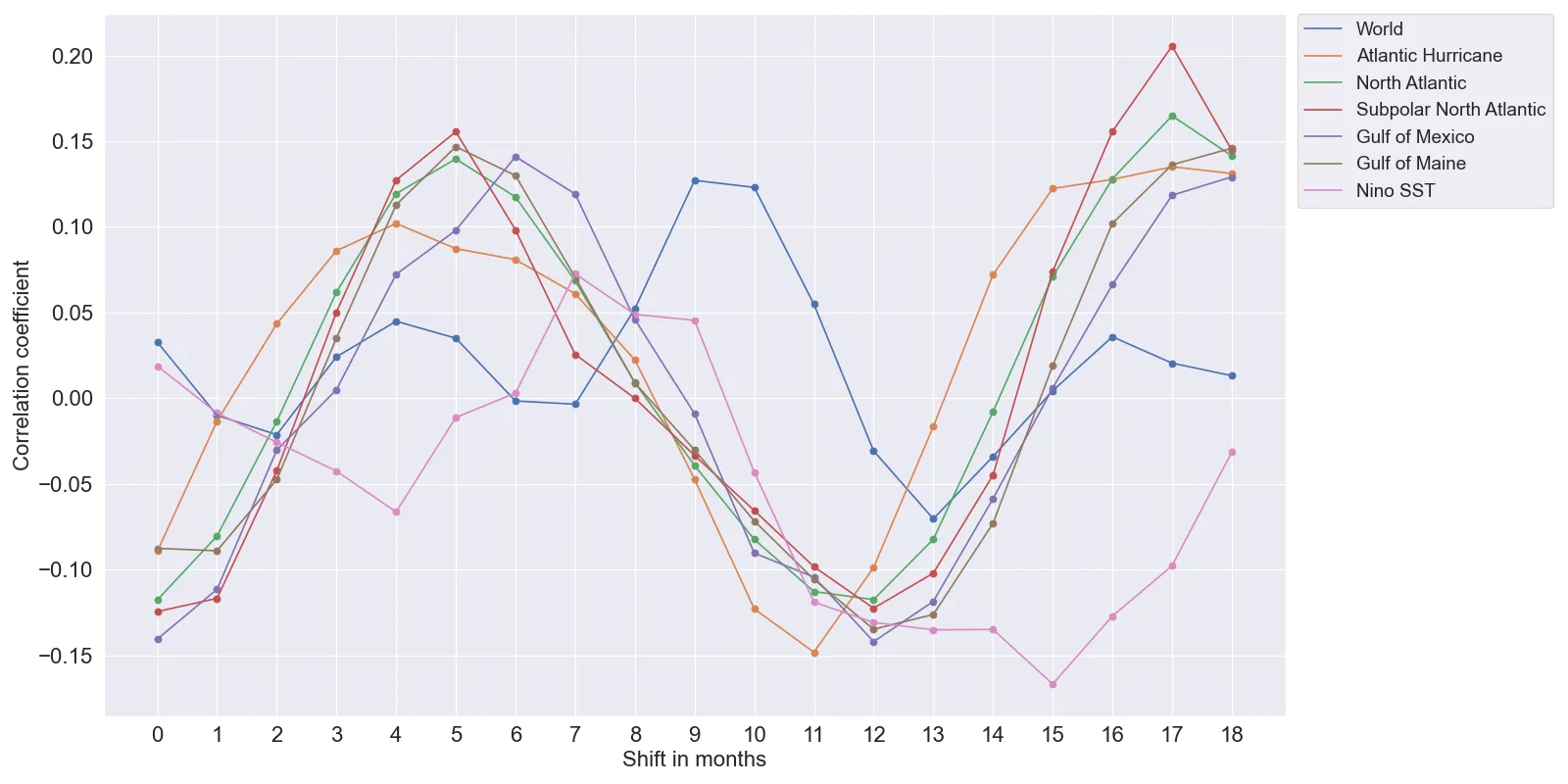
It turned out that climate affects prices with a delay of several months. The strongest link was found for heat leaving Earth into space and for the Southern Oscillation Index. When these indicators change, bond coupons respond about a year later. The model with climate data made fewer errors than the model without them. The best result came from extremely randomized trees, whose error dropped by 13.2%. Now insurers and investors can assess risk more precisely and set fair prices.
Climate indices were shifted back by up to 18 months to capture the delayed influence of the ocean and atmosphere on bond prices. The strongest link was found for outgoing longwave radiation at a lag of 12 months, meaning tropical convection affects coupons a year later.