Dark Dance: How Energy and Matter Swap Roles express
Original: "Late-time Background Constraints on Linear and Non-linear Interacting Dark Energy after DESI DR2"
A new study shows dark energy and dark matter exchange energy, and the direction of exchange has changed over time.
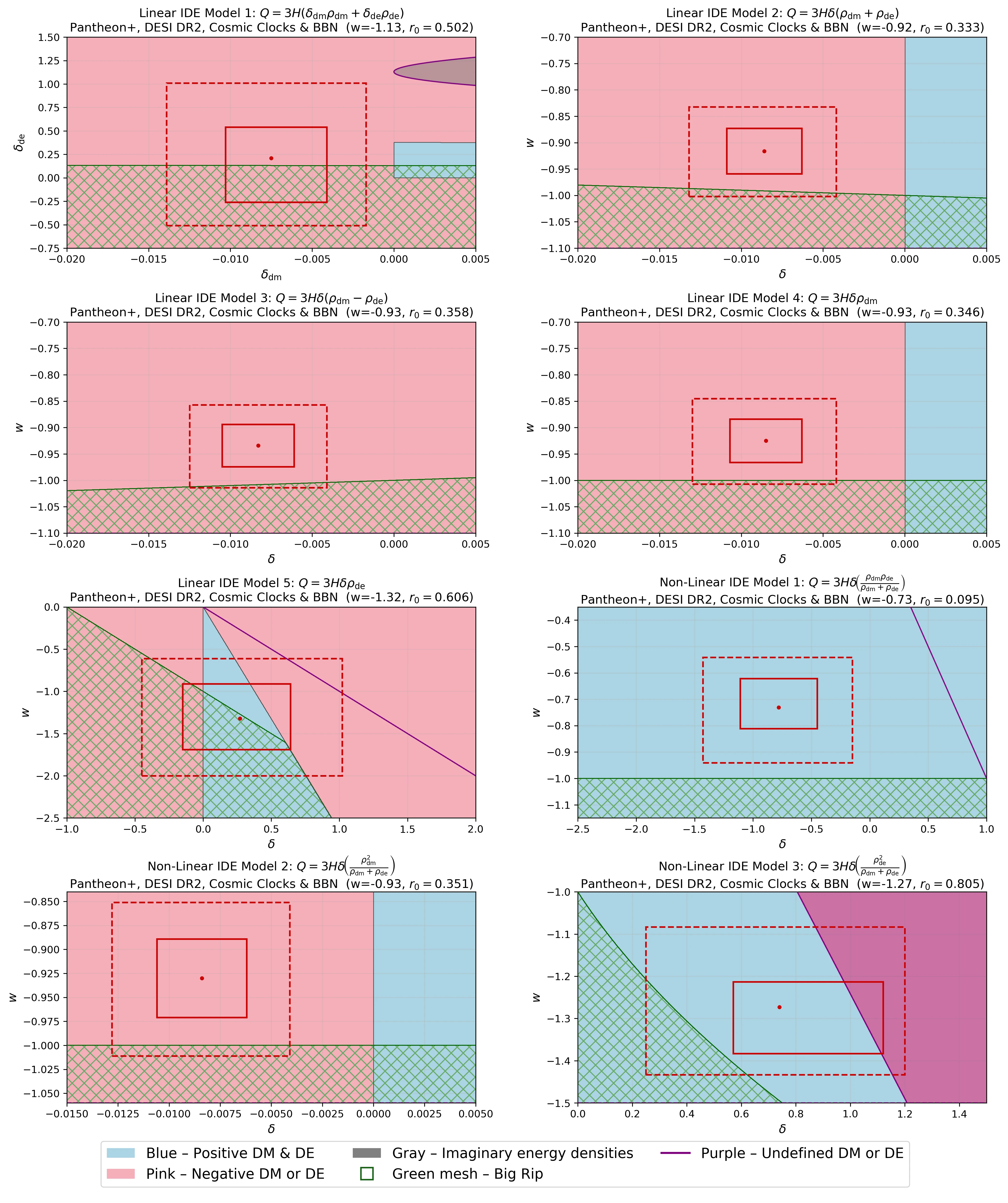
In the cosmic dance, dark energy and dark matter exchange energy. For a long time, dark energy was thought to be a constant force accelerating the universe — an insight that earned the Nobel Prize for Riess, Perlmutter, and Schmidt. But new data show the dance is changeable.
Researchers examined eight interaction models. It turns out that right now dark energy is giving energy to dark matter, while in the past it was the opposite. But in some versions, dark energy's density became negative, as if a dancer spends more than they have.
Notably: the universe's expansion hasn't always been accelerating — dark energy may have once slowed it down.
In some models, dark energy's density was negative in the past, the dancer seemed to borrow energy. This baffles physicists.