Self-interacting dark matter (SIDM) is a class of dark matter models where dark matter particles interact with each other through a force beyond gravity, in addition to the standard gravitational interactions. Unlike collisionless cold dark matter (CDM), which only interacts gravitationally, SIDM particles can scatter off each other, transferring momentum and energy. This alters the density profiles of dark matter halos, potentially solving the 'core-cusp problem' — the discrepancy between the steep density cusps predicted by CDM simulations and the shallower cores observed in dwarf galaxies. SIDM also affects the shape and dynamics of halos, including the merger rates of black holes and the viscosity of dark matter in clusters.
History
The idea was proposed by Spergel and Steinhardt in 2000 as a solution to the core-cusp problem. Earlier hints came from observations of galaxy clusters, but the model gained traction in the 2010s with more detailed simulations and observations of dwarf galaxies.
How it works
The self-interaction is typically modeled as a two-body elastic scattering with a cross-section that may depend on velocity. When dark matter particles collide, they exchange momentum, which can heat up the inner regions of halos and flatten the central density profile. The strength of the interaction is parameterized by the cross-section per unit mass (σ/m), with values around 1 cm²/g being sufficient to affect halo structure. The scattering can be elastic or inelastic, and in some models, it involves a 'dark sector' with new forces and particles, such as a dark photon or a light scalar mediator.
In practice
SIDM is used in astrophysical simulations to model the formation of galaxies and galaxy clusters, and to interpret observations of gravitational lensing and galaxy dynamics. It is also a target for direct detection experiments, as self-interactions might produce observable signatures in dark matter annihilation or scattering.
Fun fact
In some SIDM models, the self-interaction can be so strong that dark matter behaves like a fluid, leading to the formation of 'dark matter disks' in galactic collisions, which have been proposed as an explanation for the observed offsets between dark matter and stars in merging clusters like the Bullet Cluster.
A nickel crystal irradiated with ions resembles a hall where extra chairs are left after a concert. Those chairs are atoms squeezed between lattice sites. They first gather into clusters, then arrange into rings: some rings lie flat on the floor, immobile, while others roll across the hall like hoops. The question of why some roll and others do not has long troubled materials scientists.
Light from a distant galaxy reaches us through its own dust. This dust is not a smooth haze but ragged clouds, like wisps of cotton. Old models treated it as a uniform mist, and then the galaxy didn't add up energetically: too much light disappeared in the ultraviolet and too little came back in the infrared.
Astronomers did what a cook does when they dice a potato instead of tossing it in whole.
The five-hundred-meter FAST radio telescope picked up a signal at the 21-centimeter wavelength — the telltale glow of cold hydrogen. The signal came from a cloud named Cloud-9. It hangs in space near the galaxy M94, but it contains not a single star.
In the far reaches of space, there exists a hypothetical object: an ultracold black hole. It is charged and resides in an expanding universe (de Sitter space). Its temperature hovers just above absolute zero — about one trillionth of a degree above it.
Light from distant quasars, breaking through billions of years, leaves a pattern of dark absorption lines on the cosmic film — the spectroscopic Lyman-alpha forest. Each line is like a note in a grand score, written by the hydrogen of the intergalactic medium.
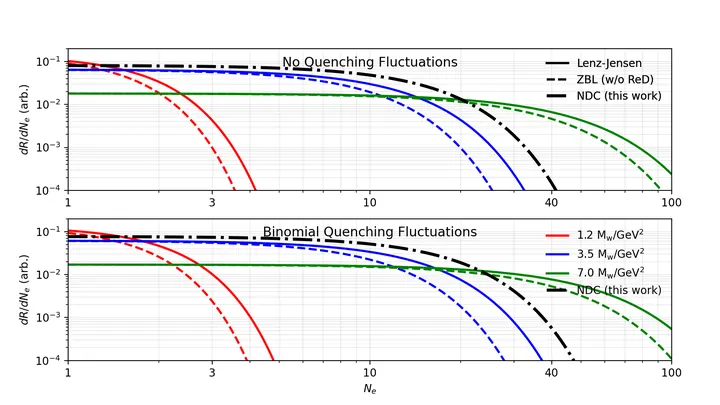
A large underground tank of liquid xenon waits for a rare event — a nudge from a dark matter particle. Normally, gravity is too weak to notice such a nudge. But if space has hidden dimensions, everything changes: at tiny distances, gravity suddenly strengthens, and the chance of catching an elusive particle grows.
A giant cloud of invisible matter acts like a funhouse mirror — distorting the light from a distant galaxy. From these distortions, astronomers can weigh the cloud and peer into its depths.
The Universe grows like a metropolis: galaxies skyscrapers are erected on an invisible scaffold of dark matter: its gravity pulling in construction material. Meanwhile, dark energy makes the city itself continuously expand.
A neutron star is a super-dense remnant of a supernova explosion, where a teaspoon of matter weighs a billion tons. Many of them, as discovered back in 1967 by Jocelyn Bell Burnell, become pulsars — cosmic lighthouses that regularly flash in the radio band.
Cosmologists staged a showdown between two kinds of cosmic explosions. Type Ia supernovae are stars that flare up with nearly identical brightness, making them reliable beacons for measuring distances across the universe.
Dark matter is the invisible scaffold of the universe. It doesn't shine, but its gravity holds stars in galaxies. In some models, dark matter particles can collide and exchange energy, like molecules in warm air.
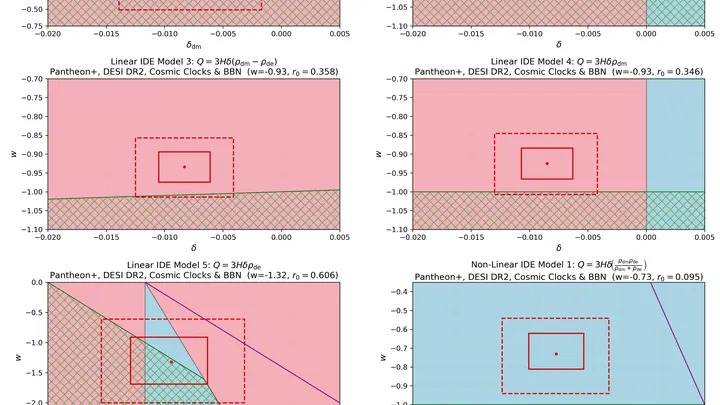
When a car on cruise control hits a bump, the speed jumps for a moment, but the engine runs smoothly. Something similar was recently noticed with dark energy — the force that makes the Universe expand faster and faster.
An architect checks the blueprint when building a house. For cosmologists, the blueprint is the Standard Model, and the measuring tape is the light from distant galaxies. Recently, a new 'tape measure,' the DESI instrument, measured distances to millions of galaxies with unprecedented precision. And the numbers didn't match the blueprint.
The Universe is a vast city. In it, dark matter is the invisible framework of buildings, and dark energy is the force stretching the streets. For a long time they were considered independent, but new research has caught them in secret communication.
Two clocks tell different times. One sits on our desk, the other lies far in the past, in the glow left over from the Big Bang. The first, looking at nearby galaxies, ticks off the expansion rate of the universe — about 73 kilometers per second per megaparsec of distance. The second, peering into ancient light, gives a noticeably lower value — roughly 67.
A balloon inflates on its own, even though no one is blowing it up. That's roughly how the accelerated expansion of the universe looks, and to explain it, scientists usually invoke dark energy, an invisible and poorly understood force. But what if the balloon expands because new air molecules are continuously appearing inside it?
A spinning top on a table wobbles: its axis is tilted, and the motion becomes unsteady. Black holes surrounded by a disk of gas and dust behave similarly. If the rotation axes of the black hole and the disk do not align, the whole system begins to vibrate, producing ripples in spacetime — gravitational waves.
When a massive star runs out of fuel, its core collapses and a shock wave races outward. But even before the star tears apart, particles that barely interact with ordinary matter may be born in its depths. If they decay into light, that energy leaks into the dense gas around the star.
This gas, like a blanket, wraps the star.
Dark matter is invisible, but its gravity holds galaxies together. For a long time, it was thought that dark matter particles pass right through each other without noticing. However, in small galaxies, the density of dark matter in the center turns out to be lower than calculations predict.
The James Webb Space Telescope peered into the galaxy cluster AS1063 and spotted tens of thousands of globular clusters — dense stellar "knots" scattered throughout the cluster. Their positions matched the map of invisible mass, which is constructed from the bending of light from distant galaxies.
The Universe is expanding faster and faster. We used to chalk that up to dark energy — a mysterious force working alone. But the latest measurements seem to have eavesdropped on a private conversation: it appears dark energy is not silent but whispering back and forth with dark matter.
The universe is expanding, and the rate of that expansion is a hot topic in cosmology. Nearly a century ago, Edwin Hubble discovered that galaxies are flying apart, but modern measurements of the Hubble constant, which characterizes the expansion rate, give conflicting values.
Dark matter is an invisible substance that holds galaxies together but emits no light. Catching its particles is like trying to hear a whisper in a noisy hall. Ordinary detectors only pick up loud impacts, while weak signals get drowned out by background noise.
In the cosmic dance, dark energy and dark matter exchange energy. For a long time, dark energy was thought to be a constant force accelerating the universe — an insight that earned the Nobel Prize for Riess, Perlmutter, and Schmidt.
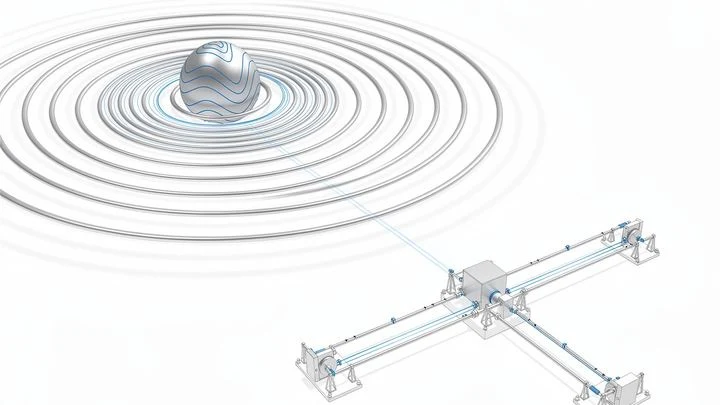
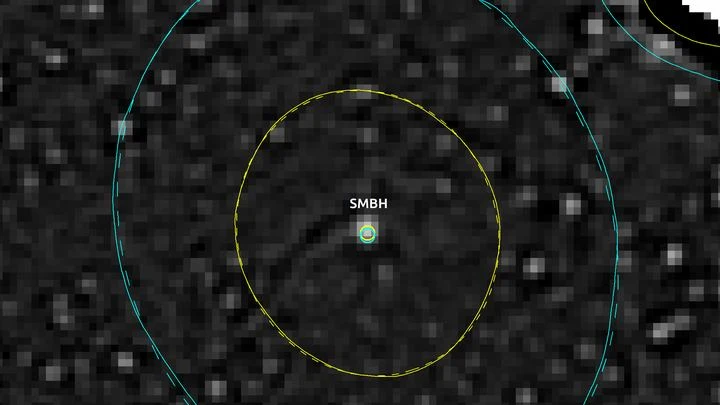
Particles of dark matter can behave like molasses: in one model they don't interfere with each other; in another, they gently jostle, creating viscosity. This determines how quickly giant black holes at the centers of galaxies fall into each other and merge.
As early as Vera Rubin found that stars on the outskirts of galaxies move too fast — as if held by an invisible web. And Fritz Zwicky was the first to suspect that clusters of galaxies hide enormous invisible mass. Today we call it dark matter and try to understand what it's made of.
Two telescopes look at the same Universe and see different expansion rates. Local measurements from supernovae give 73.04 ± 1.04 km/s/Mpc, while cosmic microwave background data within the standard model predict 67.36 ± 0.54.