How Galaxies Give Themselves Away express
When light from a distant galaxy travels toward us, dark matter along the way bends the rays slightly, like imperfect glass. Astronomers measure these distortions to understand where the invisible mass lurks. But galaxies also have their own, "intrinsic" distortions: they align not randomly but along the invisible threads of the cosmic web. It's like trying to gauge the curvature of a window pane when the panes themselves are slightly warped to begin with.
Scientists from the Dark Energy Survey collaboration tested a "self-calibration" method designed to separate intrinsic distortions from those caused by dark matter. They applied it to real telescope data from the first year of observations. For distant galaxies, a signal emerged, but for nearby ones, the results were ambiguous. The likely culprit: errors in estimating galaxy distances, because the self-calibration method is highly demanding on the accuracy of those estimates.
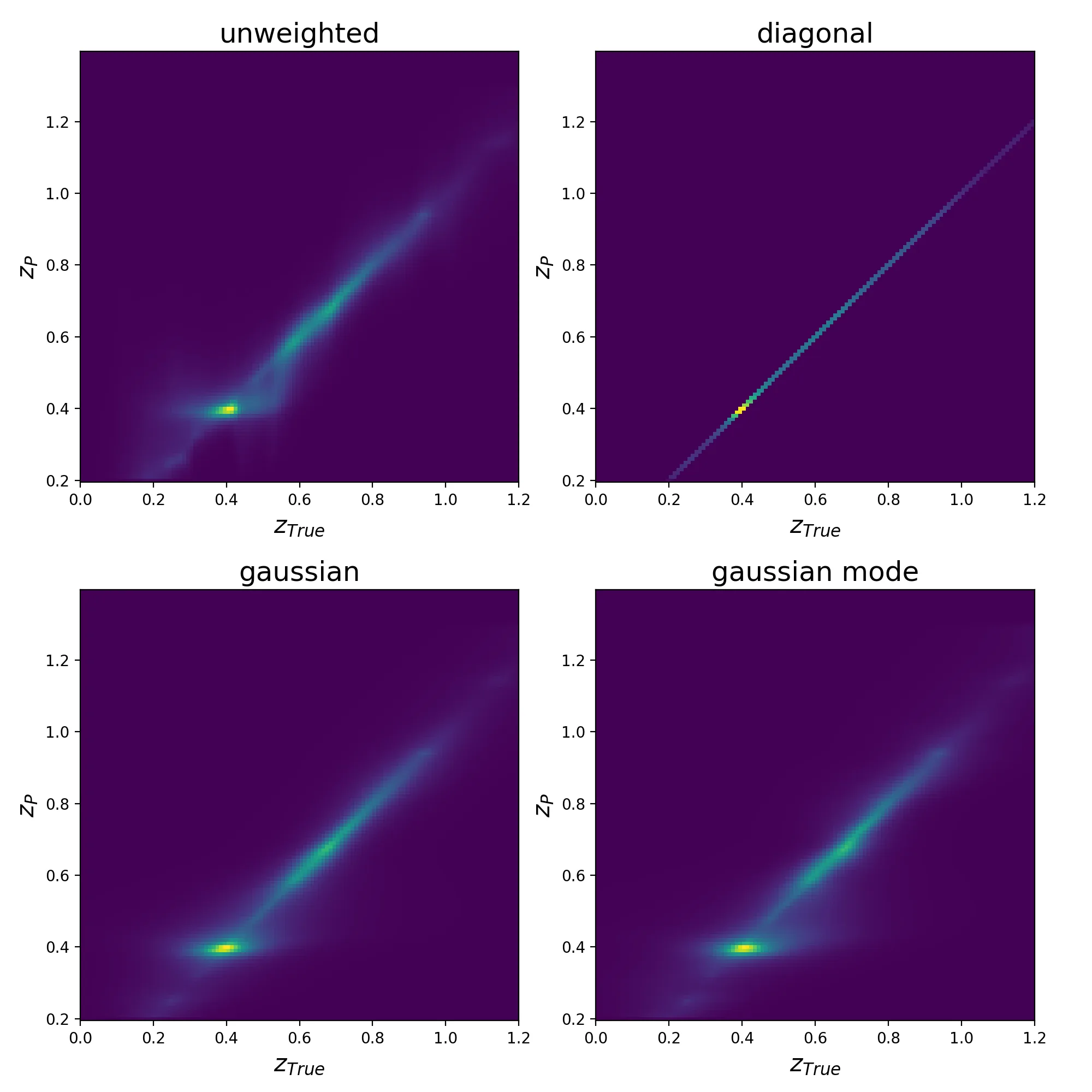
The authors showed how different ways of reconstructing the distance distribution affect the outcome. The same set of galaxies can yield either a faint hint of a signal or none at all. This is an important step for future sky surveys that will gather hundreds of times more data.
Original abstract
as written by the authors arXiv:2601.10314
We present the implementation of a Self-Calibration of Intrinsic Alignments of galaxies as an extension to the Vera C. Rubin Observatory's Legacy Survey of Space and Time (LSST) Dark Energy Science Collaboration (DESC)'s weak lensing 3x2pt pipeline (TXPipe). As a demonstration, we have run this pipeline on the Dark Energy Survey (DES) year one data set. We find indications of a non-zero intrinsic alignment signal in the higher redshift bins, while in the lower bins our results look more uncertain. We believe this is caused by known issues with the individual galaxies photo-z estimation. This effect is particularly harmful for the self-calibration method, since it has high requirements for reliable estimation of the photo-$$z$$s, and the need for individual galaxy point estimates and tomographic binning to match. We show how different methods of recreating the redshift probability distribution can affect the detection of intrinsic alignment.
Intrinsic galaxy distortions were first noticed back in 2000, yet they remain one of the main obstacles to accurately mapping dark matter.