A Diamond Speck Becomes a Sound Laser express
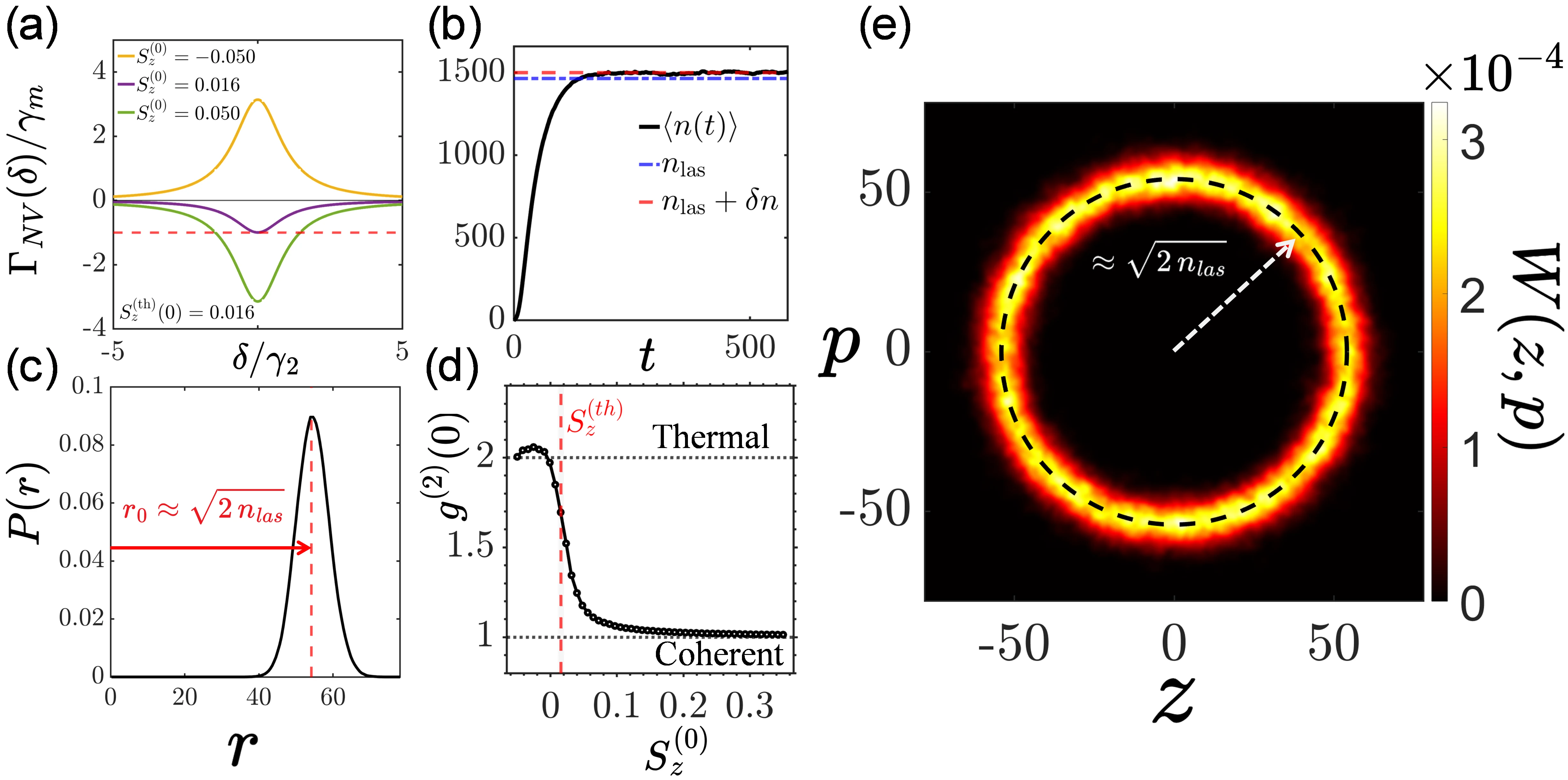
A diamond dust particle made of carbon floats in a vacuum on a laser beam. Inside there is a defect: a nitrogen atom next to a vacancy. Under the influence of light and microwaves, it starts to jitter, rocking the entire particle. This is how a sound laser starts: weak random nudges turn into a powerful steady hum. The mechanism echoes the idea of Charles Townes, who built the maser for microwaves, but here sound vibrations are amplified. All it takes is a tiny excess of excited states — just a couple of percent.
The calculations fully match the laws of quantum optics. Such a system can detect gravitational waves or the force of impact from a single molecule. And, perhaps for the first time, it will let us see quantum effects — such as the simultaneous existence of two opposite vibrations — in an object visible to the naked eye.
The maser is the older brother of the laser: it was first built in 1954 for microwaves, and now the same principle brings sound vibrations to life in a crystal.
In science fiction, self-exciting crystals often serve as the heart of detectors and engines.