Squeezing Light Out of a Crystal to Its Limit express
When you pluck a guitar string hard, it doesn't sound a single note but several at once — the fundamental tone and overtones. Physicists have pulled a similar trick with light: they aimed an infrared laser at a crystal, and the crystal lit up with sixteen colors at once, from invisible heat to hard ultraviolet.
The crystal is called NbOI2—a layered material like a stack of paper, where each sheet is one atom thick. Inside such a sheet, charges are shifted: one side is positive, the other negative, like a battery. So the material itself responds to light unusually: it doubles weak light, and strong light makes it dance on many frequencies at once.
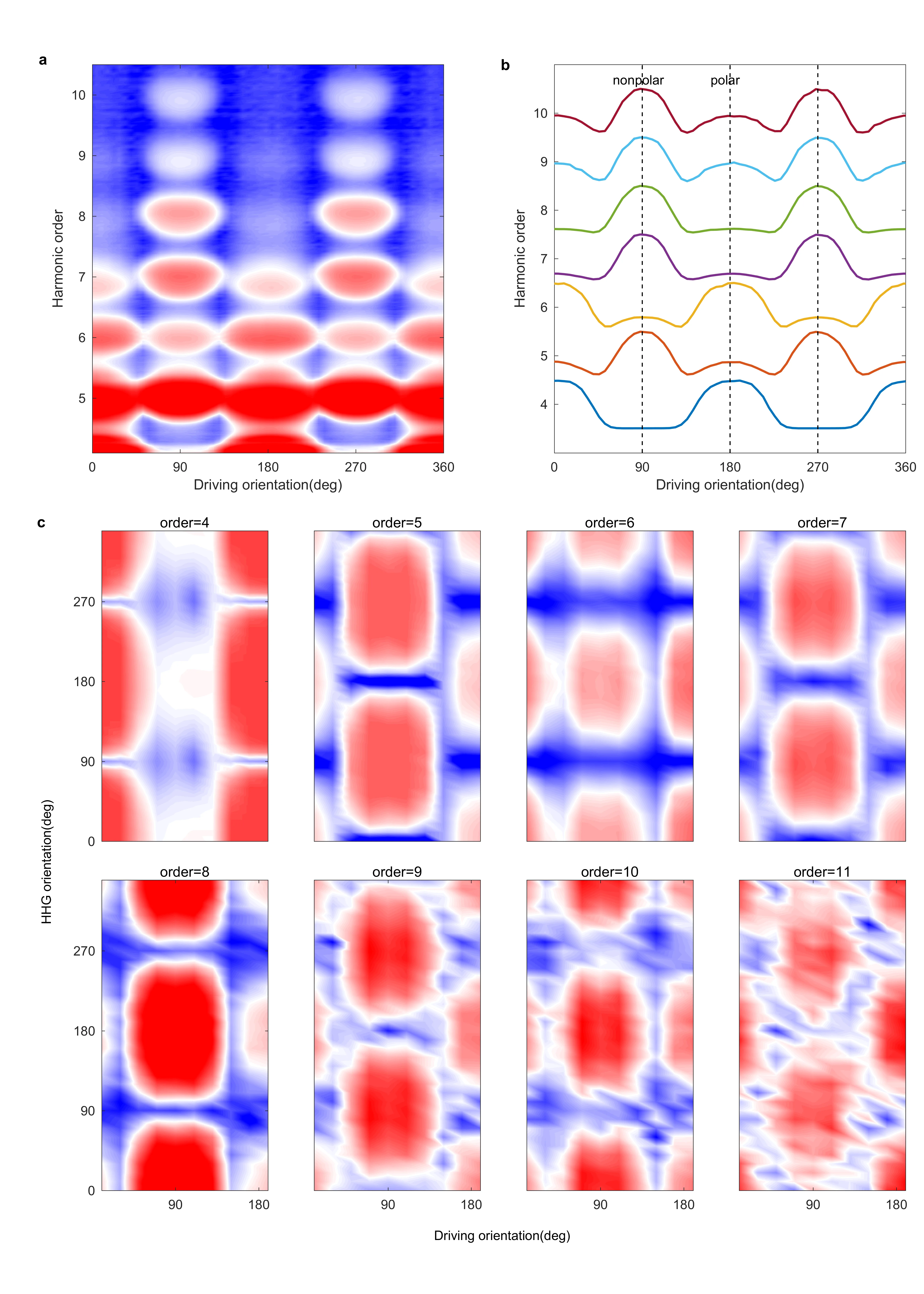
In the experiment, the laser hit the crystal at a frequency like that of thermal radiation. The energy per pulse was modest — less than what it would take to boil a kettle in an hour. But the crystal was so responsive that it emitted light with frequencies sixteen times higher than the original. Moreover, even and odd "overtones" behaved differently: even ones always pointed along the crystal axis, like a compass needle, while odd ones twisted following the laser.
The practical benefit is compact light sources with tunable frequency. These are needed for quantum communication, precision measurements, and microscopes that can see individual molecules. Instead of bulky laser setups — a thin film that turns one beam into a whole rainbow.
Light with a frequency 16 times higher than the original lies in the deep ultraviolet: it's invisible but can break chemical bonds in molecules.
In the series 'Star Trek', phasers tune the frequency of the beam for different purposes, from stunning to cutting metal. The NbOI2 crystal does something similar on a miniature scale, changing the color of light without changing the source.